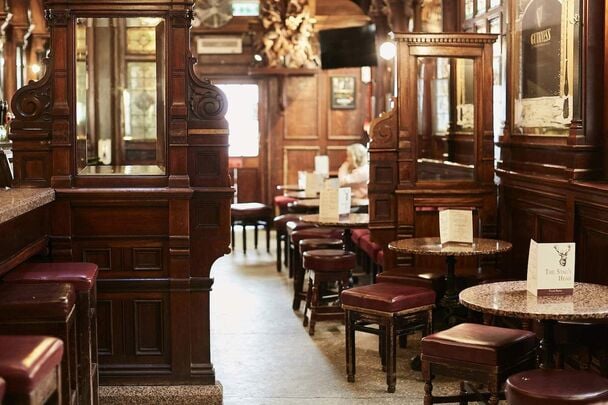
What days are the pubs closed in Ireland? Well, it used to include Saint Patrick's Day.
You may be surprised to learn that all the pubs in Ireland used to be closed on St. Patrick's Day, which is now by and large considered a drinking holiday.
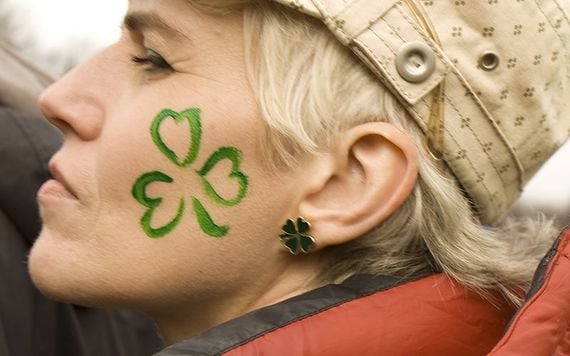
St. Patrick’s Day is associated with many things: wearing green, breaking Lent, making an attempt to try out your cúpla focal (few words of Gaelic/Irish), going to a parade, and, of course, drowning the shamrock. There is no other day in the year in which the drunken Irish stereotype is more pronounced and used as an excuse by some to enjoy themselves a bit too much than on March 17.
In Ireland, March 17 marks the death of the country's beloved patron saint, and for over a thousand years it has been celebrated as a religious feast day.
Up until the 1970s, Irish law prohibited pubs from opening on March 17 as a mark of respect for this religious day. It was feared that leaving the pubs open would be too tempting for some during Lent and would lead to a disrespectful amount of drunkenness on this most solemn day.
According to history, St. Patrick was a missionary to Ireland. If we look back at his writings, we find that he believed his enslavement in Ireland was a result of his lack of faith during his younger years, and his return to Ireland following his escape from slavery came from a compulsion to spread the word of God to Ireland and repent for these sins. His stature grew until he was adored by the Irish as the person who brought Christianity to the Emerald Isle.
Read more
In times past, canonizations were carried out at the regional level, meaning that Patrick has never been officially canonized by a Pope, although he is included in the list of saints. The feast day was only officially placed on the Catholic Church’s liturgical calendar in the early 1600s, thanks to Waterford-born Franciscan scholar Luke Wadding. Since then, it has been a holy day of obligation for Catholics in Ireland (obliged to 'hear Mass').
Until the 1700s, St. Patrick’s Day was celebrated predominantly in Ireland, where it was a somber religious occasion spent mainly in prayer.
From the 18th century onward, due to the Penal Laws in Ireland, some Irish people began to use St. Patrick’s Day to promote Irish culture and traditions. To show their Irish Christian pride, the tradition of wearing shamrocks began, but the day still revolved around Catholic rites.

St. Patrick’s Day didn’t become an official Irish public holiday until 1903, when the Bank Holiday (Ireland) Act 1903 was introduced. This act was introduced by Irish Member of Parliament James O’Mara, who was also responsible for the law requiring the closure of pubs on March 17.
In Ireland, the typical St. Patrick's Day celebration before the '70s and the lifting of the ban on alcohol sales was very different from the party atmosphere associated with the day now. As St. Patrick’s Day falls in the Christian season of Lent, a mass was attended in the morning, with the afternoon set aside for celebrations. (If St Patrick's Day fell on a Friday, the Lenten prohibition against meat was lifted for the day.) Families sang, danced, and celebrated, marking a break from the normally somber time of Lent.
Before the drinking ban was repealed, there was only one place in Ireland where one could buy a drink on March 17: The Royal Dublin Dog Show. The Dog Show would attract a wide audience, with not just dog lovers but also writers, politicians, and anyone else who wanted to do more than eat chocolate and sweets on this one cheat day during Lent.
As Maeve Binchy wrote in a 2001 article for the New York Times, “Dublin was the dullest place on earth to spend St. Patrick's Day.”
Binchy recalls how she and her family would watch, amazed, as Irish people in other parts of the world indulged heavily in the festivities while the homeland suffered through a day of thirst.
The evolution of St. Patrick’s Day into the ruckus it is now associated with may, in fact, have been an Irish American construct. Although the feast day has been observed in Ireland since the 9th or 10th century, the first parade took place in New York City in 1762, when Irish soldiers serving in the British army marched through Manhattan to a local tavern.
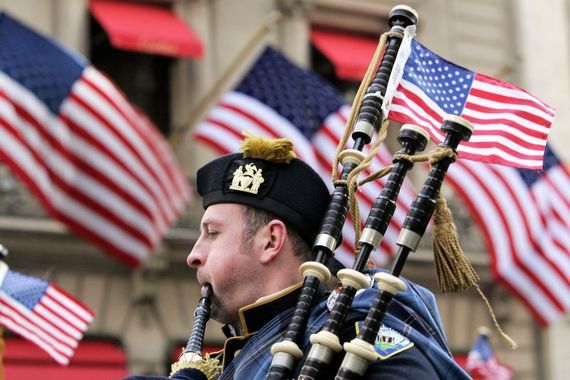
Patriotism among Irish immigrants in America continued to grow with the New York Irish Aid societies holding the first official parade in 1848 – the world’s oldest civilian parade and the largest in the United States. The first parade in the Irish Free State did not take place until 1931.
The promotion of Paddy’s Day in Ireland truly began in 1995 when the Irish Government realized the potential tourism benefits of celebrating the day 'properly.' They realized that St Patrick's Day represented a golden opportunity for the country to sell its culture and sights to the rest of the world. This led to the creation of the St. Patrick’s Day Festival – the multi-day celebration in Dublin that attracts approximately one million people annually.
There are still certain religious links evident in our adoration of St. Patrick. Each year, 5.5 million people visit St. Patrick’s Cathedral in New York, and there are over 450 churches across America named after Ireland’s patron saint. Almost 650,000 babies in the US have been named Patrick in the past 100 years. In 2019, more than half of the US population is expected to celebrate St. Patrick's Day, and spending is projected to exceed $5 billion.
Read more
Some have called for a return to the pre-70s traditions and the religious feast day. In 2007, theologian Fr. Vincent Twomey argued for this return to religion in an article for The Word magazine. Fr. Twomey claimed that the day needed to be reclaimed as a Church festival and taken back from the secular, vulgar festival it had become.
Within the Church itself, certain traditions are still retained, though they may go unnoticed among those attending the larger corporate events. Because St. Patrick’s Day sometimes falls during Holy Week, and the church avoids holding feast days during certain solemnities, such as Lent, the feast day has sometimes been moved to a different day. This last occurred in 2008, when the Church celebrated St. Patrick’s Day on March 14, although the separate secular events continued on the national holiday. This will not happen again until 2160.
St. Patrick’s Day, whether you drink or not, has become synonymous with many people’s Irish culture and identity. In the past, this meant a strong link to Irish Catholic tradition and, perhaps as a reflection of the Irish population’s own relationship with the Catholic Church, has since become more of a patriotic symbol of Ireland and its culture worldwide, separate from the religious feast day.
* Originally published in March 2015. Updated in February 2026.

Comments