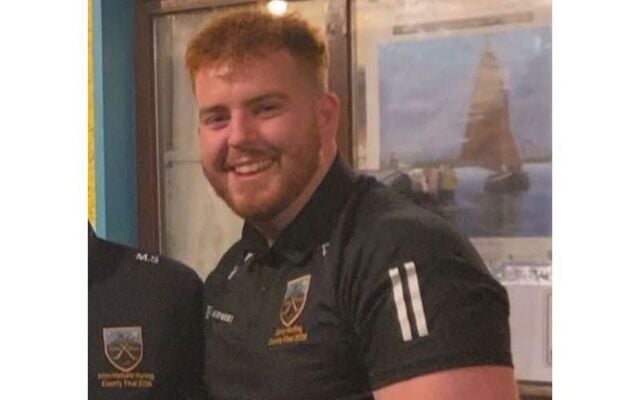
Evan Deveney was drinking a coffee at his boarding gate in Nashville International Airport, waiting for a flight to Montana, when five armed men in black walked towards him and put him in handcuffs and ankle restraints in front of a crowded terminal. The 23-year-old construction laborer from Kinvara, Co. Galway, knew he had overstayed his visa waiver and assumed he would be booked and flown home within days, but instead he spent almost a month moving through a US detention system he now describes as a prison.
Evan Deveney was sitting at the boarding gate in Nashville International Airport when five armed men dressed in black walked towards him. Until then, the morning had been entirely ordinary. He had checked in, passed through security, and bought a coffee. He and a friend were preparing to fly to Montana for a week-long holiday near Yellowstone.
At first, Deveney assumed there was a problem with his luggage. Then he noticed the guns and body armor.
“I just said to myself, ‘Jesus, this isn’t good,’” he recalled.
The officers asked him to confirm his name and told him that he was being taken into custody. Within minutes, the 23-year-old construction laborer from Kinvara, Co. Galway, was in handcuffs and heavy ankle restraints.
“They made me walk through the duty-free and through the terminal. Everyone was watching,” he said.
Deveney said the men did not identify themselves as officers from US Immigration and Customs Enforcement until he was inside their vehicle. He knew that he had overstayed his permission to remain in the United States and understood that he could be deported. He had always assumed, however, that if he were caught, he would be taken to an office and placed on a flight home.
Instead, he spent almost a month moving through the American immigration detention system.
“I honestly thought they would bring me into an office, book me and put me on a flight,” he said. “But it turned into a month-long nightmare.”


Evan Deveney and friends on the GAA field.
A life in New York
Deveney was among the many undocumented Irish people who had, until the recent intensification of immigration enforcement, lived with a degree of relative security in the United States. Their position was always precarious, but within established Irish communities, it was often possible to find work, accommodation and support while remaining largely beyond the everyday reach of immigration authorities.
For Deveney, that community was Woodlawn, a small Irish enclave in the Bronx at the northern edge of New York City, bordering Yonkers. Irish accents remain commonplace along Katonah Avenue, where pubs, shops, GAA connections and informal networks have long helped new arrivals establish themselves.
He had first traveled to New York for the summer to play hurling. The visit confirmed an idea of America that had taken hold when he was a child.
“Watching television, you saw America as the land of opportunity,” he said. “It was always something in my mind that I wanted to do.”
After returning to Galway, he found it difficult to settle. He saved money for a year before going back to New York in September 2025 through the Visa Waiver Program, which allowed him to stay for 90 days but did not permit him to work.

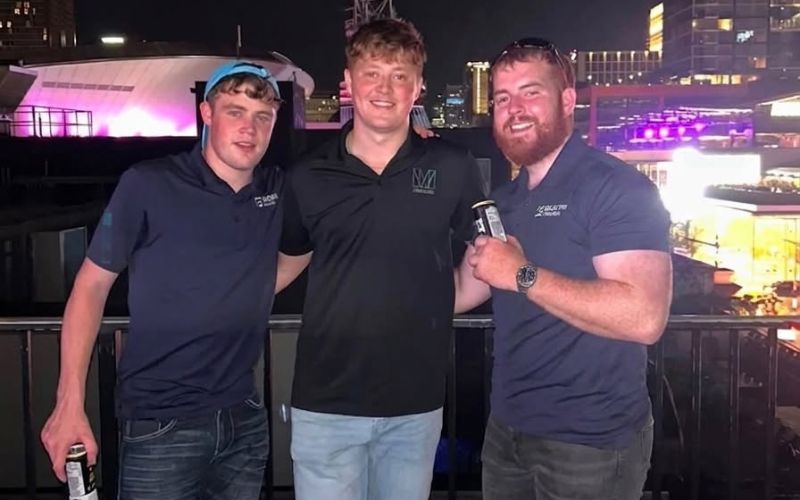
Enjoying the night life in New York.
Deveney is candid about his decision to remain after that period expired. By December, he had found construction work, made friends, and established a routine. The wages were better than those he had earned laboring and operating machinery in Ireland, and he believed America offered greater possibilities for someone in his early twenties.
“I felt like I had peaked in Ireland with what I could do,” he said. “There were more opportunities in America, more things to do and more things to see. You don’t want your twenties to go by living in the same rural town.”
His immigration status remained a source of underlying anxiety, but it did not dominate his life. ICE officers were not a conspicuous presence in New York City, he said, and people in similar circumstances continued to work and socialize without regularly encountering immigration enforcement.
“It was never at the front of my mind when I was there,” he said. “You wouldn’t actually see ICE that much in New York.”
After eight months, Deveney moved to Nashville in search of a different lifestyle. A contact through the local GAA community helped him find construction work, but the South felt less insulated. Immigration enforcement appeared more visible, and the risk of arrest less remote.
“When I was living down there, I did sort of feel it was more of a risk day to day, but you still never think it’ll happen to you,” he said.
He had already flown from New York to Nashville without difficulty, while friends in similar circumstances had also traveled domestically without being stopped.
“Everybody I was talking to who was in the same boat as me had never gotten caught, but I was aware of the risks, and I hold my hands up that way,” he said.
That sense of relative safety has been eroded by increased immigration enforcement at domestic airports. In recent months, immigrant-rights groups and legal organizations have issued travel advisories warning noncitizens about the risks of non-essential domestic air travel.
The figures point to a wider escalation affecting Irish citizens. ICE statistics released to BBC News NI showed that 99 Irish people were deported between January and September 2025, more than 50 percent above the 60 deported during the 12 months from October 2023 to September 2024.
Deveney became one of those caught in the crackdown.
A journey through detention
After being detained at the boarding gate, Deveney was taken to an ICE office approximately 15 minutes from the airport. He said he signed deportation paperwork and was informed that he would be barred from returning to the United States for ten years.
He was allowed one telephone call and contacted the friend who was due to travel with him. His friend abandoned the holiday and collected Deveney’s luggage while he remained in a cell.
Later that day, Deveney said he was placed in handcuffs and ankle restraints for a three-and-a-half-hour bus journey to Memphis. He said he received neither food nor water and remained restrained throughout. By the time he had been processed and reached a bed, it was close to midnight.
“You hear these places described as camps or holding centers,” he said. “They’re prisons. There’s no other way of looking at it.”
After three days in Memphis, Deveney was transferred by plane to a detention facility in Louisiana. His account of the weeks that followed is one of hunger, exhaustion, and uncertainty.
Breakfast was generally a child-sized portion of porridge, he said. Lunch was supposed to arrive at midday, but sometimes it did not appear. Dinner might consist of plain pasta or rice and beans.
“You’re just rotting away inside there,” he said. “Your body is obviously upset, and your mind is gone as well because you’re not eating.”
Fluorescent lights remained on throughout the night. Deveney shared a dormitory with dozens of other men, where showers ran at all hours and card games continued beside the bunks. Some detainees slept during the day and remained awake at night, while guards entered shouting to conduct regular counts.
“You can’t sleep at night,” he said. “It’s impossible to be in a routine or anything inside there.”
He developed a chest infection in Louisiana and said he lost a considerable amount of weight and muscle. On his return to Ireland, his GP was particularly concerned about the psychological effects of the experience and advised him to take time to recover.
The uncertainty was almost as debilitating as the physical conditions. At the ICE office in Nashville, Deveney had initially been told that he might be detained for a week. One week became four, while men around him warned that he could remain inside for months.
“You’re trying to stay positive and keep the good side out,” he said. “But it’s impossible because you’re getting nothing but bad news.”
It was approximately a week before Deveney was able to speak to his parents. Through a family connection from Kinvara living in Boston, they secured the help of an immigration attorney whose firm agreed to take his case pro bono.
Only after the attorney became involved did Deveney feel that his case began to move. He believes that without her intervention, he could have remained in detention for considerably longer.
“If it wasn’t for her, I could have been forgotten about in there for maybe three months,” he said.
Not everyone around him was as fortunate. Deveney met men from Russia, South Africa, Kenya, Ghana, and elsewhere, some of whom said they had already spent six or seven months in detention with little certainty about when they might leave.
Among them was a Ghanaian man who had been transported from Nashville alongside him. According to the account the man gave Deveney, he had lived in the United States for years, was married, and held a green card. He told Deveney that he had been detained while traveling to an appointment connected with his citizenship application.
“Listening to their stories as well, it was crazy,” Deveney said.
The encounters showed him how easily someone without family members advocating from outside, access to an attorney, or a clear route home could become lost in the system. Deveney knew that his parents were waiting in Ireland and that friends were trying to help him. Others appeared to have no comparable support.
Read more
Home, but still processing
Deveney was eventually transferred through New Jersey and placed on a flight to Dublin. Seeing his parents at the airport brought enormous relief, but not an immediate sense that the ordeal was over.
“You’re still a bit numb,” he said. “You can’t really believe that it happened to you. I’m just glad to be home, glad to be back with family and friends, eating decent food and drinking water again.”
Deveney accepts responsibility for overstaying and insists that he is not asking for sympathy. He knew that remaining in the country without permission carried a risk. His objection is to the treatment that followed and to the length of time people can remain detained even when they are prepared to leave.
“It’s not about looking for sympathy,” he said. “I knew what could potentially happen to me. I’m trying to shed light on what is going on inside and how inhumanely people are being treated.”
For now, he does not know what his future looks like. He is back in Kinvara, recovering physically and trying to process how quickly the life he had built in America disappeared. He remains open to traveling elsewhere but plans to spend the immediate future at home, resting and considering his options.
He has little desire to return to the United States, even when the reported ten-year bar expires. By then, he will be 33 and expects his life to have taken an entirely different course.
His American dream began within the relative shelter of the Irish community in New York, where work came easily, and the threat of enforcement remained distant. It ended at an airport gate in Tennessee.
“If you want us out of there,” he said, “just send us home. I cannot understand why they’re keeping people there to rot.”



Comments