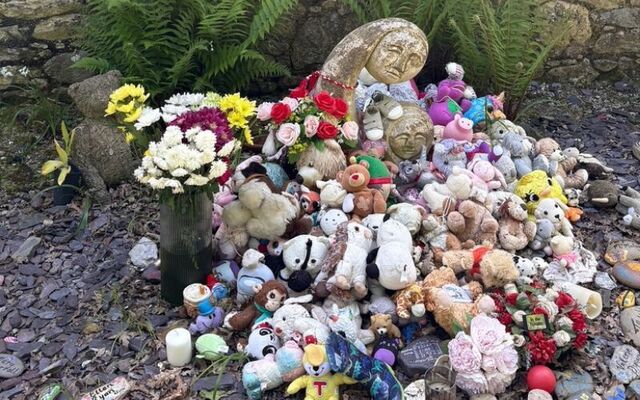
The leader of the largest Irish American organization, the Ancient Order of Hibernians (AOH), traveled to the Cork site this week after hearing the stories of survivors and those seeking their lost relatives. He is now urging a full forensic survey of the land to ensure that no construction takes place where the remains of children may still lie in unmarked graves.
On Tuesday, May 12, AOH National President Sean Pender met with Carmel Cantwell at the Bessborough Mother and Baby Home site, where he heard firsthand about the pain still carried by families connected to the institution. After the visit, Pender said the Ancient Order of Hibernians could not remain silent about what he called a continuing injustice to the women, children, and families tied to Bessborough.
The site is believed to contain the remains of hundreds of babies and infants, buried in unmarked graves. The Commission found that 923 children associated with Bessborough died, and that the burial place of most of them is still unknown.
There has also been speculation that some may have been buried off-site, possibly at Carr’s Hill or another local cemetery, due to missing burial records.
Cantwell, who advocates for her mother and brother and serves as an administrator of The Bessboro Mother and Baby 'Home' Support Group, helped bring attention to the site and the calls for accountability. Pender said he was initially drawn to the issue after reading about New York Ladies Ancient Order of Hibernians President Terry Meyer, who survived the home herself, and wanted to learn more about what happened there.
Following the visit, the Ancient Order of Hibernians issued a forceful appeal to Irish authorities, urging a full forensic survey of the Bessborough Mother and Baby Home site before any further development proceeds.
Their statement called for "the grounds should be preserved as a permanent memorial to those who died and a reminder of what happened to women/girls and their children here.”
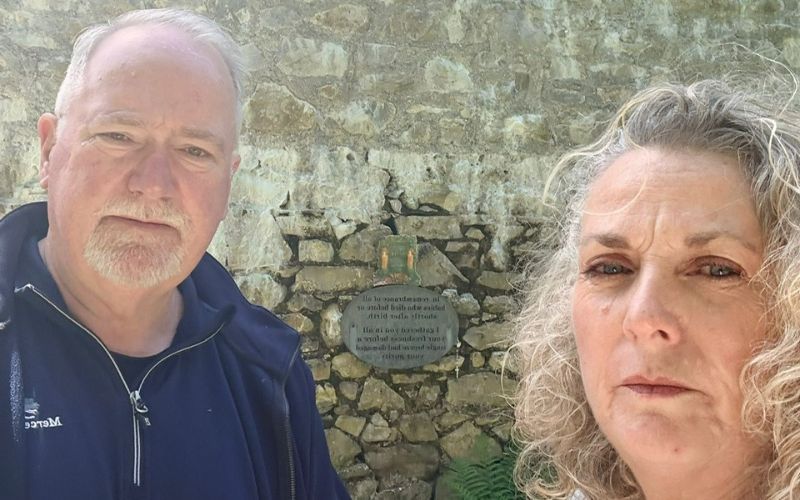

President Sean Pender and Carmel Cantwell of of The Bessboro Mother and Baby 'Home' Support Group.
The AOH said the issue carries special meaning for Irish Americans, many of whom trace family ties to Mother and Baby Homes through adoption and migration. For those families, Pender said, these are not distant historical sites but part of their own story and their own search for truth.
He also argued that when there is credible evidence, human remains may be present, especially those of children, construction should not move forward until the ground has been carefully examined.
Read more
“When credible evidence exists that human remains, particularly those of children, may be present on a site, no responsible authority should permit construction to proceed. A full and rigorous forensic survey of the grounds with an eye to recovery should be completed. This standard applies to ancient battlefields, archaeological sites, and to any place where the forgotten dead may lie. It must apply here.”
Pender broadened the argument beyond Ireland, saying societies everywhere carry debts to those once treated as inconvenient or disposable. In his view, lost graves are not unique to one country or one faith, but are reminders of what happens when people look away from suffering and abuse.
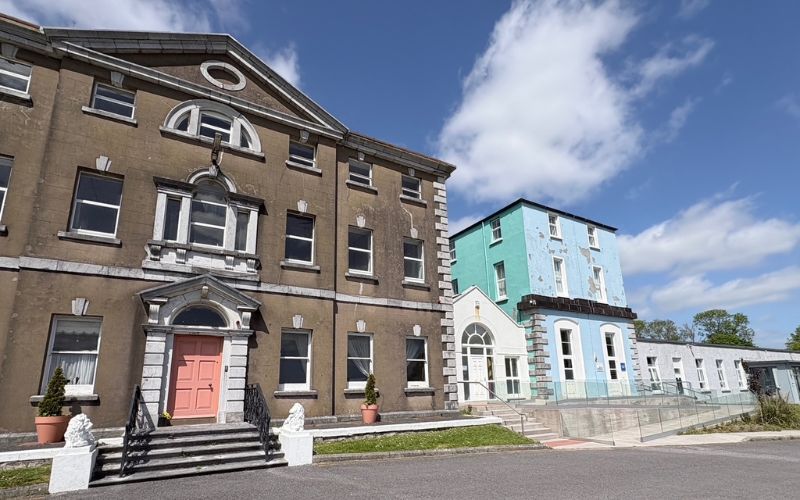
The Bessborough House, Blackrock, Cork.
“We say this as Americans who acknowledge that our own nation, and many others, carry unreconciled debts to those the society of the time deemed inconvenient: the poor, the disabled, the illegitimate, the forgotten. Lost graves are not an Irish phenomenon or a Catholic one. They are the silent monuments of every society that chose to look away. We cannot move forward unless we address the legacy of the past.”
He concluded that the request at Bessborough should not be divisive, but a basic matter of human dignity.
“What is being asked at Bessborough should not be controversial. We cannot ignore or fail these children again. Let us give the dead the dignity they were denied in life. That is a standard that knows no nationality, no religion, and no politics. It is the standard of our common humanity, and we stand fully behind it.”



Comments