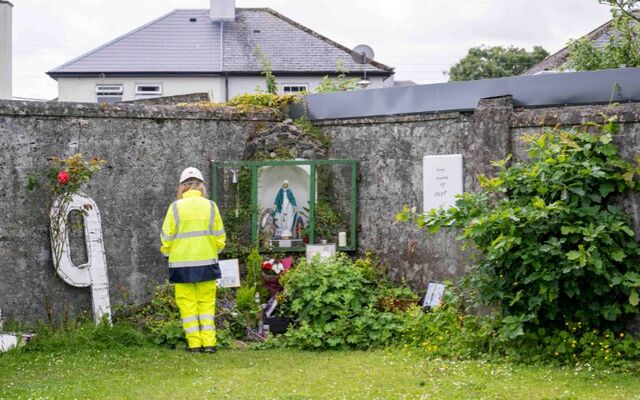
22 additional sets of infant human remains were recovered during the most recent reporting period of the ongoing forensic excavation at the site of the former Mother and Baby Institution in Tuam, Co Galway.
There have now been 33 sets of infant human remains recovered from an area of the site identified in historical documents as a "burial ground," the Office of the Director of Authorised Intervention, Tuam (ODAIT) said in its latest update, issued on Friday.
To date, all remains recovered from this area of the site are of infants that were buried in coffins. Forensic analysis is underway, the ODAIT said.
The ODAIT further said that following radiocarbon dating, it is its opinion that the 33 sets of infant human remains recovered to date from the "burial ground" were buried during the period of operation of the Mother and Baby Institution Tuam (1925-1961).
Another seven sets of human remains recovered during an earlier reporting period in another area of the site were buried during the Workhouse era (1841 to 1918).
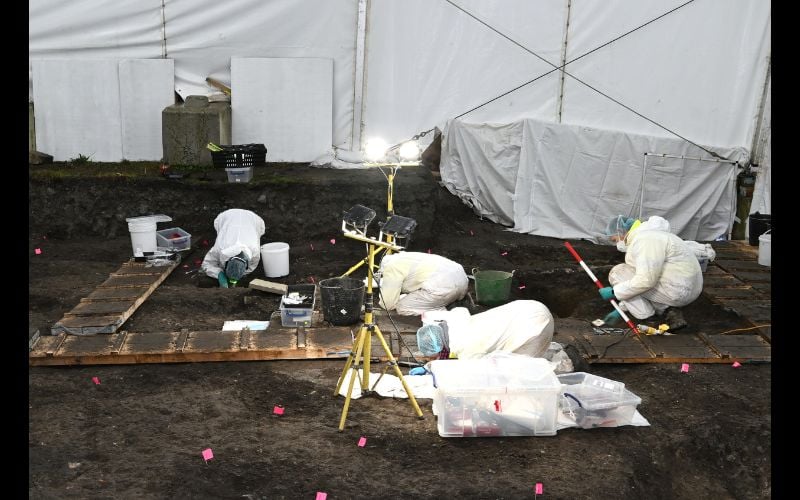

ODAIT forensic staff working under the temporary tent. (ODAIT)
Identification Programme
The ODAIT said on Friday that during the most recent reporting period, eight more family reference DNA samples have been taken and delivered to Forensic Science Ireland (FSI), bringing the total to 28.
In accordance with the provisions set out in the legislation, ODAIT’s ID Programme team is engaging with a further 175 people who have contacted ODAIT to enquire about providing a DNA sample.
To date, over 65 cases are being processed for determination of eligibility, with arrangements being made to take their samples in the coming weeks.
If you are interested in providing a DNA sample, please see ODAIT.ie, email [email protected], or call +353 (0)1 539177.
Structures
The ODAIT said on Friday that in the former yard area, the entire area is now forensically resolved, apart from the well and connected drains, where work continues.
In the area identified in historical documents as a “burial ground," hand excavation continued under the cover of the tent. The recovered evidence from this area is consistent with it being a burial ground from the time of the operation of the Mother and Baby Institution.
Within this area, ODAIT said it also uncovered a pit (over 3 metres in width; depth will be determined on excavation) which disturbed the “burial ground." It contains modern building debris consistent with the post-institutional era. Excavation in the next reporting period will provide more information about this feature.
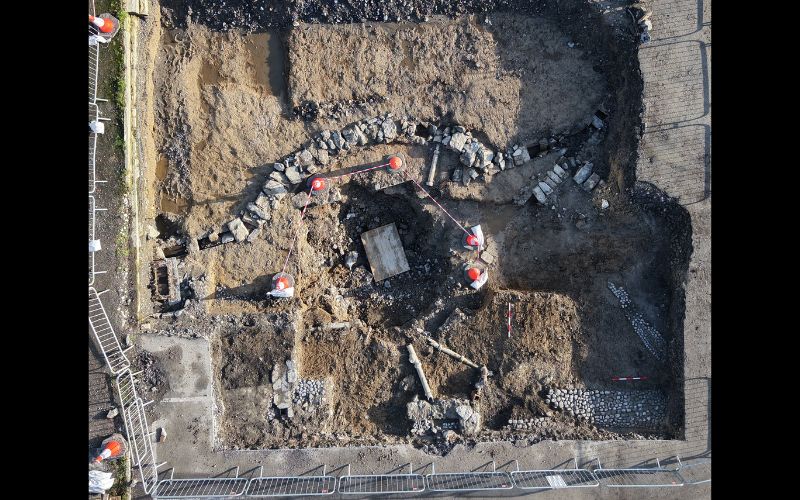
Well shaft, under excavation. (ODAIT)
Material evidence
The excavation continues to recover material and objects from the four phases of the site’s history. All evidence recovered is being photographed, catalogued, and retained by ODAIT in a dignified and respectful manner consistent with international standards and best practice.
Objects recovered from the period of the institution include a glass baby feeder.
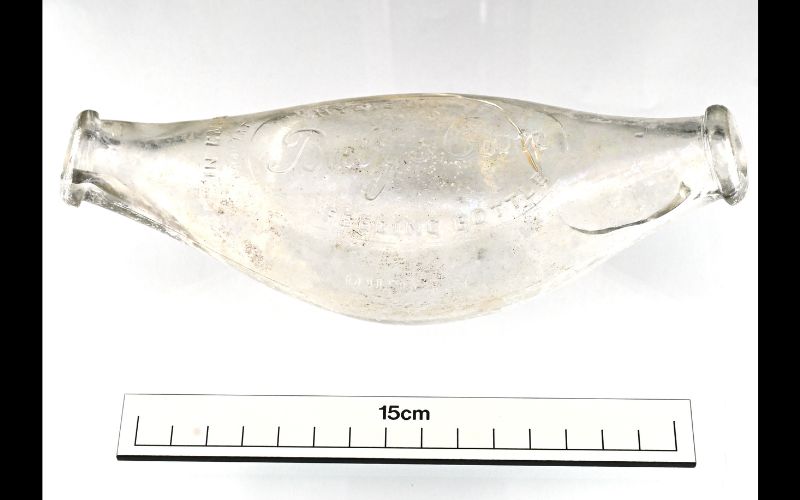
Glass hygienic baby feeder, uncovered during the excavation. (ODAIT)
Partial replica of the subsurface multi-chambered tank
The excavation of the comingled infant remains identified during the 2016/2017 excavations in the subsurface concrete chambers on the site of a historic sewage system in the Memorial Garden presents ODAIT with a unique combination of forensic and engineering challenges.
To test varying methodologies and ensure adherence to international standards and best practice, ODAIT is constructing an above-ground replica of a section of this tank.
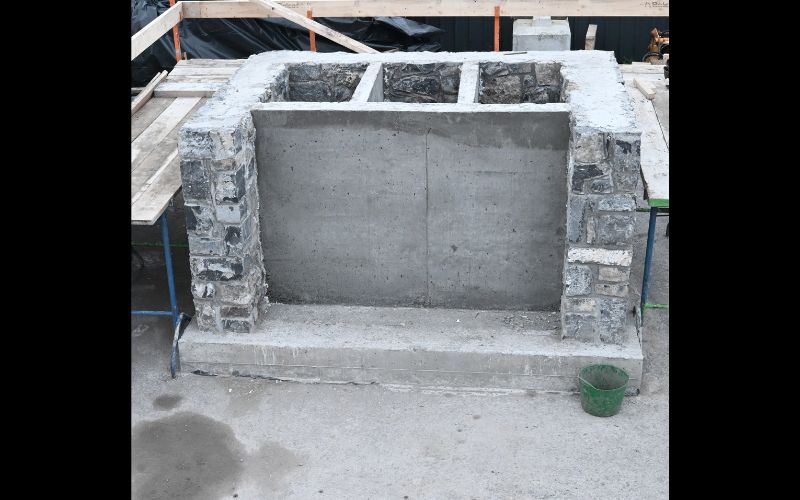
February 5, 2026: Partial replica of the subsurface multi-chambered tank. (ODAIT)
About the Tuam Mother and Baby Home in Co Galway
The Tuam Mother and Baby Home was an institution for unmarried mothers and their children. Run by the Bon Secours Sisters, it operated from 1925 to 1961.
In 2014, local amateur historian Catherine Corless was researching the Tuam Home's history when she discovered records showing that 796 children had died at the Home, but burial records could not be found, sparking suspicion of a mass grave at the site.
“Significant quantities” of human remains were discovered at the site in 2016 and 2017.
In January 2021, nearly six years after the Mother and Baby Homes Commission of Investigation was launched, the Final Report of the Commission of Investigation into Mother and Baby Homes was published.
Including the Tuam Home, the Commission investigated 18 homes across Ireland, ultimately finding that "a total of about 9,000 children died in the institutions under investigation - about 15% of all the children who were in the institutions."
The report later states: "There is no single explanation for the appalling level of infant mortality in Irish mother and baby homes."
The report says that "a particular catalyst" for the formation of the investigative Commission "was the discovery by Catherine Corless of the possible burial arrangements for children who died in the Tuam Children’s Home."
Following the publication of the report, the Irish Government offered a formal apology to victims, survivors, and their relatives.
In November 2021, the Irish Government published its Action Plan for Survivors and Former Residents of Mother and Baby and County Home Institutions. Part of the plan was a commitment to "advance burials legislation to support the excavation, exhumation and, where possible, identification of remains, and their dignified reburial."
In July 2022, the Institutional Burials Act became law, allowing exhumations to take place at former Mother and Baby Homes across Ireland. The Irish Government established ODAIT as part of the Act that October, and in May 2023, Daniel MacSweeney was tasked with overseeing the excavations of children's remains at the site at Tuam.
Pre-excavation works began at the Tuam site in June 2025, and the excavation commenced on July 14.
The excavations, which are expected to take 24 months to complete, continue. The next technical update will be issued in April.


Comments