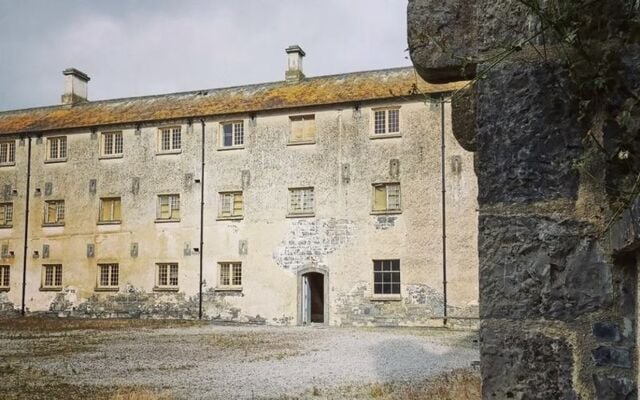
The hauntingly preserved Irish Workhouse Centre in Portumna has been chosen as the setting for the National Famine Commemoration in May 2026. This decision marks the first time the solemn state event will be held in County Galway to honour the memory of those who perished during An Gorta Mór.
Minister for Culture, Communications and Sport Patrick O'Donovan has confirmed that the National Famine Commemoration will take place within the historic Portumna Workhouse complex. The upcoming ceremony is set to include military honours and a solemn wreath-laying service to remember the victims of the Great Irish Famine at one of the few remaining workhouse sites in Ireland. This is the first time the State Commemoration has taken place in County Galway.
Minister O'Donovan described the selection of Portumna as a decision made with deep respect and noted that the site bears direct witness to the hardship experienced during that tragic era. He expressed his eagerness to work with the local community to ensure the victims are remembered with dignity at a location that offers a uniquely fitting setting for national reflection.
Minister O’Donovan said, "The Irish Workhouse Centre in Portumna stands on a site of immense historical significance, a place that bears direct witness to the hardship, loss, and upheaval experienced arising from An Gorta Mór. As one of the best-preserved workhouse complexes in the country, it offers a uniquely fitting setting for reflection on one of the most defining and tragic periods in our nation’s history."


Minister for Tourism, Culture, Arts, Gaeltacht, Sport and Media Patrick O'Donovan.
Minister O’Donovan also noted the importance of creating opportunities to highlight Ireland’s enduring connections with the global Diaspora, and to celebrate the contributions of those who emigrated and their descendants around the world.
The National Famine Commemoration was established in 2008 and rotates by province annually. The selection of Portumna was made by the National Famine Commemoration Committee, following a call to the local authorities in Connacht in September.
Read more
The Portumna Famine Workhouse
The Portumna Workhouse in County Galway was established in 1852 as part of the Poor Law Union system introduced in Ireland in response to widespread poverty and the devastation of the Great Irish Famine (1845–1849).
It was designed by George Wilkinson, the architect responsible for many of Ireland’s workhouses, and built on a nine-acre site north of Portumna town. The facility was constructed to accommodate 600 inmates.
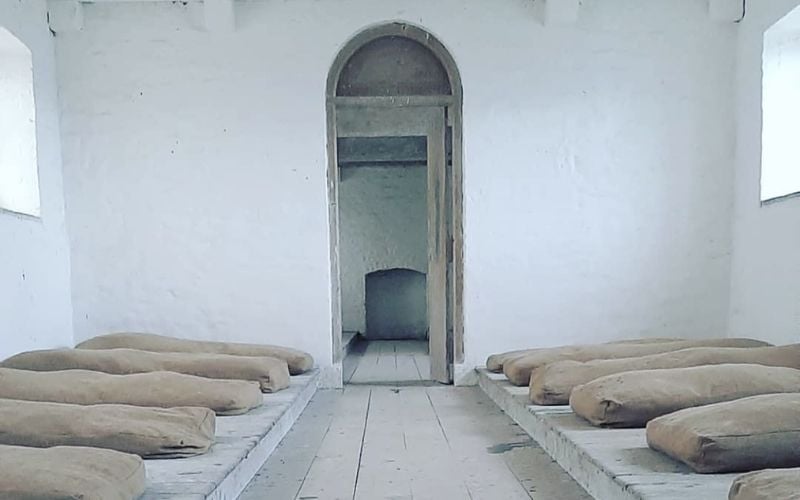
The Portumna Famine Workhouse housed 600 people.
The workhouse system was introduced under the Poor Law (Ireland) Act of 1838, modelled on the English system. It aimed to provide indoor relief to those unable to support themselves. Inmates received food and shelter in exchange for labour, but conditions were deliberately harsh to discourage dependency. Families entering the workhouse were segregated by gender and age, with only children under two allowed to remain with their mothers.
Although Portumna Workhouse opened after the worst years of the famine, its creation was a direct response to the crisis. The famine had overwhelmed existing workhouses, leading to gross overcrowding, disease, and mass deaths. The Portumna facility became a vital resource for the destitute population of southeast Galway, serving as a grim lifeline for many years.
The site featured a T-shaped layout, with separate blocks for men, women, and children, a hospital wing, a chapel, and a dining hall. The workhouse bell regulated daily life. The buildings, many of which remain, were constructed with high walls and barred windows, emphasizing the institution’s austere nature.



Comments