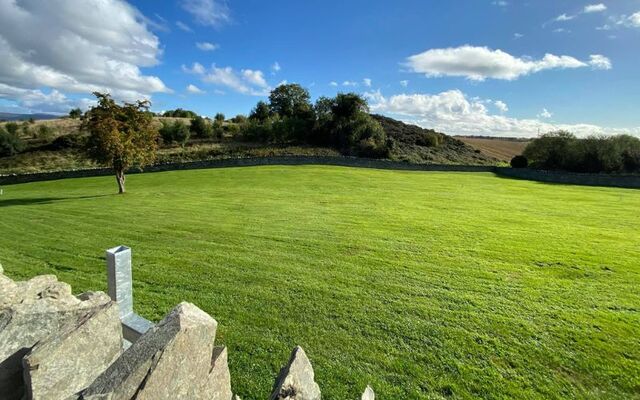
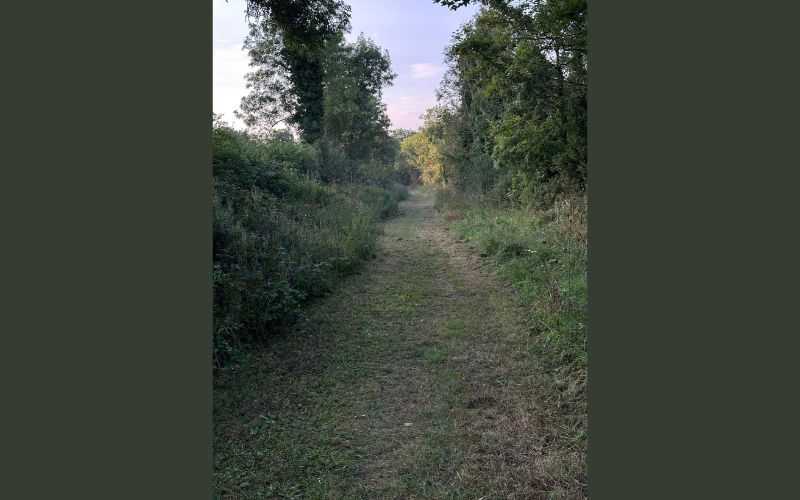
The Dundalk Famine Graveyard Association has launched a GoFundMe to raise money for the upkeep of the Sidella Greenway, a laneway that runs past the restored paupers' graveyard.
The group is seeking donations to pay for machinery, tidy-up works, and the planting of native trees and wildflowers along the lane. "We decided to take on a project maintaining the greenway that runs past the graveyard out to the Ardee Road," the organiser, Paul Gilgunn, writes on the GoFundMe page.
The Sidella Greenway is historically important because it served as a route into Dundalk town in the 1800s, including for the procession of bodies from the Dundalk Workhouse to the paupers' graveyard now known as the Dundalk Famine Graveyard. The graveyard itself was established in the mid-19th century and has been restored by local volunteers.
Campaigners say the lane is also rich in wildlife and contains a recently rediscovered holy site, locally known as St. Clare’s Well.
The Sidella Greenway is rich in wildlife and features St. Clare’s Well, the Dundalk Democrat reported, adding that the well is part of the greenway’s cultural and natural appeal.

The GoFundMe lists a target of €1,000 and shows donations already received toward that goal, with the fundraiser organised by Paul Gilgunn on behalf of the Dundalk Famine Graveyard Association.
The group hopes the project will encourage local schools and residents to use the lane for education and recreation. The association says successful fundraising would also help maintain other local amenities and greenways in the area.
Read more
Dundalk Famine Graveyard's history
The Dundalk Famine Graveyard in County Louth sits quietly at Killally, a short distance from the town of Dundalk. This unadorned field marks one of the starkest local reminders of the Great Famine and the human toll it inflicted on Ireland and its diaspora. For Irish Americans who trace family stories back to the mid-1800s, the site provides a tangible place to reflect on those losses and the conditions that drove so many to emigrate.
The graveyard grew out of crisis when the Dundalk Union Workhouse could no longer cope with the volume of deaths during the famine years. As the workhouse burial ground filled, the authorities opened a larger field at Killally in the early 1850s to receive paupers and inmates who died of starvation and fever. The move was pragmatic and grim in equal measure, and records from the period are fragmentary.
Burials were essentially communal and unmarked, which makes it challenging to assign names or precise numbers today. Local accounts point to thousands of interments between the late 1840s and the decades that followed, but exact tallies are lost to time. Many of those buried were children and families who succumbed to disease and want, and who did not leave headstones to mark their resting places.
Through much of the 20th century, the site lay overgrown and neglected, reflecting a wider national pattern of uneasy memory around famine burial grounds. Community groups and historians began to reclaim the story in the late 20th century, and a commemorative plaque was placed in the 1980s as a formal acknowledgment. Volunteers later cleared and tended the plot, and today modest markers and annual services help ensure that the dead are not forgotten.
To donate to the Dundalk Famine Graveyard Association's GoFundMe, click here.



Comments