Over the past three decades, John Stahl has watched America's immigration system transform from the front row. From the aftermath of the Diversity Visa lottery to today's executive orders, travel restrictions, and shifting enforcement priorities, the Immigration Legal Services Director at the Emerald Isle Immigration Center has spent his career helping families navigate one of the country's most misunderstood legal systems.
It's a distinction that has shaped not only his own career, but the lives of thousands of immigrants who have sought guidance through the Emerald Isle. Founded in 1988 to support newly arrived Irish immigrants, the organization now assists clients from more than 130 countries across its Queens and Bronx offices, reflecting the transformation of both New York and the immigrant experience itself.
Yet one of the best-known legal figures in Irish America has no Irish ancestry at all.
"I consider myself Irish through assimilation," Stahl says with a smile.
An Irish childhood in Woodside
Growing up in Woodside, Queens, however, Ireland was rarely far away. The neighborhood Stahl remembers from his childhood had a distinctly Irish character, populated by Irish families, businesses, and community institutions. Many of his friends came from Irish families, and it was that local connection that would eventually lead him to the Emerald Isle Immigration Center.
"It was very Irish growing up," he recalls. "Many of my friends and their families were Irish."
Woodside today tells a different story. Together with neighboring Jackson Heights, it has become one of the most diverse parts of Queens, home to immigrant communities from across the world. The Irish population, Stahl says, has become more dispersed, even as its presence remains visible in the neighborhood.
Emerald Isle has evolved alongside it. What began as an organization established primarily to help a new generation of Irish arrivals settle in New York now assists people from more than 130 countries.


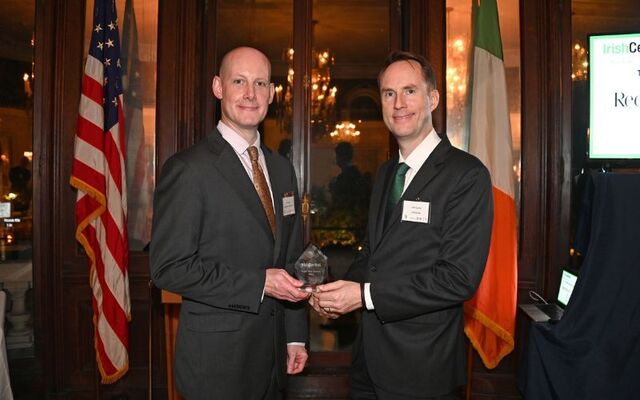
John Stahl representing the Emerald Isle.
"We're very much a community-serving agency now," Stahl says.
In many ways, the transformation Stahl has witnessed outside the center's Queens office has been replicated inside its doors. The nationalities have changed, and the Irish community has become more established and geographically dispersed.
Separating fact from fiction
Every week, clients from various places arrive at Emerald Isle with screenshots from social media, messages from relatives, or advice passed from friend to friend, convinced that a new immigration announcement has changed everything overnight. Stahl says one of the most important parts of his job isn't preparing applications. It's separating fact from fiction.
"People depend on us to give them reliable and trustworthy information," he says. "There's a lot of misinformation and rumors flying around, especially now with everything online and on social media."
Some of it, he adds, comes from people looking to exploit the vulnerable with false promises and false hope. For many low-income immigrants, distinguishing trustworthy legal advice from misinformation has become almost as important as understanding the law itself.
"Sometimes the information isn't what people want to hear," Stahl says. "But it's important to tell them honestly where they stand."
That responsibility has changed the profession itself. "You can't kind of dabble in it among other fields," he says. "You have to stay on top of it that frequently."
Stahl never expected immigration law to become his life's work. He knew early on that he wanted to become a lawyer. Studying political science at Binghamton University, then law at St. John's University, he developed an interest in international law and human rights. A part-time job as a citizenship counselor at Emerald Isle during law school proved decisive.
"I took a class in immigration law while I was there, and it just sparked my interest," he recalls. "Being able to help individuals and see tangible results from affecting people's lives just drew me in."
More than thirty years later, he has never left.
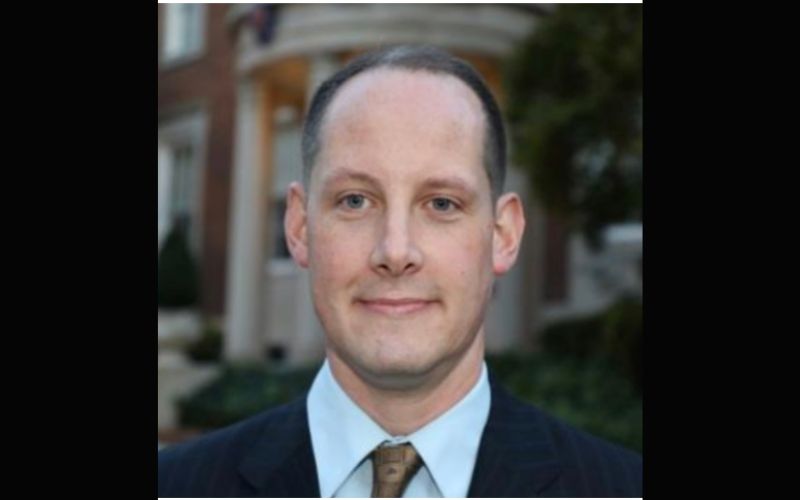
John Stahl.
1990s unlawful presence bars
If one piece of legislation has cast the longest shadow over Stahl's career, it is the three- and ten-year unlawful presence bars introduced by Congress in the mid-1990s. The timing was significant: thousands of previously undocumented Irish immigrants had just obtained green cards through the Diversity Visa lottery, and Emerald Isle was helping many take the next step toward citizenship.
The legislation meant that anyone who accumulated sufficient unlawful presence after overstaying a visa and later left the United States could face a three or ten-year bar on re-entry.
"It created a new class of undocumented immigrants who were essentially stuck here," Stahl says. "Many had built families and businesses in America. But leaving the country could mean they wouldn't be able to return."
For Irish America, such changes carried particular weight. Immigration had shaped generations of Irish communities in the United States, while legalization opportunities in the late twentieth century gave thousands of more recent arrivals a route to permanent status. Those who remained undocumented, however, increasingly found themselves with fewer options and deeper roots in a country they could not safely leave.
Those consequences are still unfolding. In many cases, Stahl says, parents who once feared they'd never regularize their status are only now finding a pathway because their American-born children have reached adulthood, old enough to sponsor a parent for permanent residence.
Old laws, new enforcement
Thirty years later, the uncertainty hasn't disappeared. Under the current administration, immigration has again become one of the most contentious issues in American politics. Yet, as Stahl points out, the significance often lies less in entirely new laws than in changes to enforcement priorities, executive policies, and the way existing rules are applied.
"The laws haven't changed too much from when I first started," he says. "It's more how those laws are executed and implemented."
Recent federal guidance affecting people applying for green cards from within the United States has raised concerns that more applicants could be required to complete the process abroad, a significant change for some undocumented applicants, since leaving the country could trigger the very bars that have defined so much of Stahl's career.
At the same time, a pause affecting green card processing for applicants from 75 countries, together with wider travel restrictions, has created fresh uncertainty for families with applications already underway.
"We're trying to get the message out," Stahl says. "Know your documentation, speak to the right people before traveling, and be prepared."
Beyond New York
His work extends well beyond New York. For almost a decade, Stahl has worked with the Coalition of Irish Immigration Centers, analyzing federal policy and helping translate often technical legal developments into practical guidance for Irish communities across America.
For all that has changed, one ambition has remained central to Emerald Isle's work.
"Citizenship has always been our mission," Stahl says. "That's the ultimate goal."
Ask Stahl which case he remembers most, and he doesn't point to a dramatic legal victory. Instead, he talks about relationships measured in decades, not months.
A woman from El Salvador first arrived at Emerald Isle seeking Temporary Protected Status. Years later, her American-born son was old enough to sponsor her for a green card. Five years after that, she returned once more, this time to become an American citizen.
"That case was over decades," Stahl says. "You build that trust, that relationship."
Those are the moments that keep him motivated. Others are far more difficult.
"There are many that don't have any options," he says.
For those families, his role often becomes preparing contingency plans rather than legal applications, ensuring parents understand their rights and what could happen to their families if detention or removal becomes a reality.
"We're all immigrants"
His own family's story shaped that empathy. His maternal grandparents emigrated from Cuba, while his father's family traces its roots to Germany, generations removed. His grandfather became a U.S. citizen after serving in the military, and his grandmother later joined him in America and obtained her own citizenship through their marriage.
"We're all immigrants," Stahl says. "I think keeping that in mind is important."
The Irish neighborhood Stahl knew as a child has changed, just as generations of Irish immigrants before him settled, raised families, and moved elsewhere. New communities have followed, arriving with different languages and from different countries but often confronting the same uncertainty about how to establish a secure life in America.
Emerald Isle has changed with them, retaining its Irish identity while broadening the community it serves.
When asked what he hopes the organization will continue to provide, Stahl doesn't discuss politics or policy. He talks about certainty.
"I hope we'll continue to be that reliable and trustworthy beacon for immigrants," he says, "helping people understand their rights and giving families the security and stability to build their lives here."
Thirty years after first joining Emerald Isle as a law student, Stahl remains convinced he made the right choice.
Immigration law has become faster-moving, more specialized, and, at times, more politically charged than ever before. But for him, the work has always come back to the same thing: helping people understand their options and giving them honest advice, even when the answer isn't the one they were hoping for.
"You have to tell people where they stand," he says. "That's what they come to us for, and we'll help them navigate their next steps as best we can."
* John Stahl is a previous honoree and judge of the IrishCentral Legal Elite Awards, which celebrate excellence, integrity and service across the Irish-American legal community. Nominations are now open for the 2026 awards, and IrishCentral is also welcoming sponsors interested in supporting this year's event. To submit a nomination, learn more about sponsorship opportunities, or find out more about the awards, visit the IrishCentral Legal Elite Awards.




Comments