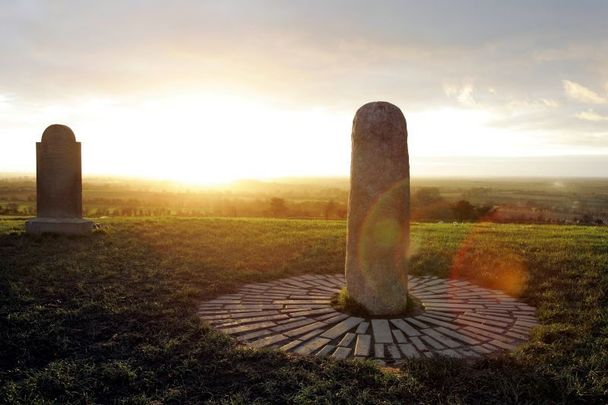
You do not have to travel very far in Ireland to stumble across ancient sites from various time periods in history.
Ireland is dotted with these old structures that date from the Mesolithic Period through the Neolithic Age, Bronze Age, Iron Age, and Medieval times. What's familiar to many of the most famous of these sites is their recurring use as capitals for Ireland's royal societies.
Old Ireland comprised different kingdoms ruled by various kings. In early Irish literature, we can explore the Historical Cycle, or the Cycle of the Kings, which overlaps with the Ulster and Fenian cycles, covering the period from 431 B.C. to the 11th century. The period ended with King Brian Ború, Ireland’s greatest high king.
Each of the many kings required a center from which to rule. Royal families held varying levels of importance, possibly based on their popularity, wealth, influence, and military capacity. The major kings based themselves around sites where they could hold assemblies, oversee athletic games, and perform new inaugurations.
The royal capitals provide us with excellent accounts of what life was like for an ancient people and culture, as well as their beliefs and practices. The sites also pose many unanswered questions, allowing us to continue studying them in the hope of learning more about our ancestors.
The ancient capitals were once great power bases in Ireland. A capital served as a demonstration of a king's strength, a place for games and worship, and, most importantly, as a sacred space for the ritual marriage of the newly inaugurated king to the goddess of the lands, its protector.
Upon exploration, the ancient royal sites have revealed many notable archaeological features, such as earthen works, standing stones, ring barrows, inauguration chairs, sacred trees, churches, and other places of worship, stone basins, etc.
Witnessing the grandeur in scale is impressive – it transports the mind’s eye back to the time when they were in use, which must have been a spectacular scene.
There were five central provinces (kingdoms), and each was seen to have contained a “Royal Site” for the ruling king.
Here’s where you can find them:
Munster
Cashel (Caisel) was the seat of the ancient Kings of Munster for centuries prior to the Norman invasion of Ireland. It has seen much building, destruction, and rebuilding throughout its nearly 900 years, in present-day Tipperary.
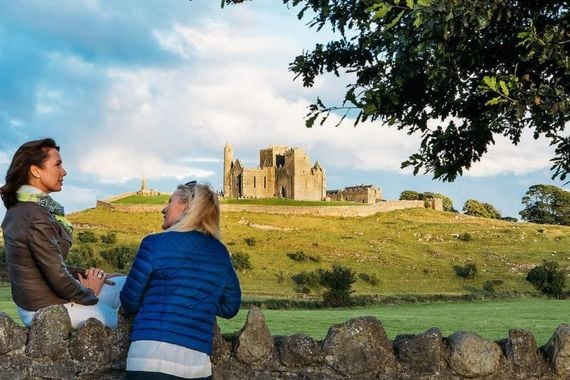

Rock of Cashel, County Tipperary.
Ulster
Navan Fort (Emain Macha), associated with Queen Macha and the Ulaid, was one of the great royal sites of pre-Christian Ireland, in present-day Armagh.
Leinster
Dún Ailinne, another of the major royal sites in ancient Ireland, was where the Kings of Leinster were inaugurated. Dún Ailinne is in present-day Kildare.
Connaught
Rathcroghan (Cruachain), in present-day Co. Roscommon, is associated with Queen Meave. It was the capital of the Connachta and was believed to have had an entrance to the otherworld.
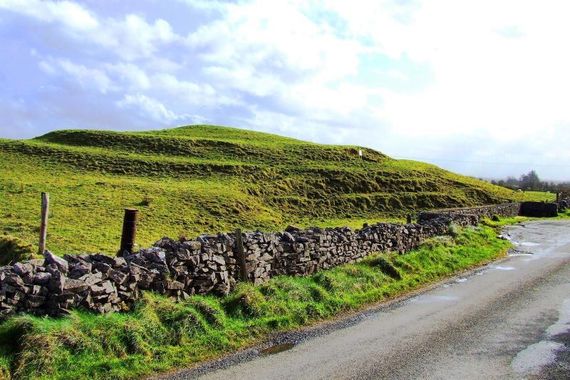
Rathcroghan (Cruachain), in present-day Co. Roscommon.
Meath
Hill of Tara (Teamhair), The Hill of Tara, located near the River Boyne in present-day County Meath, is regarded by many as the most important archaeological site in Ireland. It contains a number of ancient monuments, and, according to tradition, was the seat of Árd Rí na hÉireann, or the High Kings of Ireland.
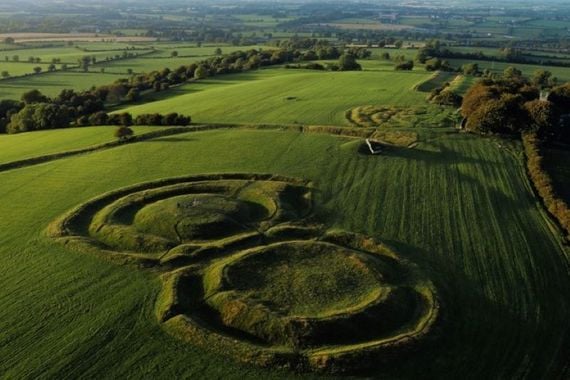
The Hill of Tara, located near the River Boyne in present-day County Meath.
Others
Tailtiu (Teltown) is another royal site where ancient games were held in honor of Tailtiu, daughter of the King of Spain, who married Eochaid Mac Eire, the last Firbolg king of Ireland. Tailtiu became the foster mother to the Sun/Storm God Lugh. Located in the current-day Co. Meath.
Tlachgta (Hill of the Ward) is another location in current-day Co. Meath, which honors the powerful druidess Tlachgta, who died giving birth to triplets on the hill. It is believed to be the birthplace of Samhain, better known today as Halloween. Fires were lit to honor Tlachgta, and the tradition has since been renewed in Ireland each Samhain.
*Ben Kesp is a writer and author of; Landed Estate e-book fiction series exploring the lives of the Anglo Irish; Irish History & Myth e-book series and a collection of short stories. To read more of his writing, visit his website here.
* Originally published in 2014, updated in 2022.

Comments