In 1709, a wave of German-speaking refugees arrived, and a sizeable minority was granted land in rural communities where a small but resilient group survived and adapted. Their descendants helped build the linen industry, founded early Methodist congregations overseas, and shaped Dublin commerce before becoming thoroughly woven into modern Irish society.
A refugee crisis has come to Britain. The new arrivals, fleeing famine and political persecution, have arrived in the United Kingdom, polarizing British society. Some accuse them of being “vagrants” and call for them to be deported, believing that they seek only to live off of the native taxpayer. Others show more sympathy, acknowledging their “moderate principles”, and criticising the repression that they had faced back home.
It is 1709, and about 13,000 refugees from the Palatinate, then a part of the Holy Roman Empire, had sailed to London, seeking help from the British monarchy. Unwanted in their homeland, the Palatines would be settled in both Britain itself and its North American colonies. Some of them, however, would be given land in Ireland, creating one of the island’s most fascinating diasporas.
In this essay, I will tell you about the Irish Palatines. I will discuss the townlands that they came to call their home, as well as their notable descendants, who include the founders of American Methodism, the owners of Switzer’s department store on Grafton Street, and one of the architects behind the World Health Organisation. Let’s tell their story.
The German Palatines hailed from the Middle Rhine region of the Holy Roman Empire, an area now located in western Germany. Through the late 17th and early 18th centuries, the Palatines, most of whom were Lutheran Protestants, were subjected to military attacks by Catholic France. The French looted and destroyed Palatine cities, resulting in a collapse in their living standards.
The Palatines, most of whom were agricultural labourers, would not stick around. Aligned militarily with the United Kingdom, thousands of Palatines would flee to Britain in 1709, after the coldest winter in Europe in the last 500 years. The ensuing crop failure led to a continent-wide famine, killing hundreds of thousands of people. In all, about 13,000 Palatines sailed to London, with most of them being resettled in Britain itself, or in its American colonies, like New York, North Carolina and Pennsylvania. However, a significant minority, numbering almost 3,000, would instead be taken to Ireland.
Read more
Following the Protestant Reformation in the country almost 200 years earlier, the English Crown sought to consolidate its rule over Ireland. It confiscated land from Catholic landowners, granting them to Protestant settlers from England and Scotland, and viciously suppressed native rebellions. For some however, yet more loyal Protestants were needed in Ireland. In July 1709, a committee of Irish Protestant landlords wrote to Queen Anne, asking that some Palatine families be given land on abandoned farms. Their wishes were granted – by the end of the year, some Palatines had settled in Ireland.
Upon their arrival, Palatine families were granted eight acres of land each. The government agreed to pay their rent for twenty years, and supplied every man with muskets to protect themselves. The Palatine arrivals complained of victimisation by their hostile neighbours, and many of them would leave Ireland. Within three years, two-thirds of the initial arrivals had left the island, choosing instead to book a passage to the American colonies or to return to the United Kingdom. Nonetheless, some land proprietors convinced Palatines to stay, the most famous of whom was Sir Thomas Southwell of Castle matrix, a townland near Rathkeale in County Limerick.
An MP for the county, and a supporter of William of Orange during the Williamite Wars, Southwell had been instrumental in bringing French-speaking Huguenot Protestants to Ireland, helping Louis Crommelin to set up the country’s first linen factory in Lisburn in County Antrim. Now keen to do the same for the Palatines, he secured government support to help get them set up and financed their initial needs at considerable personal expense. His venture was a success - by 1714, about 130 families lived on his lands.
The Palatines of Castle matrix were an insular community – between 1742 and 1780, only seven of the eighty Palatine marriages in the area included someone from outside their close-knit group. Through the 18th century, they continued to speak German as their first language, and elected a head burgomaster, a type of German mayoral figure. They cultivated flax to support the booming linen industry, and slept in duvets, then a novel import to Ireland from the continent.
As the century progressed, and their rental agreements with the central government expired, some of the Castlematrix Palatines moved out, and bought land in Carlow, Tipperary and Kilkenny, where prices were lower. Abel Ram, an Anglo-Irish landowner from County Wexford, championed Palatine rights, and set up farming colonies for them in Old Ross and in Gorey.
The Palatines were devout Lutherans, but upon their arrival in Ireland, managed to blend their faith with the Anglican practices that were expected of them by the government. Lacking a religious leader of their own, many Palatines turned to John Wesley, an English cleric who founded Methodism, a new sect of Protestantism, with his younger brother.
In 1756, Wesley visited a group of Palatines in Limerick, writing with admiration of their sobriety and lack of deceitfulness. Over the next few years, more Irish Palatines would go to the United States, and settle in New York. The most famous of these was Philip Embury, the grandson of a Palatine who had been given land by Thomas Southwell. Fluent in both German and English, Embury had initially converted to Methodism in 1752, and rose to become a Methodist preacher by 1758. A qualified carpenter, he helped to build a Methodist chapel in Rathkeale, but, in 1760, would leave for North America with some of his friends.
Once he arrived in New York, Embury set up a linen business, but prompted by his cousin, Barbara Heck, he resumed preaching in about 1766. With help from Irish and English Methodists, Embury and Heck raised enough money to buy a plot of land on John Street in Lower Manhattan, where they built a chapel. Their chapel was the first in the world to be named after John Wesley, and was probably the first Methodist place of worship to be founded in the Americas.
Today, Methodist churches make up the second largest Protestant denomination in the United States, with over 10 million members, and its members have spanned the racial divide, including figures such as George W. Bush, Hillary Clinton and Rosa Parks. To this day, Embury and Heck are considered to be the pioneers of American Methodism.
Nor were Embury and Heck were not the only Irish Palatines to make their mark on American society. Mary Elizabeth Switzer, the daughter of a Limerick Palatine, was born and raised in Boston, and grew up admiring left-wing Irish political leaders, like James Connolly, James Larkin and Con Lehane. During her working life, she held numerous US civil service jobs, eventually overseeing numerous nationwide social welfare programs.
She was a vocal supporter of disability rights, and upon her retirement, had become the most important female bureaucrat in the American government. She even helped to draft the founding constitution of the World Health Organisation (WHO).
Read more
Back in Ireland, the descendants of the original Palatines became assimilated into Irish society, anglicising their names, and becoming involved in Irish political and economic affairs. Through the early 19th century, Palatine surnames appeared on petitions calling for Catholic Emancipation. After the Famine, some of them joined the Land League, including Sylvester Poff.
Poff, a Kerry farmer, had joined the League after he and his family had been evicted from their land. In 1882, he, along with James Barrett, his cousin, were wrongly accused of murdering a local farmer, and the following year, both men were hanged in Tralee Gaol. They were granted posthumous pardons by President Michael D. Higgins only in 2024.
Some Palatines left rural Ireland altogether and moved to Dublin. In 1838, John Switzer, born in County Tipperary, opened a draper store at 91 Grafton Street, and expanded the business to include department stores on neighbouring Wicklow Street. The store became synonymous with Christmas shopping in the city, before being bought by the Brown Thomas group in 1990. Margaret Hamilton Reid, a granddaughter of one of Switzer’s closest confidantes, would even become the chair of the Switzer Group in 1956, a position she would hold for almost 20 years, making her the first woman to lead a publicly traded Irish company.
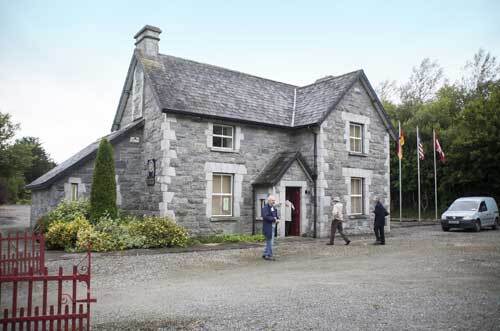
Today, the Palatines are firmly incorporated into the fabric of Irish society. In Rathkeale, the old railway station in the town was converted into an Irish Palatine Heritage Centre, while the Irish Palatine Association, founded in 1989, has members in the United States, Canada, Australia, New Zealand, and Ireland itself. The best-known Irish Palatine alive today is probably Donald Teskey. Born in Rathkeale in 1956, Teskey is a member of the Aosdána, an exclusive group of Irish artists. His paintings depict Irish seascapes and have been displayed in exhibits all over the world.
In this essay, I have talked about the Irish Palatines. I have touched on their backstory, the challenges that they faced, and some of the more notable Palatine figures. Theirs is a story of displacement and resilience, not dissimilar to those Irish people who were themselves forced to flee the island.
Indeed, many of the Wild Geese who fled Ireland in the late 17th century ended up in the Holy Roman Empire, serving in the armies of German-speaking princes. From medieval monasteries to Siemens’ construction of the Ardnacrusha power station to the European Union, the fates of Ireland and the territory of today’s Germany have always been intertwined – there is no reason for that to change now.
This article was submitted to the IrishCentral contributors network by a member of the global Irish community. To become an IrishCentral contributor click here.

Comments