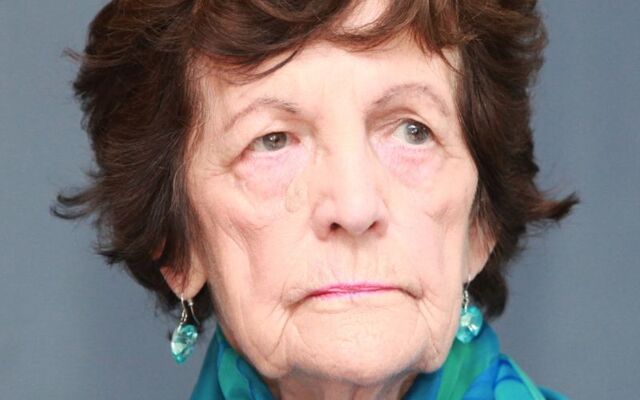
Survivors of Ireland's Mother and Baby Homes who now live in Britain will be protected from losing means-tested benefits and social-care support under a new law, named in honor of Irish campaigner Philomena Lee, who is now 93 years old.
Under Philomena's Law, which was enacted in the UK on October 30, former residents and survivors of Ireland's Mother and Baby Homes who now live in the UK can receive payments from the Irish Government's Mother and Baby and County Home Institutions Payment Scheme without losing means-tested benefits and social care. These payments will now also be exempt from UK income tax.
The legislation was introduced in the British House of Commons in March 2025 by Labour MP Liam Conlon, the son of Irish immigrants.
Conlon hailed the enactment of Philomena's Law as a "historic change," noting that it is the first time in UK law that a redress payment from a foreign government has been ring-fenced.
He added: "But above all, it is a long-awaited justice for thousands of survivors of these cruel institutions and shows them the respect and kindness they have so often been denied throughout their lives."
Introducing his legislation last year, Conlon said that it was wrong that survivors of Ireland's Mother and Baby Home now living in Britain "risk losing their benefits" if they accepted compensation from the Irish Government's redress scheme.
"Under our current rules, any money accepted through this payment scheme would be considered savings and could see them lose means-tested benefits and financial support for social care," Conlon said at the time.
He said the arrangement deterred some survivors from applying for the Irish redress scheme, while others who received a compensation offer had to weigh up whether it was worth accepting the money, or whether it would sink them into a worse financial situation overall.
To remedy the situation, Conlon proposed the introduction of an indefinite capital disregard, which he said would remove any risk to an applicant’s benefits.
Conlon said his legislation would be named in honor of Irish woman Philomena Lee, who gave birth to a son, Anthony, in the Sean Ross Abbey Mother and Baby Home in Roscrea, Co Tipperary, in 1952, but was forced by the nuns in the mother and baby home to give him up for adoption to the US when he was three years old.
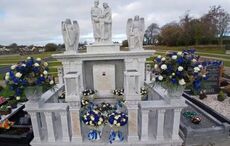
Anthony, who was renamed Michael Hess when he was adopted, traveled from the US to Ireland twice, in 1977 and 1993, to try and find his mother. The nuns at the Co Tipperary institution were unmoved by his pleas for help, but they did agree, in exchange for a hefty donation to the Catholic Church, to let him be buried in the convent.
The mother and son never got to reunite before his passing in 1995.
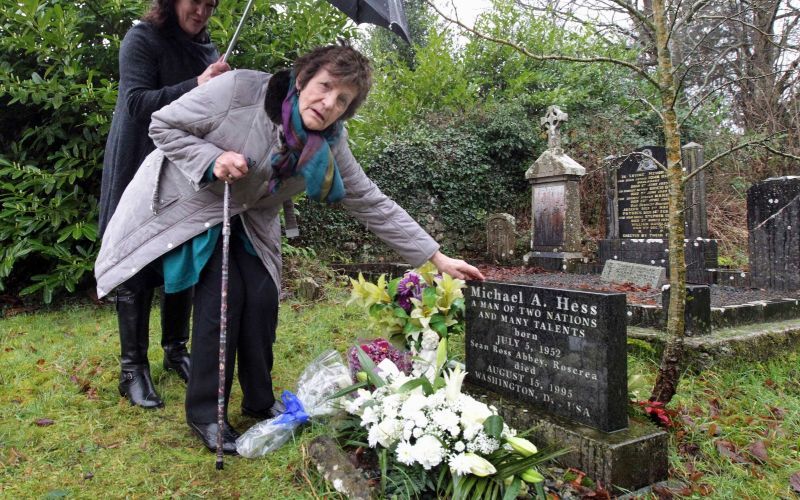

January 25, 2014: Philomena Lee at the grave of her son Anthony Lee (Michael Hess) at Sean Ross Abbey in Co Tipperary. (RollingNews.ie)
The Irish woman's story was chronicled in the 2009 book "The Lost Child of Philomena Lee" by British journalist Martin Sixsmith, which was later adapted into the 2013 Oscar-winning film "Philomena," starring Dame Judi Dench and Steve Coogan.
Conlon highlighted last year that Philomena Lee's story was not an isolated one and that, as "a direct result of the abuse and trauma they experienced," many survivors of Ireland's Mother and Baby Homes moved to England.
In 2021, the Irish Government finally offered a formal apology to the victims and survivors of Ireland's Mother and Baby Homes. Later that year, the Irish Cabinet approved an Action Plan and a Payment Scheme for Mother and Baby Home Survivors.
Conlon's legislation was supported by British-based advocacy groups Irish in Britain and London Irish Centre, as well as prominent figures including Siobhán McSweeney, Dara Ó Briain, Emma Dabiri, and Steve Coogan.
Earlier this year, following a summit between Taoiseach Micheál Martin and then-UK Prime Minister Keir Starmer in Co Cork, the UK agreed to disregard payments under Ireland’s Mother and Baby Redress Scheme, while Ireland agreed in principle to disregard means for compensation payments from UK schemes.
Philomena Lee's daughter Jane Libberton, who also supported the legislation, said after its enactment: "Having this law named after my mum means so much to our family. Through sharing her story, she helped give a voice to so many mothers and children whose suffering went unheard for far too long.
"For many survivors, the pain of separation, loss and the shame imposed on them has lasted a lifetime. Many spent decades carrying their experiences in silence, wondering what had happened to their children, their mothers or other family members. Seeking answers and recognition has often brought further heartache, and it has taken enormous courage to speak out.
"No payment can undo what happened or give back those lost years, but redress is an important acknowledgement of the suffering people endured. Survivors should be able to accept it without worrying about losing the benefits they rely on. I hope this change gives people the reassurance they need to apply.
"We are so grateful to MP Liam Conlon, Irish in Britain, and everyone who has worked to make Philomena’s Law a reality.
"It is a lasting tribute to my mum’s courage and to all those who have fought to be heard.”
View this post on Instagram
In Ireland, Taoiseach Micheál Martin and Minister for Children, Disability and Equality Norma Foley have both welcomed the enactment of Philomena's Law.
Applications to Ireland's Mother and Baby Institutions Payment Scheme can be made online or by post. To find out more or get help applying, visit PaymentScheme.ie or call 1800 843 354 free of charge from within Ireland. From outside Ireland, call +353 1 522 9992; charges may apply.