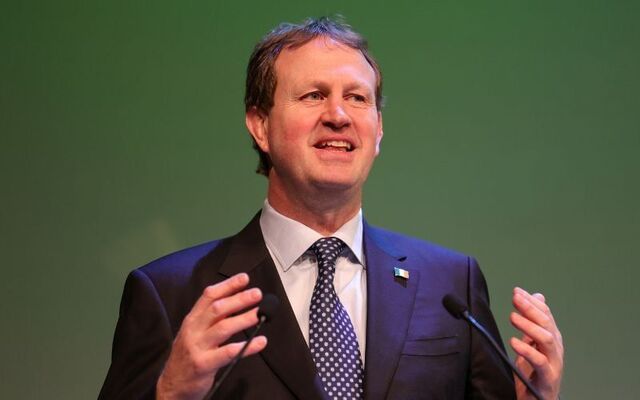
Justice Minister Jim O'Callaghan is preparing to ask the government to fast track a bill that supporters are calling the biggest shake up of Ireland's naturalization process in decades. The changes would affect anyone applying for Irish citizenship through residency, not those claiming citizenship through Irish ancestry or descent.
Under the draft Irish Nationality and Citizenship (Amendment) Bill 2026, applicants would need eight years of reckonable residence in Ireland before they could apply for citizenship. That is a sharp jump from the five year requirement introduced only in late 2025, which itself had replaced a three year threshold. Applicants would need two years of continuous residence immediately before applying, plus six years within the previous decade.
Language and civics tests
For the first time, applicants would have to prove they can communicate proficiently in English, Irish, or Irish Sign Language. They would also need to show a working knowledge of Irish civics, covering how society, government, and the Constitution function. The justice minister would have discretion to waive the language requirement in cases involving vulnerable applicants.
Spouses and civil partners of Irish citizens would face tighter rules too. The required length of marriage or partnership before applying would rise from three years to five, and the applicant would need five years of Irish residency, including two years immediately before applying.
Finance and welfare
The legislation would also introduce income requirements tied to Central Statistics Office data on earnings, labor costs, and the cost of living. Applicants would need to show they are self-sufficient and not likely to become an unreasonable burden on the state.
Read more
Anyone receiving social welfare payments or housing supports at any point during the naturalization process would be barred from citizenship, and applicants could not have received such payments for two years before applying. A record of an immigration offense, before or during the application, would also disqualify a candidate.
Time spent in Ireland under the EU's Temporary Protection Directive, the scheme that has sheltered tens of thousands of Ukrainians since 2022, would not count toward residency requirements for citizenship.
Ministerial powers
The bill would give the justice minister a distinct legal ground to revoke naturalized citizenship on public order and national security grounds, along with a faster process for carrying out revocations. Officials point to shifting security concerns across the EU as the reason behind the change.
Ireland's Minister for Justice, Home Affairs and Migration, Jim O'Callaghan, is expected to seek Cabinet approval on Wednesday for priority drafting of the bill, publication of a draft outline, and referral to the Oireachtas (Parliamentary) justice committee for pre-legislative scrutiny.
Read more
Shift on migration
The proposals arrive as O'Callaghan is also set to brief his Fianna Fáil colleagues at their pre-Dáil think-in in Tullamore on what the Irish Times reported he is calling a "firmer migration" policy. He is expected to point to a 39 percent drop in international protection applications since the EU's migration pact took effect in Ireland in June, and the government has framed the citizenship changes as bringing Ireland's naturalization system more in line with the rest of the EU.
The numbers show how central naturalization has become to Irish life in recent years. Nearly 235,000 people have become Irish citizens since 2021, including about 26,400 in 2025 alone. The most recent citizenship ceremony, held in Killarney in June, saw 4,600 new citizens from 139 countries take their oath.
For those who already hold citizenship through a parent or grandparent, these changes will not apply, since that process falls under separate rules for citizenship by descent. However, for the growing number of immigrants who call Ireland home, the path to an Irish passport is about to get considerably longer and more demanding.



Comments