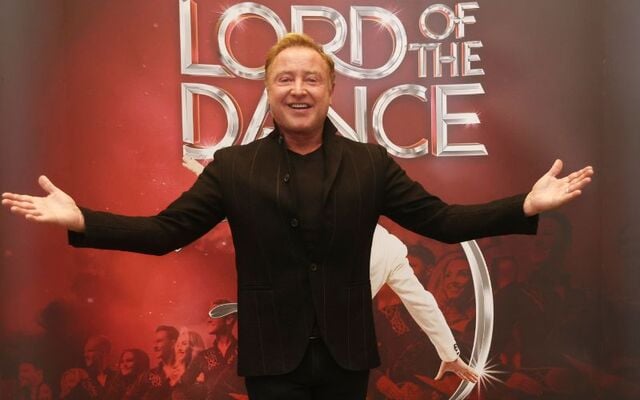
A company managing the multi-million-euro tour, Switzer, is pressing to extend an order barring Flatley from any involvement, but the star has said it doesn’t have the right to do this.
His barrister told the Belfast High Court yesterday that it was none of Switzer’s business if Flatley chose to "blow up the entire 'Lord Of The Dance'", so long as it was paid its fees.
The court heard claims Flatley had made "some horrendous business mistakes" which had cost him millions in borrowings, all at a time when he had no income. The court was also told that his movie flop "Blackbird" earned just €10,000 at the box office, leaving him € 4.5 million in debt.
He also has a € 9 million mortgage on his Co. Cork mansion, Castlehyde, it was claimed. It was also claimed he had borrowed €75,000 for his birthday party, and €50,000 to join the Monaco Yacht Club – all at a time when he had no income other than borrowings, the court heard.
But Flatley’s barrister, David Dunlop, said "lurid and false allegations" had been made about the dancer.
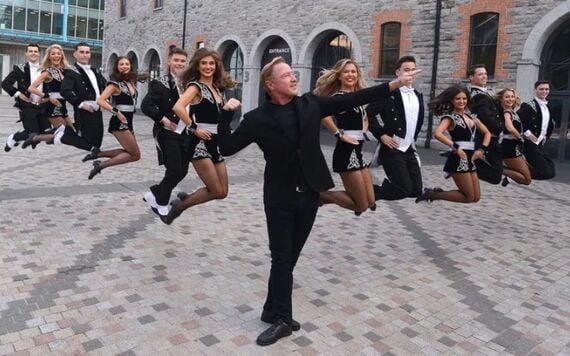

Michael Flatley at the launch of the 30th anniversary tour of "Lord of the Dance".
Gary McHugh, Switzer’s barrister, said a July 2024 agreement, allowing Switzer to manage the tour, had followed a fall-out between Flatley and Philip Moross, who had formed a partnership to run "Lord Of The Dance" in 2019.
He said Mr Moross, of music services group Cutting Edge, was owed £2.9million (€3.35million) by Flatley at the time, which was to be repaid on a monthly basis from 50% of the royalties earned by the "Lord Of The Dance" shows.
Flatley would get the other 50%, while Switzer would be paid fees of £35,000 (€40,000) a month for the first 24 months for its management of the tour, increasing to £40,000 (€46,000) a month, it was heard.
Read more
So far, Mr Moross had been paid back just under €500,000 under the agreement, the court heard. Mr McHugh said Flatley’s former financial advisor, Des Walshe, believed Flatley fully understood why the arrangement was structured in this way.
In a letter to Flatley’s solicitor on December 7 last year, Mr Walshe explained: "Michael’s business history of running tours at a loss, liquidating companies, and his widely acknowledged inability to run his business correctly were the principal reasons why control mechanisms were deemed necessary.
"Many promoters were reluctant to deal with Michael directly, as he has an industry-wide reputation for not paying his bills."

Michael Flatley's movie "Blackbird" made only €10,000 at the box office leaving him with €4.5m of debt.
Mr McHugh said: "The fear is that Mr Moross, who has the rights to the music in all of this, could pull the plug if there was default on the agreement made, and if… the repayment of the money due to him was going to be interfered with or impeded or scuppered."
He continued reading from Mr Walshe’s letter, which outlined a "growing sense of frustration with Michael’s misbehaviour and lies with people who have been working with him for a number of years".
Mr McHugh said Mr Walshe was using such "robust" language in a context where the 2024 agreement had been performing well for all sides, including Flatley.
"Michael is clearly feigning ignorance or a lack of understanding in order to avoid his debt obligations,’ the letter from Mr Walshe stated. ‘Since 2019, Michael has lived the lifestyle of a Monaco millionaire, without the funding to do so.
"He borrowed the initial money to move from Monaco from Philip Moross, despite advice to the contrary, as he did not even have the minimum cash required to open a residency bank account.
"Michael has essentially maintained this façade of wealth using other people’s money ever since. In the bluntest terms, he was faking it, on a multi-million-euro scale."

Michael Flatley.
He said Flatley had added to his difficulties with "some horrendous business mistakes" that have cost him millions in additional borrowings, all at a time when he had no income and was "running out of rope" financially.
The court heard that this included his failed movie "Blackbird", which earned just €10,000 in box office receipts, leaving Flatley €4.5million in debt.
He also has a €9 million mortgage for his Co Cork mansion, it was claimed. Instead of reining in his spending, he simply borrowed more money from more people, Mr Walsh said.
"It was all about image… Michael’s appetite for lifestyle cash was insatiable, including borrowing €75,000 for his birthday party, and €50,000 to join Monaco Yacht Club. All during a time when he had no income other than borrowings," he wrote.
Mr McHugh then quoted from a sworn statement from promoter Joe Gallagher, who said: "The current structure was put in place specifically to prevent Michael Flatley from defaulting on his obligations under those agreements – the very thing which he is trying to do now. The integrity of what was agreed must be protected in full."
Read more
Mr McHugh said this captured "the essence" of why Switzer sought the injunction now. He said Flatley had "unilaterally embarked on a course to bring the house down" and that risk and uncertainty were the "enemy of the entertainment industry".
"If the Switzer-Flatley agreement of 2024 is not performed to the Nth degree, it could very well have devastating consequences for shows going forward in 2026," Mr McHugh warned.
"If promoters and producers can’t be sure who is paying their bills, or if their bills will be paid, there are obvious and immediate consequences."
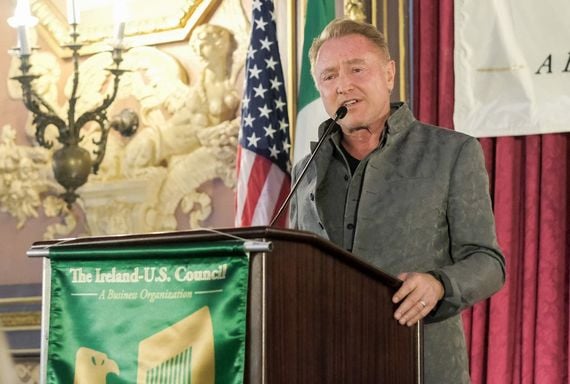
Michael Flatley.
He said that the injunction was needed "to hold the ring" pending further action by Switzer against Flatley regarding the alleged breach of their agreement. He said a promised alternative remedy in the form of damages from Flatley was worth ‘as much as a hill of bean’ in the circumstances.
In reply, Flatley’s barrister, David Dunlop, said Mr Walshe was "not attacking the ball, but attacking the player". He said Mr Walshe had made "lurid and false allegations" against Flatley, attacking his personality, while ignoring Switzer’s own alleged insolvency, and the fact that it was owned by Flatley.
Mr Dunlop said the reality was that Switzer had no rights to the tour, other than its licence, "which can be terminated by Mr Flatley", and service fee.
"It does not matter a jot to Switzer if Mr Flatley blows up the entire Lord Of The Dance in a number of months, so long as Switzer gets its fees," he said.
He said Switzer appeared to be presenting itself as saving Flatley from himself, and protecting or attempting to repay other unnamed creditors "hiding behind Switzer".
None of these creditors was before the court, he said, and Mr Moross had made no complaint. He said Switzer could not legally divert any revenue from the tour to anyone other than its sole shareholder, Flatley.
Mr Dunlop appealed to the court not to ‘handcuff’ the parties together and force them to work side by side, in circumstances where they were at "open war" and the "trust has completely gone".
He said Switzer could cause "untold and unquantifiable" damage to the tour over the next 12 months, with no impact on itself, as it had "no skin in the game".
"It is an injunction which will lead to catastrophe, as it will simply be impossible for the court to police, because neither party is able to work, one with the other," he said.
Judge Gerald Simpson said he would deliver his judgment this afternoon, as the first Lord Of The Dance show this year is due to be held in Dublin next week.
* This article was originally published on Extra.ie.




Comments