
Legend has it that Stingy Jack tricked the devil twice and was rewarded with a place in neither heaven nor hell, left instead to wander the dark with a lump of burning coal glowing inside a hollowed turnip.
In Ireland, as well as Scotland, people made their own versions of Jack’s lanterns by carving scary faces into turnips, placing candles inside them, which were used to frighten off evil spirits on the night of October 31.
Today, a model of one is on display at the Irish Museum of Country Life in Co Mayo.
Immigrants are understood to have brought the tradition with them abroad to America, where today's Jack-o-lanterns are not always as spooky-looking, instead featuring playful faces in orange pumpkins.
Did you know carved turnips were the original scary lanterns in Ireland for #Halloween? The pumpkin is a later American twist on this tradition. Clodagh Doyle, The Keeper of the folklife collection at the NMI explains it all here: https://t.co/twYJ6qQcNv pic.twitter.com/GAoIBD7XKP
— National Museum of Ireland (@NMIreland) October 22, 2024
The Jack-o-Lantern story in Irish folklore
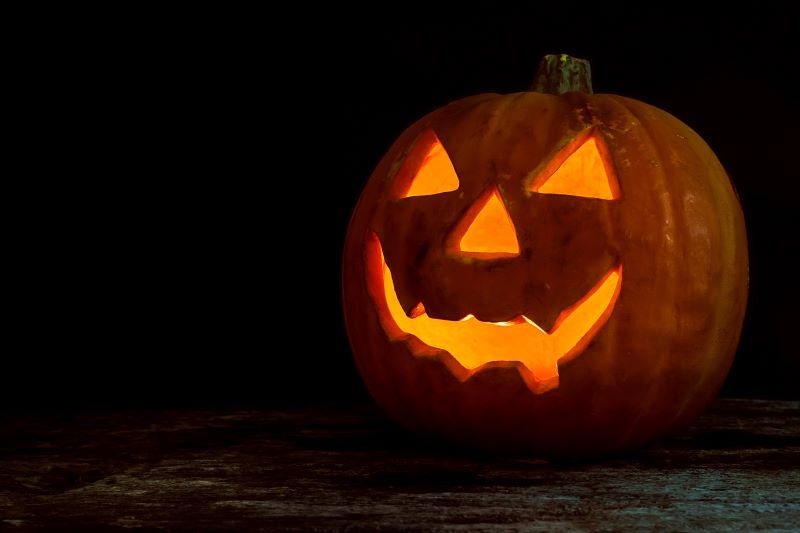

(Getty Images)
As the tale goes, Stingy Jack invited the devil for a drink and convinced him to shape-shift into a coin to pay with. When the devil obliged, Jack decided he wanted the coin for other purposes and kept it in his pocket alongside a small, silver cross to prevent it from turning back into the devil.
Jack eventually freed the devil under the condition that he wouldn’t bother Jack for one year, and wouldn’t claim Jack’s soul once he died. The next year, Jack tricked the devil once more by convincing him to climb up a tree to fetch a piece of fruit. When he was up in the tree, Jack carved a cross into the trunk so the devil couldn’t come down until he swore he wouldn’t bother Stingy Jack for another ten years.
When Jack died, God wouldn’t allow him into heaven, nor would the Devil allow him into hell, having been tricked. Instead, Jack was sent into the eternal night, with a burning coal inside a carved-out turnip to light his way. He’s been roaming the earth ever since. The Irish began to refer to this spooky figure as “Jack of the Lantern,” which then became “Jack O’Lantern.”
What was the original purpose for the use of the Jack-o-lantern at Halloween?
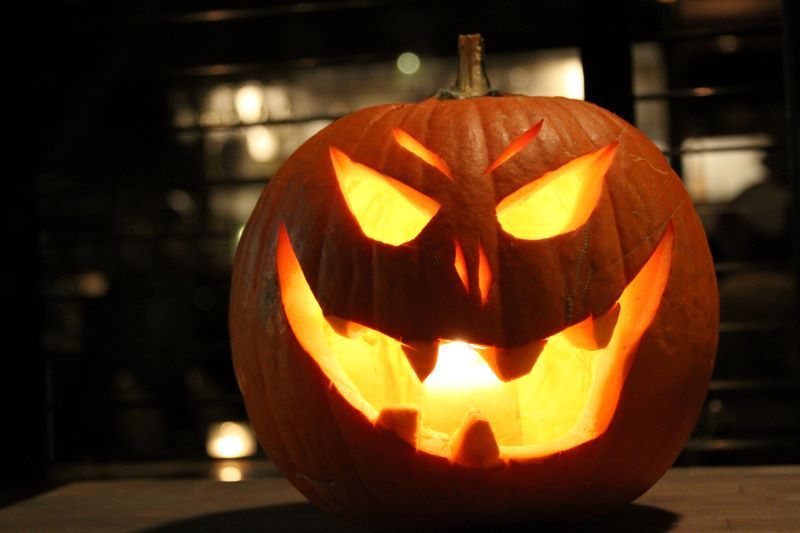
(Getty Images)
This legend is why people in Ireland and Scotland began to make their own versions of Jack’s lantern by carving grotesque faces into turnips, mangelwurzels, potatoes, and beets, placing them beside their homes to frighten away Stingy Jack and other wandering evil spirits and travelers.
Once this became a Halloween tradition, Jack-o-Lanterns were used as guides for people dressed in costume on Samhain (Oct 31 – Nov 1), a traditional Gaelic version of Halloween, seen as a night when the divide between the worlds of the living and the dead is especially thin. The Samhain festival marks the end of the harvest season and the beginning of winter, the “darker half” of the year.
When the Irish and Scots immigrated to America, bringing the tradition with them, they found that pumpkins, native to America, were perfect fruits for carving Jack-o-lanterns. Pumpkin Jack-o-Lanterns have been an integral part of Halloween festivities ever since.
Some believe that the Jack-o-Lanterns originated with All Saints’ Day, and represent Christian souls in purgatory. Roaming Stingy Jack is, after all, in what would be considered purgatory.
Was the Jack-o-Lantern really an Irish tradition?
Although the idea that the myth of the Jack-o-Lanterns is Irish is widely held, there is no scholarly research into Irish customs and mythology that proves it so. There is also evidence of turnips being used for what was called a “Hoberdy’s Lantern” in Worcestershire, England at the end of the 18th Century. Hoberdy's Lanterns had carved-out faces in turnips and the stump of a candle within.
Pumpkins eh? here's proper scary, a traditional Irish Jack-O-Lantern made from a turnip. It dates from 1903 and was carved at Baile na Finne, Co. Donegal (it now resides at the Irish Museum of Country Life) pic.twitter.com/bSnnqSBJBm
— Irish Archaeology (@irarchaeology) October 30, 2020
You can learn more about scary Irish Jack-o-lanterns here:
* Originally published in 2014, updated in Oct 2025.

Comments