With the Winter Olympics upon us, we have a chance to watch sports that we rarely see. Sports such as curling, luge, bobsleigh, and speed skating.
While the sport of speed skating has never taken off in Ireland due to a lack of ice, the country has some representation on the international stage thanks to Canadian-born Ryan McAnuff and Australian-born Liam O’Brien. Both compete in short track racing and had hopes of competing at Milan Cortina. Unfortunately, neither were successful in their efforts. For O’Brien, it would have been a chance to follow in the skates of his older sister Danielle, who competed in ice dance for Australia in 2014.
No doubt both McAnuff and O'Brien are proud to represent Ireland in their chosen sport. I wonder if they are aware of an important historical Irish link to speed skating, all down to one Irish-born father and his American-born sons.
The Hudson River in New York doesn’t freeze each winter like it used to in the 1800s. Back then, the winter months saw New Yorkers take to the ice for their enjoyment, but also to be competitive, and among the competitions was speed skating.
In the 1860s, while the United States was in the midst of a civil war, the city of Newburgh, just north of New York City, became known as the cradle of American speed skating. At the centre was Irish-born Timothy Donoghue. He was a Civil War veteran who had moved to the States with his family as a child. He is not to be confused with another Timothy Donoghue, born in Tipperary, who won a medal of honour during the conflict with the 69th New York Infantry, nicknamed the Fighting Irish. Our speed skating Donoghue was a lieutenant with the Newburgh Guards. He was also one of the best skaters of the era. He won a national championship in 1864, and it is said that he won enough prizes to decorate an entire wall. His successes earned him the nickname the “Newburgh Cyclone."
He wasn’t just known for speed, he was also known for his endurance. In 1872, he skated 30 miles up the frozen Hudson River to Poughkeepsie and back home. Then in the afternoon, he skated even further, going all the way up to the New York state capital, Albany, taking him over five hours. An incredible achievement.
Donoghue was also a champion rower. He also built boats and operated a business making oars considered the world’s best.
Interested in design, he was a pioneer in terms of speed skate design. He made all his own skates, which played a big part in his success. He skated with longer irons on the skate, which gave him an advantage as he didn’t have to swing his arms.
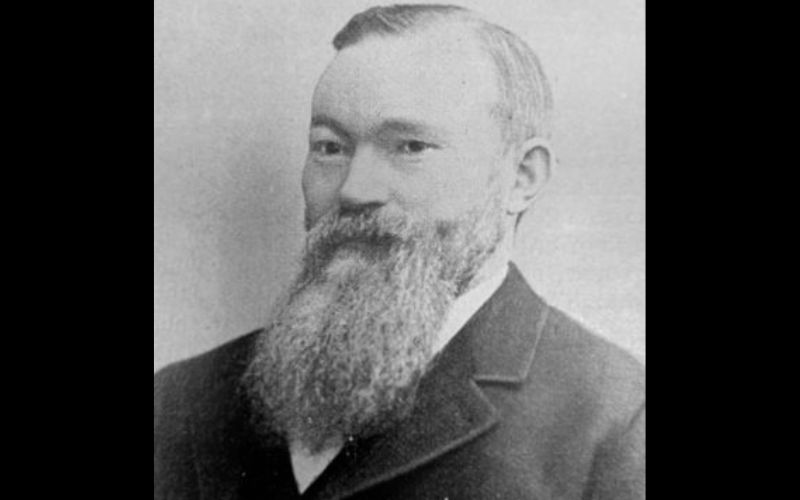

Timothy Donoghue.
His three sons Timothy Jr, James, and Joseph would benefit from his skate designs and expert training.
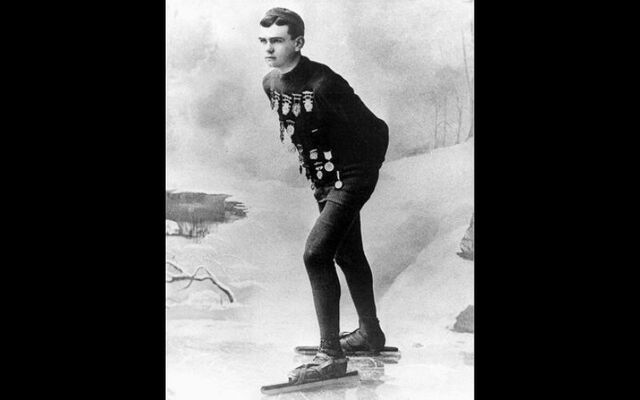
Joseph was the standout of the three brothers, reaching the pinnacle of the sport. Born in 1871, he won the state championship in 1887 and two years later travelled to Europe, where he developed a rivalry with Russian Alexander Panschin. Panschin was typically stronger at the shorter distances, whereas Donoghue excelled at the longer distances. The two would compete in various competitions in the Netherlands (a speed skating stronghold), Germany, Norway, and Austria. While skating in Vienna, Donoghue broke the two-mile record, for which the Vienna skating club presented a diamond ring.
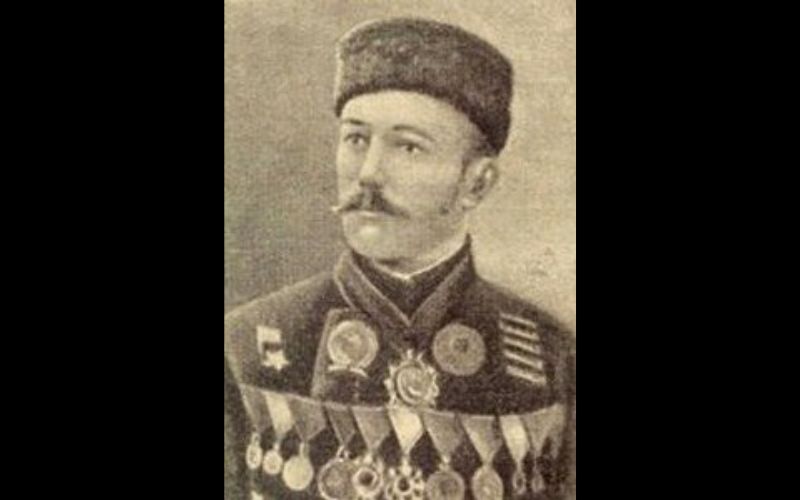
Alexander Panshin.
Back home in the States, Joe was a member of the well-to-do Manhattan Athletic Club. The club, nicknamed the “Cherry Diamonds,” was one of the first athletic clubs in New York, forming in 1877. He continued to have success at home and in 1890 returned to Europe to prepare for the World Championships in January 1891. After a training camp in Norway, Donoghue went to Amsterdam in high hopes. He conquered all before him, winning all four distances. He could truly claim to be the world champion, bringing much joy to his father, mother Margaret, his seven siblings, and the city of Newburgh.
At the same time that Joe was enjoying success at amateur level, in professional skating, Canadian Hugh McCormick was world champion in both 1890 and 1891. Hugh’s father Ralph was from Ireland and had settled in New Brunswick, where the frozen lakes and rivers were fertile ground for speed skating. Hugh was a professional skater from 1883 to 1895 and won numerous events from provincial championships, national championships, and North American championships.
It seems that Joe and Hugh did skate against each other in training sessions, but not competitively.
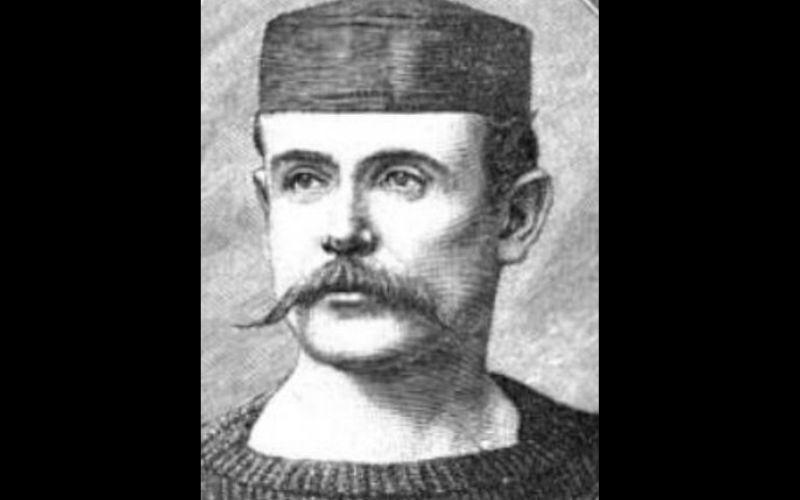
Hugh McCormick.
The success of 1891 was Joe’s high point. Soon after, speed skating began to evolve, moving indoors to rinks. Donoghue had grown up skating on natural ice and was unable to adapt to the confines of the rink. He specialised in long-distance skating and in 1893, he broke the record time for 100-mile skating, a record that stood until the 1960s. Joe was the first American to claim a speed skating world championship and was the only American to win it until Eric Leiden won it in 1977. Joe passed away in 1921, his father having passed in 1897. Joe was the first inductee in the National Speedskating Museum and Hall of Fame in 1960.
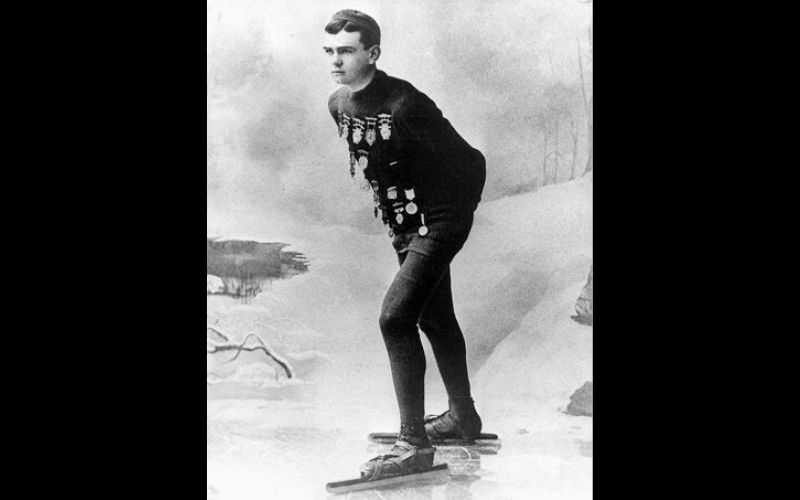
Joseph Donoghue. (Public Domain)
The Donoghue family made an incredible contribution to speed skating, not just in terms of racing but skate design. They were pioneers and innovators. The Donoghues were central to establishing an interest in speed skating in the United States.
Today, the United States is among the best at speed skating, considered third in the world behind the Netherlands and Norway. Jordan Stolz won Gold for the US on February 11 in the 1000 meters with an Olympic record time of 1:06.28, while Erin Jackson won Gold in the 500m event at the 2022 Winter Olympics in Beijing. In 2026, Jackson placed sixth in the Women's 1000m and fifth in the 500m event.
*Samuel Kingston is a sports historian from Clonakilty, West Cork. You can follow him on The Irish World of Sport on Instagram and Facebook.

Comments