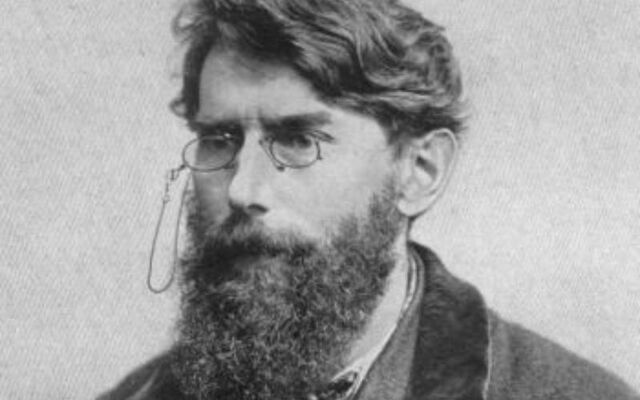
Editor's Note: The following piece has been shared with IrishCentral from the American Irish Historical Society's (AIHS) Treasures of Time, stories from the collections and archives of the American Irish Historical Society in New York City.
Perhaps one of the most famous Irish artists featured in our collections is George Russell (1867-1935), a mystical painter who went by the pseudonym of “Æ." Russell is remembered for his fantastical artwork, political work, philosophical writing, and connections to his literary contemporaries.
This week, we highlight two of his paintings housed in our collections and share more of his history for those familiar and unfamiliar.
Russell was born in Lurgan, Co. Armagh to a small linen-draping family. At age 11, they relocated to Dublin, where he was raised and educated. After his studies at Rathmines and the National College of Art and Design (then called the Metropolitan School of Art), he quickly became involved with high-standing artists and politicians, including his lifelong friend W.B. Yeats. This friendship, though long-lasting, was often strained.
In his early writing, he attempted to use the pseudonym “Aeon” (American: eon), but a publishing typo changed it to “Æ,” which remained his title throughout his life. His intended title of eternal wisdom was misspelled into a name that lasted long past his life.
Æ was a prominent figure in the Irish literary revival movement and stood out among his fellow writers due to his strange and mystical beliefs. This mysticism was so notorious that he appears as himself in the Scylla and Charybdis episode of James Joyce’s "Ulysses," somewhat mocked for his belief in “formless spiritual essences” (9.49, 185:14, p. 195 Gifford and Seidman). Joyce further plays with Æ by writing “A.E.I.O.U” to refer to a fictional debt.
Æ’s own writing was what drew the greatest attention to these interests. Reportedly, he experienced visions himself from an early age, and took these as a deep connection with Irish nature and the magic he saw within it. By the 1880s, he was involved with the teachings of theosophy, an esoteric belief system founded by Russian mystic Helena Blavatsky. Fascinated by both mystical beliefs and rising scientific theories (Freud, for instance), Æ became obsessed with uncovering the soul and its secrets. He believed in the likelihood of past lives, and cited his own experiences returning to previous ages in Ireland. Though moved by Eastern European and continental theorists, his philosophy took great inspiration from Irish folklore and myth, bridging the gap between popular discourse and his own personal experiences.
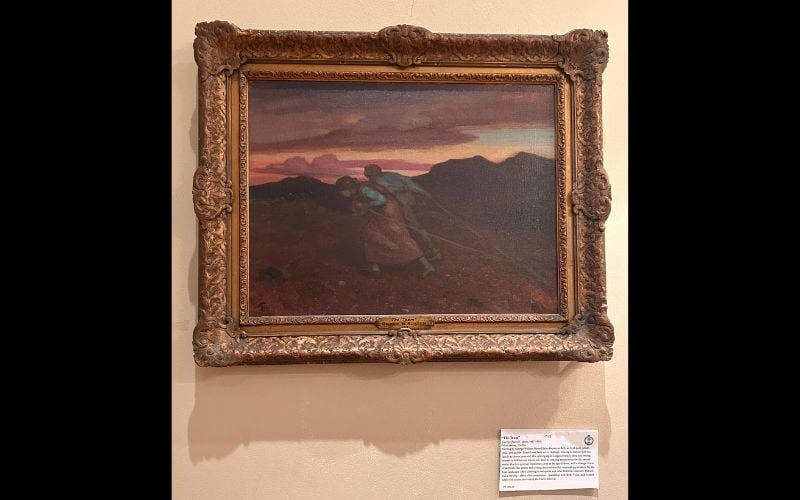

“The Team” 1913, Oil on canvas, 16x20in, PT 1982.24. (AIHS)
The above painting, “The Team,” was completed by Russell in 1913, when he was 46 years of age. In the same year, he had published a collection of poems and spoken publicly about his beliefs in Irish nationalism, chiefly regarding his support of the Dublin Lockout strikers. Though he largely considered himself a nationalist, he was a proud pacifist and took issue with some of the actions of the Irish Free State.
This painting is atypical for Æ, as is the other in our collection. They depict natural scenery as it would appear to the naked eye, lacking the typical psychedelic mysticism he is best known for.
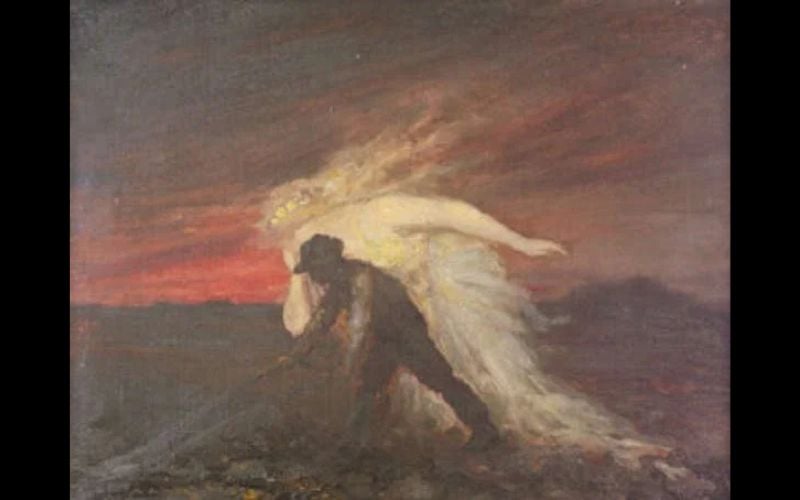
The Plough and the Earth Spirit (not in AIHS collections). (Public Domain)
The above painting (not in our collections) is similar and likely from around the same time. However, viewers will note the ghostly figure watching over the plough. The two images almost seem to be from the same scene, though our “team” seems to be ignored by the spirit.
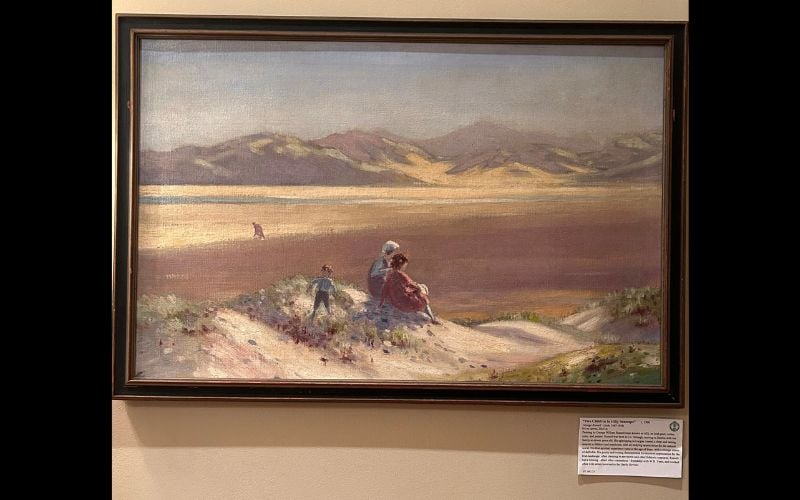
“Two Children in Hilly Seascape” c. 1900, Oil on canvas, 20x31in, PT 1982.23 (AIHS)
This above image is another pastoral scene from his works, again missing any mystical notes. To see more of his typical mysticism in his artwork, the paintings below demonstrate some of his magical views.
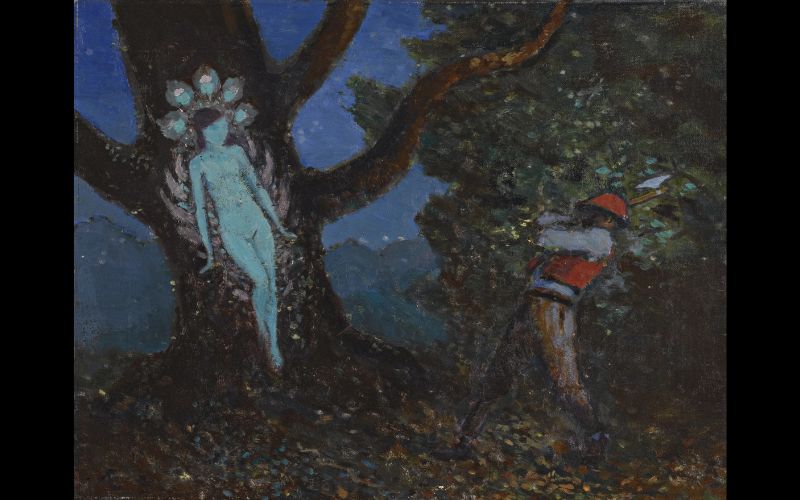
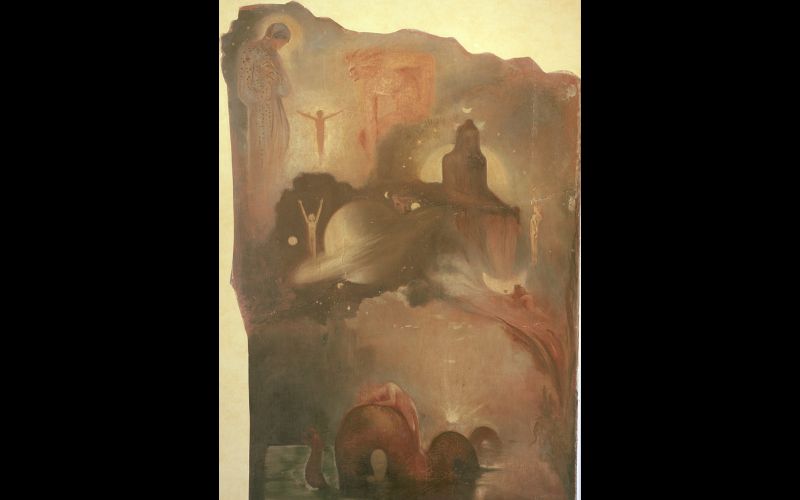
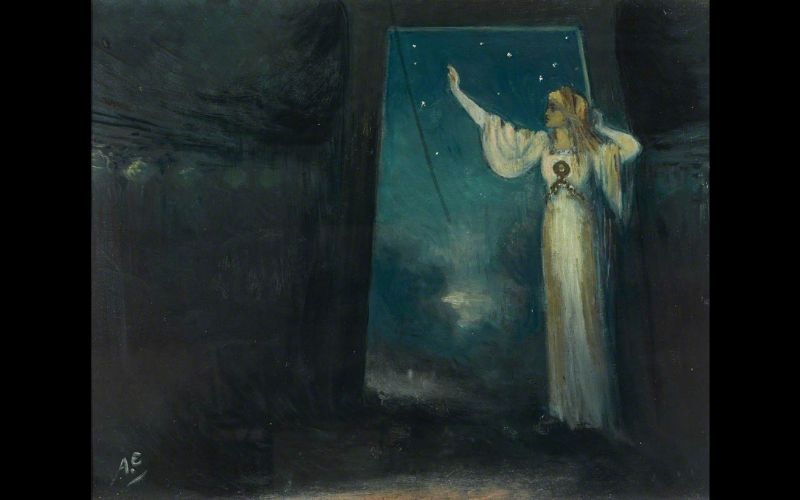
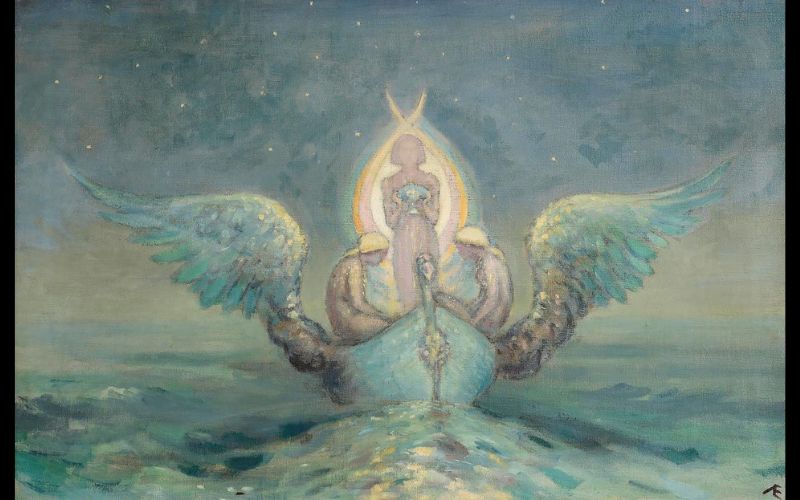
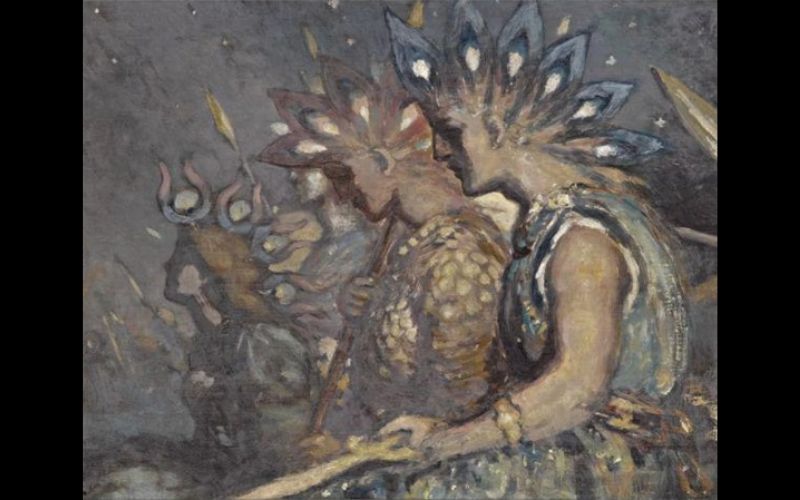
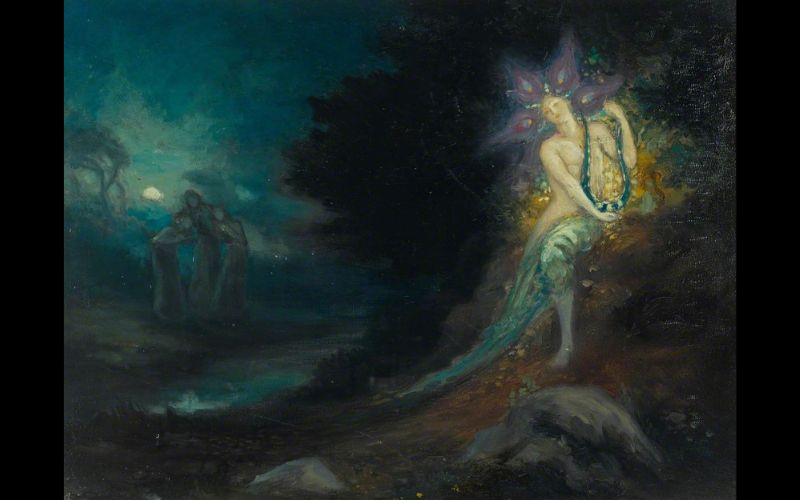
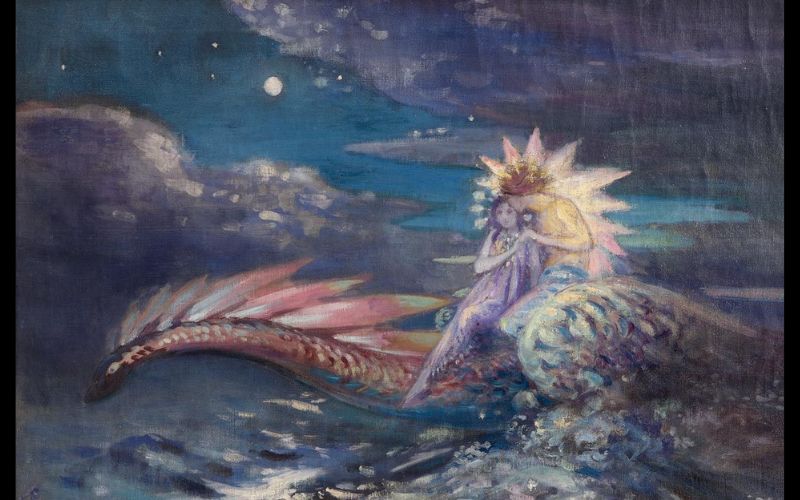
Russell’s mystical visions took inspiration from Irish folklore primarily in his depiction of the fae, as shown above. These works of folklore come from oral and written tales across Ireland, and were hugely impactful from his earliest childhood memories. In our collections, the fae remain hidden in the distance, looming out of sight. But in the dark nights on the second floor, the light may reveal some hidden secrets…
This column is adapted from the blog of the American Irish Historical Society (AIHS). Read the full stories at AIHSNY.org/blog.
Founded in 1897 and located on Museum Mile in New York City, the American Irish Historical Society (AIHS) preserves and promotes the history and cultural legacy of the Irish in America through its archives, art collections, and public programs. Learn more at AIHSNY.org.


Comments