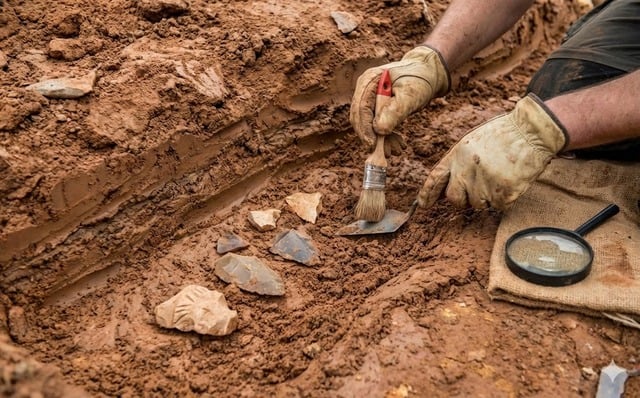
Researchers have uncovered evidence of a sprawling prehistoric complex in the hills of Wicklow that rivals the scale of early cities. This monumental find challenges the long held historical narrative that the Vikings were the primary architects of Ireland’s first towns and urban centers.
Archaeologists working in the Baltinglass area of County Wicklow have identified what appears to be the largest cluster of prehistoric houses ever discovered across Ireland and Britain. Using advanced Light Detection and Ranging (LiDAR) technology to map the landscape, the team revealed the remains of hundreds of circular dwellings nestled within ancient hillforts. These structures suggest a level of social organization and permanent settlement that was previously thought to be impossible for that era. The sheer density of the buildings indicates that this was not merely a seasonal camp but a thriving community.
This discovery is particularly significant because it contradicts the traditional view of Irish urbanization. For decades, historians have taught that the Vikings established the first true towns in Ireland during the ninth century. This new evidence points to a massive population center that existed thousands of years earlier. It implies that prehistoric Irish society was far more complex and sedentary than experts once believed.
Dr. James O'Driscoll of University College Cork led the research and expressed his amazement at the scale of the site. He told the BBC that the discovery is completely unique and changes how we view the prehistoric landscape.
Read more
According to his analysis, the area may have contained as many as one thousand individual houses. This number far exceeds any other known prehistoric site in the region and suggests a major shift in our understanding of ancient Irish life.
Archaeology Magazine notes that the Baltinglass landscape is now considered one of the most important archaeological sites in Western Europe. The findings suggest that Ireland was part of a broader trend of urbanization that predates the medieval period by millennia. Rather than living in isolated farmsteads, it seems that people chose to congregate in large fortified settlements. This behavior mirrors the development of early cities found in other parts of the world during the Bronze Age.
The Irish Independent reports that the site covers a vast area that had been hidden by overgrowth and modern farming for centuries. Because the structures are located on high ground, they provided a defensive advantage and a clear view of the surrounding valleys. This strategic positioning confirms that these were permanent residences designed for long term habitation. The researchers hope that further excavations will reveal more about the daily lives of the people who inhabited these ancient hills.
As the study continues, the implications for Irish history are profound. If the prehistoric Irish were building large scale settlements, then the role of the Vikings as the founders of urban life must be reevaluated.



Comments