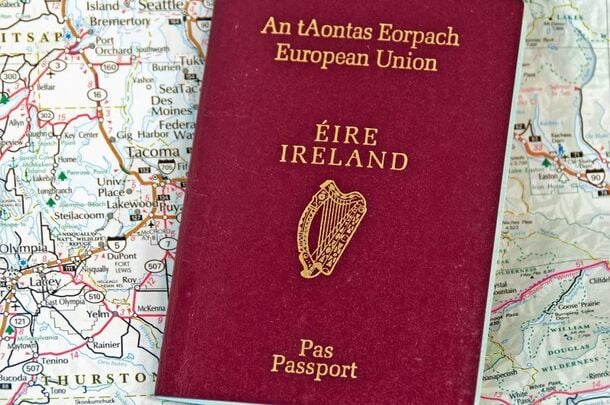
Irish citizens enjoy near-unrivaled travel freedom as the Henley Passport Index places Ireland in the upper tier of global mobility in 2026. The trend reflects decades of diplomatic reach and the unique rights Irish nationals enjoy across Europe and the United Kingdom.
Ireland ranks among the top passports in the Henley Passport Index 2026, sharing space with other high-access European countries. The index measures how many destinations an ordinary passport holder can visit without a prior visa and is compiled using exclusive Timatic data from the International Air Transport Association and Henley & Partners research.
For 2026, Henley’s analysis shows Asia and Europe dominating the top slots, with Singapore staying at number one and Japan and South Korea close behind. Henley warns that while many passports cluster at the top, the gap between the most and least mobile has widened to a record 168 destinations, underscoring an uneven distribution of global mobility.
“Over the past 20 years, global mobility has expanded significantly, but the benefits have been distributed unevenly," says Dr. Christian H. Kaelin, creator of the Henley Passport Index.
Irish media and travel commentators drew attention to Ireland’s place in that upper cluster in 2025 and 2026, reporting that Ireland nabbed a top-three spot on the updated Henley lists and that Irish passport holders can access nearly 189 destinations without a prior visa. That high placement is consistently credited to Ireland’s strong diplomatic ties, EU membership, and the Common Travel Area agreement with the UK, which preserves unique mobility rights for Irish citizens.
Read more
The United States and the United Kingdom present a more complicated story. Henley reports that the United States recovered into the top 10 in early 2026 after a brief fall, but it has suffered one of the largest long-term declines, slipping from a top rank in prior years to 10th place in the latest index. The United Kingdom has similarly slipped compared with earlier peaks and is ranked below the leading European passports in 2026, reflecting a steady decline in visa-free reciprocity over the last decade.
“Passport power ultimately reflects political stability, diplomatic credibility, and the ability to shape international rules," observes Misha Glenny, Rector of the Institute for Human Sciences in Vienna, underlining how geopolitics now shapes travel rights more than ever.
Different passport rankings can tell different stories depending on the methodology. The Nomad Passport Index and other alternative rankings factor in taxation, dual citizenship rules, personal freedoms, and visa-free access. Those alternative measures pushed Ireland even higher in some 2025 lists, fueling headlines and a surge of interest among diaspora applicants seeking Irish citizenship. Still, Henley’s passport index remains the standard reference for counting pure visa-free travel on ordinary passports.
As Henley puts it, passport privilege now shapes access to education, work, and commerce in an era of rising travel demand and tightening border rules, so the value of that freedom is both immediate and strategic.



Comments