
The first oil tanker lorries have been allowed to leave the Whitegate refinery in Cork en route to petrol stations across the country to replenish supplies of petrol and diesel.
Some 600 of the 1,500 garages and petrol stations across the country have run out of diesel, petrol, or both as fuel protests continue nationwide.
The Garda operation to clear Whitegate is said to have taken around an hour, and some protestors were allegedly dragged from their vehicles, which were blocking access to the exit of the site.
Road blockades remain in place across the nation, with a sixth day of protest planned for tomorrow (Sunday, April 12).
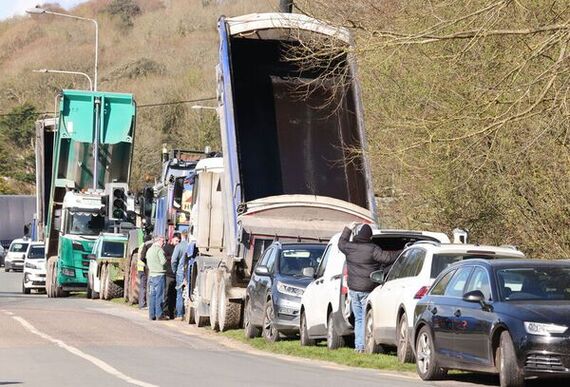

Thursday, 9 April 2026: Protesters gather outside the Irving Oil Refinery in Whitegate, Co Cork, as trucks, tractors, buses and cars block the gates in a widening demonstration over rising fuel costs. (Eamonn Farrell / © RollingNews.ie)
Dublin Bus is expecting severe disruption of its services to continue, while Luas services in the capital have also been impacted by the blockades, which brought O’Connell Street to a standstill.
Garda public order units were deployed to Whitegate to allow tankers to leave the refinery to deliver fuel nationwide.
A Garda Operation is ongoing at Whitegate Refinery to ensure critical supplies of fuel to maintain critical emergency public services, including Ambulance and Fire Services.
Garda Public Order Units have been deployed.
Blockaders must comply with Garda directions. pic.twitter.com/qhirYj9DPC
— An Garda Síochána (@GardaTraffic) April 11, 2026
Talks between Government Ministers and representatives of the IFA, the ICMSA, and the Irish Road Haulage Association failed to reach a satisfactory agreement to end the protests.
Read more
A number of representatives of the thousands of protestors were denied access to the meeting at Agriculture House yesterday evening (Friday, April 10), and afterward issued a statement saying the protests would continue.
Whitegate is the country’s only refinery and processes light, low-sulphur crude oil, sourced from the North Sea and West Africa. The facility produces transportation and heating fuels, such as gasoline, diesel, and kerosene, which are then distributed across Ireland and Europe.
* This article was originally published on Extra.ie.



Comments