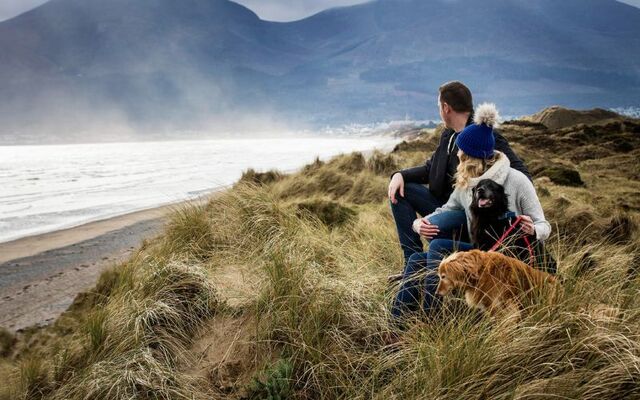
Ireland has thousands of waymarked trails, but only a handful come with a genuine one-off attached, a pilgrim mountain, a cable car that crosses open ocean, a walkway bolted onto a cliff face. The six below are grouped by how much of your day they ask for, and every one of them rewards locals who have driven past the turnoff for years just as much as it rewards first-time visitors.
Before you set out on any of them, check the operator’s website that morning rather than the night before. Irish coastal paths close and reopen at short notice, and the lesson of 2026 is that even the most famous ones are not guaranteed. The southern stretch of the Cliffs of Moher Coastal Walk, running the six kilometers from Liscannor, is currently closed entirely over what the official site calls “severe safety concerns”, and the northern section from Doolin now stops at Surfers Path.
The other practical point is footwear. Several of these routes are graded difficult, two of them refuse entry in sneakers, and Irish weather turns fast enough that waterproofs belong in the bag even in settled spells.
Croagh Patrick
County Mayo, full day
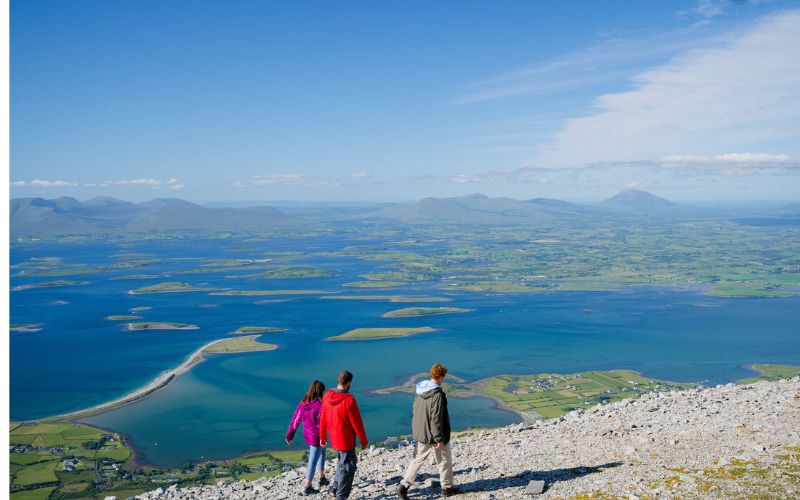

Croagh Patrick, County Mayo.
The Reek rises 764 meters above Murrisk on Clew Bay and draws walkers for reasons that run from the devoutly religious to the purely scenic. Allow four to five hours round trip. The notoriously loose scree that once defined the climb has been largely replaced by a stone-pitched path, the result of a multi-year restoration effort.
That path now needs upkeep, and in May 2026, Minister for Rural and Community Development and the Gaeltacht, Dara Calleary, announced €42,000 toward its maintenance as part of a €90,000 package. “Croagh Patrick continues to draw thousands of pilgrims and tourists to it each year,” he said. Official figures put the number at more than 50,000 annually.
Dursey Island
County Cork, full day
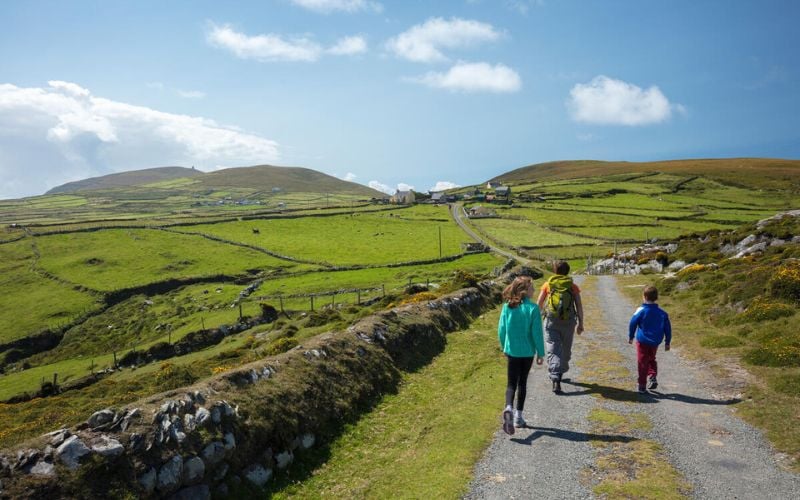
Dursey Island, Cork.
Getting to the trailhead is the attraction here. Dursey, off the tip of the Beara Peninsula, is reached by Ireland’s only cable car, which is also the only one in Europe that crosses open seawater. It carries six people at a time, runs roughly 25 meters above the Atlantic, and has been in service since 1969.
Once across, a loop of around 14 kilometers takes in the ruined village settlements, a Napoleonic signal tower, and some of the best whale and dolphin watching on the southwest coast. The car reopened following a €1.6 million upgrade that Cork County Mayor Cllr Danny Collins said “ensures the safety and accessibility of this iconic landmark.” Phone ahead on (027) 73851, as weather and demand affect the timetable.
Diamond Hill, Connemara National Park, County Galway, half day
The upper loop at Letterfrack runs about seven kilometers and takes roughly three hours, climbing a quartzite ridge on a mix of boardwalk, gravel and stone steps. It is the best value big view in the West, because admission to the park and parking are both free.
From the 442-meter summit, the panoramic views take in Kylemore Abbey, Tully Mountain, and the full sweep of the Twelve Bens. One scheduling note worth passing on: the Visitor Center now closes on Mondays and Tuesdays outside bank holidays, though the trails themselves stay open year-round.
Cuilcagh Boardwalk
County Fermanagh, half day
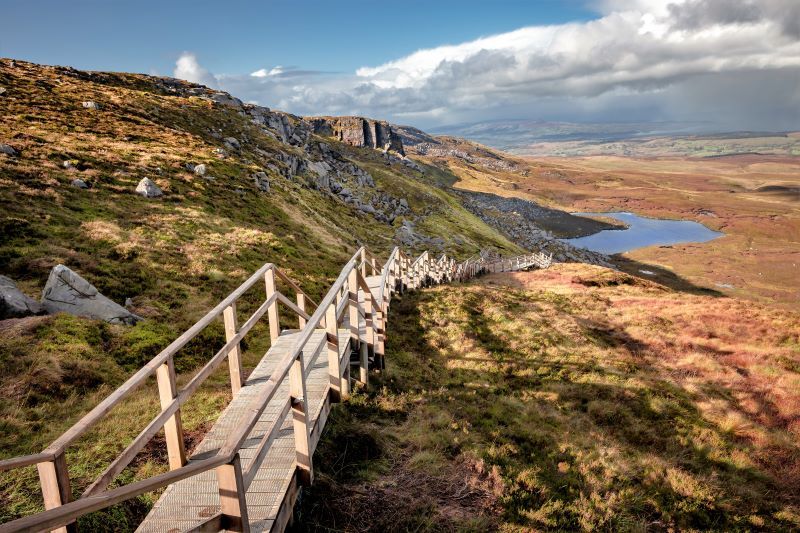
Cuilcagh Boardwalk, Fermanagh.
Known to almost everyone as the Stairway to Heaven, this 6.5-kilometer linear route crosses one of the most intact blanket bogs in western Europe before a long wooden staircase lifts you to a viewing platform. Tourism Ireland’s description of the summit outlook is hard to improve on: the sense that “the whole world has been spread out at your feet.”
Plan it properly. The trail is graded difficult; parking at the trailhead operates on a pre-booking system through the boardwalk. i.e., walkers are currently asked not to continue past the platform. Allow three hours, though the geopark warns the route “can take 8-10 hours on a busy day” when queues build on the steps.
The Gobbins
County Antrim, half day

The Gobbins, Antrim.
This Edwardian cliff path on Islandmagee is a guided experience rather than a casual wander, a three-hour, five-kilometer route of tunnels, hand-carved steps and tubular bridges pinned directly to the rock above the sea. The operator reckons the whole thing equates to climbing and descending 50 flights of stairs.
It reopened in March 2026 after storm damage and rockfall forced repairs. Mid and East Antrim Mayor Cllr Jackson Minford said: “Safety has rightly guided every decision throughout this process.” Adult tickets are £23.50 online, hard hats are supplied, proper walking boots with ankle support are mandatory, and sneakers are refused at the gate.
Downpatrick Head
County Mayo, under an hour
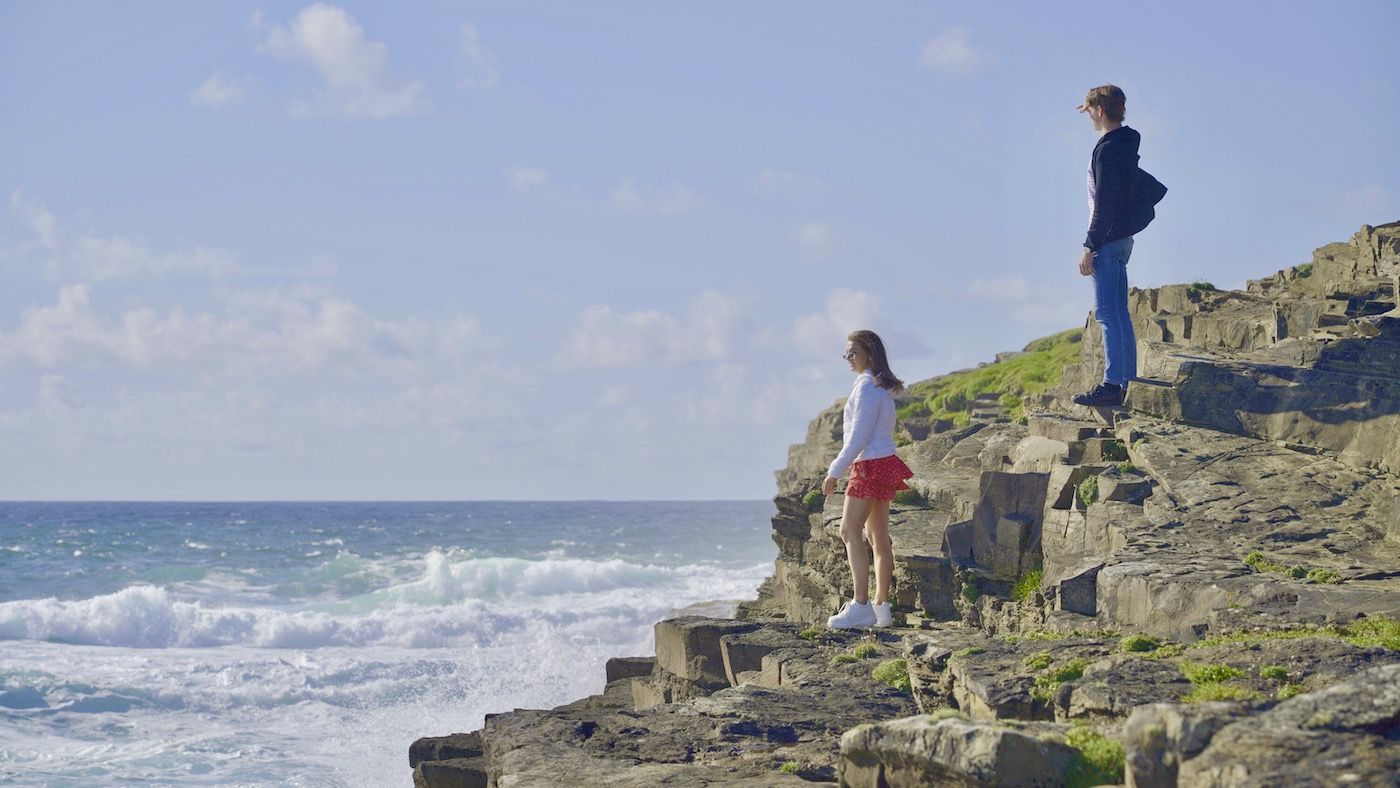
Downpatrick Head, Mayo.
The shortest walk here delivers the most dramatic payoff per step. A gentle stroll across the grassy headland near Ballycastle brings you to the edge of a 45-meter sea stack called Dún Briste, severed from the mainland by storms in 1393, with, by local account, people still living on top of it.
Watch your footing near Poll na Seantainne, described by Mayo tourism as a “spectacular blow-hole with subterranean channel to the sea” and the site of an 1798 tragedy in which 25 men sheltering below drowned on the incoming tide. The ruins of a church traditionally linked to Saint Patrick and a 1980s statue of him stand nearby.



Comments