As a parent of a special needs child in New York City, I've taken for granted the rights my son has to an education and services like speech and occupational therapy.
It hasn’t always been that way. Just a quick search into the not too distant past and we're thankful that he's living now, not a generation or two earlier—the dark ages for the disabled. His life would have been far more challenging.
Looking at how special education became law in this country, I’m struck by how much of it came from a sense of religious social justice and personal empathy—much of it Irish-American.
It begins in late 19th-century New York City, from a single Lower East Side classroom, to the floor of the U.S. Senate — through a president's grief for his sister, a Philadelphia lawyer's regret over his own brother, a bureaucrat who funded Sesame Street, and a senator from Iowa who learned sign language for his deaf brother before he learned to legislate for disability rights.
Here are the main contributions:
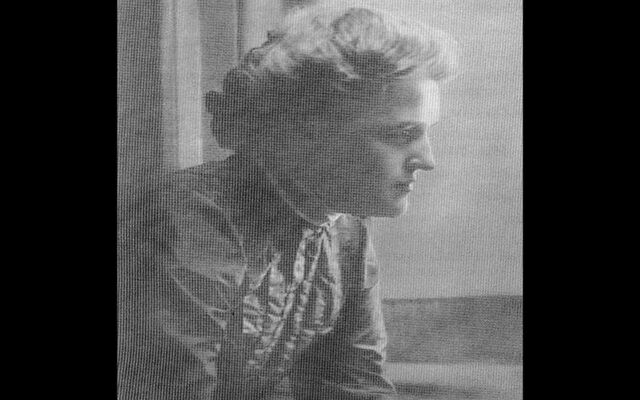
Elizabeth Farrell
Before Elizabeth Farrell, many children with special needs in the U.S. didn't go to school. The ones with significant disabilities were often sent away — institutionalized, out of public life altogether. The ones who did show up in a classroom were labeled unteachable, or worse, nearly a century before terms like ADHD and autism entered the lexicon.
But in 1898, New York State passed compulsory-education laws, which for the first time forced every child into a classroom—no matter their ability.
That's where Farrell steps into the story, in a right-place, right-time sort of way. In 1899, she was teaching grade school at P.S. 1 on the Lower East Side of Manhattan when the principal presented her with a challenge: 19 boys he called "misfits." 12 of them had been labeled "retarded." (Terms like "retarded" appear here only as period language, not as language IrishCentral would use today.) All of them were failing. Have at it, the principal said.
Farrell’s ideas about education leaned progressive. While in college at Oswego Normal and Training School in upstate New York, she absorbed a teaching model built on real objects and lived experience. No lectures and rote drills, which sounds wonderful to any student, at any time in history.
Farrell was up to the challenge. Her Catholic upbringing — she was the daughter of Irish immigrants from Kilkenny and educated by the Sisters of Charity, a religious order dedicated to nursing the sick, helping the needy, and teaching kids—guided her sense that educating these children was a responsibility, not a favor.
She started teaching them separately, at their own pace, in what she called an "ungraded class." She threw out the standard curriculum. Instead of books, the boys worked with picture puzzles; instead of penmanship drills, they used watercolor paints; instead of arithmetic tables, they built furniture.
She organized each term around a single real-world subject — one year it was farming, and the boys measured rooms and fields, wrote about soil and barns, and sent away to Washington for seeds to plant.
It kept the kids off the streets and from drifting into a life of crime. By 1903, New York City had 10 ungraded classes. By 1911, it had 131. In 1907, the Board of Education formalized the system and made Farrell its inspector — effectively the first administrator of what would eventually become District 75, the branch of New York City's public schools that today serves 25,000 students with disabilities.
Farrell brought back the Binet intelligence test from Europe. By the time she retired, a staff of 500 was teaching more than 11,000 children in ungraded classes across the city.
She died in 1932—another Irish-American named Elizabeth Walsh succeeded her. Today, Farrell is not forgotten. In 1922, she gathered a dozen educators at Teachers College, Columbia, to start the Council for Exceptional Children — still the major professional organization in special education today.
The building where she taught that first class, P.S. 1, is still standing. Farrell's ungraded classroom was the start of something much larger than she could have known.
The Kennedys
The next chapter is better known. When John F. Kennedy was elected president in 1960, he pushed harder than any previous president for the country to accept and support people with intellectual disabilities. The reason was personal. His sister Rosemary had been lobotomized in 1941, at their father's direction, in a procedure that left her permanently and severely disabled. The Kennedys had spent two decades keeping that fact hidden. As president, Kennedy began to undo the silence.
In 1961, he created the President's Panel on Mental Retardation, the first sustained federal attention the issue had ever received. Federal dollars began flowing into research and services. Medicaid and Medicare amendments followed, building the funding mechanism that services for people with disabilities still run on today. (The panel is still active, renamed the President's Committee for People with Intellectual Disabilities in 2003.)
His brother Robert carried the work further. In September 1965, then New York Senator Robert Kennedy toured the Willowbrook State School on Staten Island and the Rome State School upstate — together housing more than 10,000 patients — and came away calling the conditions worse than a zoo. He described patients sleeping in beds barely inches apart, dressed in rags, left to rock back and forth all day without exercise or attention, kept docile with heavy doses of tranquilizers instead of care.
Asked why the visit affected him so personally, he didn't dodge the question: "I have an older sister in an institution," he said, naming Rosemary, then 46, a patient at St. Coletta's School in Wisconsin. The admission, rare for a Kennedy at the time, helped turn Willowbrook — seven years before Geraldo Rivera's 1972 exposé made it a national scandal — into a symbol of what institutionalization meant. It also gave the growing disability rights movement a Kennedy-sized megaphone.
Their sister Eunice Kennedy Shriver built something more lasting out of the same grief. In 1962, motivated by watching what Rosemary's life became after the lobotomy, she started a day camp for people with intellectual disabilities at her family's Maryland farm. Six years later, that grew into the first International Special Olympics Games in Chicago; today it operates in more than 170 countries.
One oral history from the New York disability rights organization AHRC put it simply: the Kennedy family's public embrace of the issue made it, for the first time, "kosher" to talk about.
Gilhool, the Philadelphia case
The political momentum the Kennedys built still needed a legal foundation, and that came from a courtroom in Philadelphia. In 1971, a lawyer named Thomas K. Gilhool — descended from Irish immigrants who mined coal in Lackawanna County, Pennsylvania — filed suit against the Commonwealth of Pennsylvania on behalf of 14 families whose children had been turned away from public school. At the time, a state law barred children who hadn't reached a "mental age" of five.
The case was also personal. Gilhool's younger brother, Bob, was developmentally disabled, and when their father died in 1954, Gilhool had persuaded his mother to send ten-year-old Bob to the Pennhurst State School — a decision he spent the rest of his life regretting and working to undo. "We could have invented something, even then, to keep him at home," he said decades later. Bob left Pennhurst in 1961.
The case, Pennsylvania Association for Retarded Citizens v. Commonwealth of Pennsylvania (PARC), settled by consent decree that October: Pennsylvania agreed that every child with an intellectual disability, ages 6 to 21, had a right to a free public education. It was the first ruling of its kind in the country, and it became the direct legal template for the federal law that followed four years later.
PARC only fixed Pennsylvania. In 1972, to find out how bad the problem was everywhere else, Congress launched an investigation. What they found made the case for federal action impossible to ignore: 1.75 million children with disabilities in the United States were receiving no education at all, 200,000 were living in institutions, and another 2.5 million were getting an education that fell short of adequate — with wide, inconsistent gaps from state to state. Three years later, Congress acted.
Gallagher, the law, and Kermit
Congress needed a bureaucrat to turn that data into a nationwide law. That bureaucrat was James J. Gallagher, an Irish American child-development expert from Pittsburgh who became the first chief of the federal Bureau of Education for the Handicapped. His work was an inheritance from his mother, Anna Mae Gallagher, a special education teacher and author.
Gallagher helped develop the concept of the Individualized Education Program, the IEP, the document that today governs the education of every disabled student in America. He helped write and pass the Education for All Handicapped Children Act of 1975, the law that guarantees every one of those students a free and appropriate public education. Every family that has sat across a table from a school district negotiating an IEP is operating inside a system Gallagher helped build.
He is also, improbably, the reason Sesame Street exists. As a federal education official, Gallagher was part of the funding decision that got the show off the ground. The man who wrote the rules for how America educates disabled children is also, in a real sense, the man behind Kermit the Frog.
At his death in 2014, his family wrote that he had always been fond of good stories and bad puns, so perhaps the Kermit connection is not so improbable.
Harkin and the ADA
The last piece fell into place in 1990. Senator Tom Harkin of Iowa, a proud Irish American, drafted and sponsored the Americans with Disabilities Act, working alongside Ted Kennedy — another Kennedy still carrying the family's cause a generation later.
Harkin's motivation was as personal as Kennedy's or Gilhool's: his older brother Frank had gone deaf from spinal meningitis at seven, and Harkin learned sign language as a boy so they could talk to each other. When the Senate passed the ADA on July 13, 1990, Harkin delivered part of his floor speech in American Sign Language — the first time ASL had ever been used on the Senate floor — so Frank could understand him directly. He said he wanted to honor a lesson Frank had taught him as a child: that "people should be judged on the basis of their abilities and not their disabilities."
The ADA, signed into law by George H.W. Bush, did what the ungraded classroom and the IEP had not: it declared, in federal law, that disability rights are civil rights, covering not just schools but employment, transportation, and public life.
Why the Irish?
Of course, there are dozens of non-Irish who’ve made enormous contributions to the lives of the disabled in this country. But for any Irish person, this list’s Celtic hue is not shocking. The Irish have always been generously represented in the fields of social work and education. Social justice has been a fixture of the Catholic Church that the Irish carried with them wherever they’ve landed.
Recently, at a special needs convention in New York City, I was talking to a parent advocate who was manning a booth. As I signed her email list she saw my name and told me her extended Jewish family had lived in Dublin for generations. She goes there frequently with her adult son, who has Down's syndrome. The Irish are much more accepting of her son than in the United States, she said. I asked her why she thought that was. She said that with big Irish families, there is less pressure on one child to be the high achiever. That pressure is dissolved among the brood, she said, and they are who they are.
Families in the U.S. are still navigating the system Farrell, the Kennedys, Gilhool, Gallagher, and Harkin built, one IEP meeting at a time. Without their courage, it would be a far darker age indeed.
*Brian O'Connor is a journalist and the founder of Lighthouse, a free newsletter for New York City parents navigating the special education system.



Comments