Andy Burnham's arrival in Downing Street carries an unexpected echo of Drogheda, the County Louth town his great-grandfather left behind generations ago. His rise to the top of British politics is a fitting moment to ask why Oliver Cromwell still stands in bronze honor outside the very Parliament Burnham now leads.
Andy Burnham’s arrival in Downing Street brings an unusual historical connection. As media reports have noted, his great-grandfather, Edmund “Ned” Burke, came from Drogheda in County Louth and emigrated with his family to Liverpool in the late 19th century. Burnham was also raised Catholic. Neither fact should dictate his view of history, but together they make this a particularly interesting moment to look again at a figure who still occupies a place of honor at the heart of British political life.
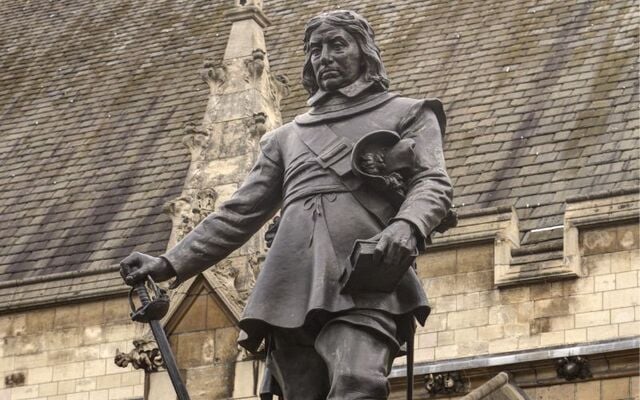
Oliver Cromwell stands in bronze outside Westminster Hall in London at the heart of what the British like to call "The Mother of all Parliaments". He is not hidden away in a museum or presented simply as an object of historical study. He stands on a pedestal beside Parliament, in one of the most symbolic locations in Britain.
For anyone from Drogheda, a town just north of Dublin, that is difficult to accept, considering what happened in September 1649.
When Cromwell’s army captured the town, more than 3,000 people were killed. Soldiers who had surrendered were put to death, Catholic clergy were among those killed, and civilians also died. Historians continue to debate the precise numbers and circumstances, but there is no dispute about the ferocity of the assault. Cromwell himself defended what happened as a warning to those who might continue to resist.
That is why Drogheda became something more than the site of a 17th-century military defeat. In Irish memory, it came to represent repression, religious persecution, and the vulnerability of a Catholic population facing overwhelming force.
And Drogheda was just the beginning.
Read more
What followed was a transformation of Irish land ownership and political power. The 1652 Act for the Settlement of Ireland gave legal force to enormous confiscations of Catholic-owned land. Estates were taken, families uprooted, and land transferred to soldiers and creditors of the English Parliament. Some Irish people were transported overseas; others were displaced onto poorer land.
For Irish Catholics, the Cromwellian period therefore meant much more than battlefield defeat. It meant the loss of land, political power, and security on a vast scale. It meant the destruction of churches and the defilement of statues and Catholic iconography.
Many historians have used the language of ethnic cleansing when describing the Cromwellian campaign's mass dispossession and population transfer directed overwhelmingly against a particular religious and cultural population.
The human cost was immense. Estimates remain contested, but Ireland may have lost around 40 percent of its population during the wars and upheaval of the 1640s and 1650s, through fighting, famine, disease, and displacement. Whatever precise figure one accepts, Ireland suffered a demographic catastrophe.
However, that history is still surprisingly little understood in Britain.
Through my work and social contacts there, I have repeatedly been struck by the gap between the Cromwell familiar to many British people and the Cromwell remembered in Ireland. As a Director of the Drogheda Civic Trust, I am particularly conscious of that difference.
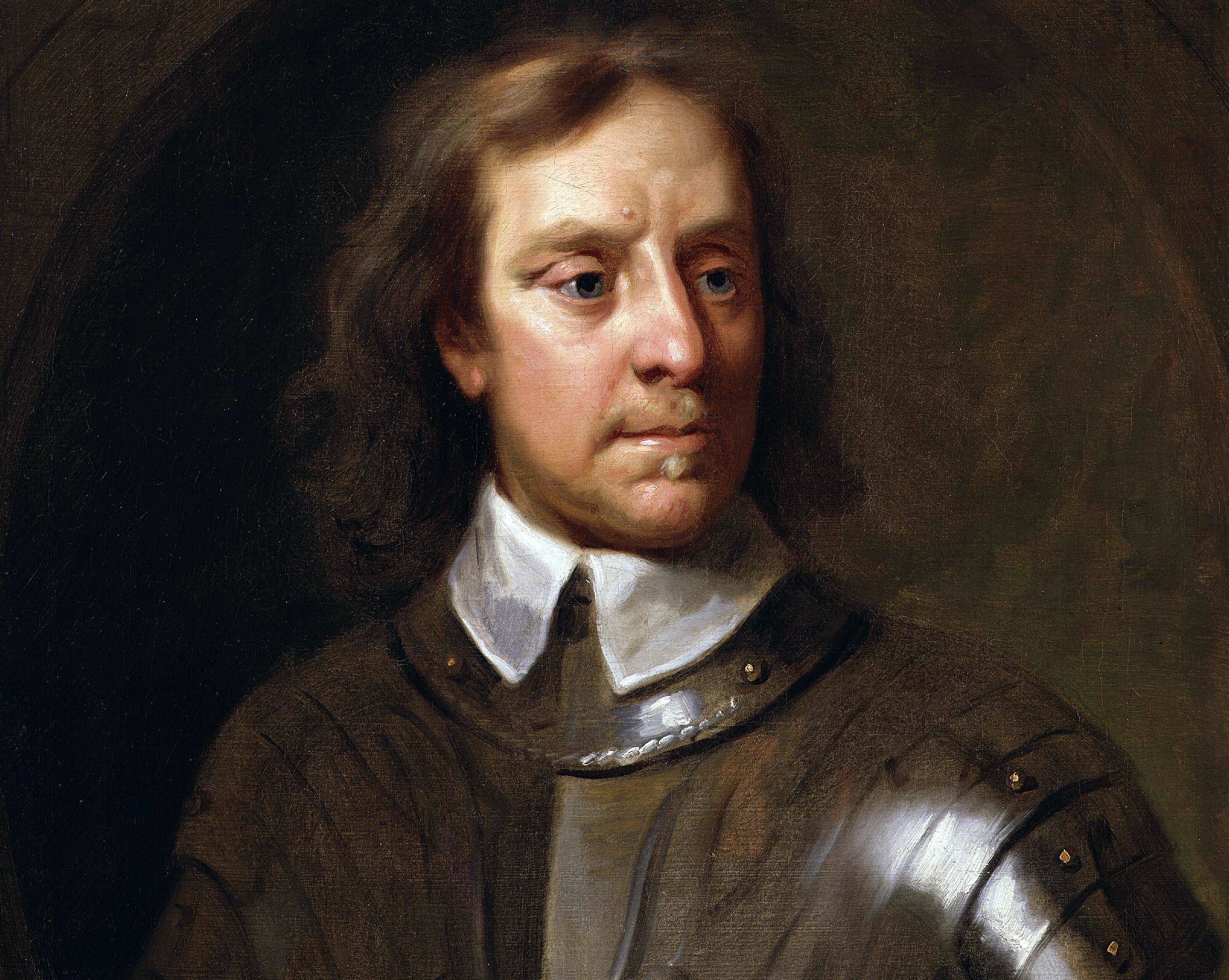

A portrait of Oliver Cromwell.
This is rarely about hostility. More often, people simply have not encountered the history in depth.
British pupils may learn about Cromwell as a soldier, a Parliamentarian, a Lord Protector, and a central figure in the constitutional upheavals of the 17th century. His Irish campaign may also be mentioned. But too often, the massacres, mass dispossession, and forced displacement of Irish Catholics occupy a much smaller place in the story, leaving an incomplete picture.
There is a difference between knowing that something happened and understanding why it still matters. Irish people grow up with a great deal of British history because it is inseparable from our own. The same familiarity with Irish history cannot always be assumed in Britain.
The case for reconsidering Cromwell’s statue at Westminster should not rest on anger or an attempt to erase him from history. Cromwell is far too important a historical figure for that. The question is whether remembering him requires continuing to honor him.
A proper process would begin with education.
Before the British public is asked whether Cromwell should continue to occupy such a prominent place at Westminster, people should be given a fuller understanding of the man they are being asked to judge. That means more serious and comprehensive treatment of Cromwellian Ireland in public discourse.
Read more
Education and factual information should not tell people what verdict to reach. They should enable them to understand why Cromwell occupies such different places in British and Irish memory.
Then the statue can be considered on its merits.
My own view is that Cromwell should no longer occupy a position of national honor outside Westminster Hall. His statue should be moved to a museum, where the whole man can be presented: Parliamentarian, military commander, and Lord Protector, but also the commander whose forces took Drogheda on September 11, 1649, a date that carries an unavoidable resonance for American readers because of 9:11, 2001. He is also the central figure in a campaign that many historians have described as ethnic cleansing and probably genocide.
That would not erase history. It would put history in context.
Nor should this be presented as a demand from Ireland that Britain remove one of its statues. The strongest call should come from informed British citizens themselves. Burnham’s Drogheda ancestry should not impose a special obligation upon him, but his arrival in Downing Street provides an opportunity to begin the conversation.
There is also a useful precedent in Burnham’s own approach. During the debate over controversial monuments in Greater Manchester in 2020, he argued for discussion and a proper process rather than simply pulling statues down. That seems exactly the right approach here: understand the history, allow an informed public debate, and then decide whether the honor is still deserved.
Britain may wish to wipe the slate clean in its relationship with Ireland. But that cannot mean pretending that nothing happened in the first place.
No one needs to forget Oliver Cromwell.
But Britain should now decide whether a man with this record still deserves such a prominent place of honor at the heart of their Parliament.
* Michael O'Dowd is a Director of the Drogheda Civic Trust and a former columnist with the Irish Voice.

Comments