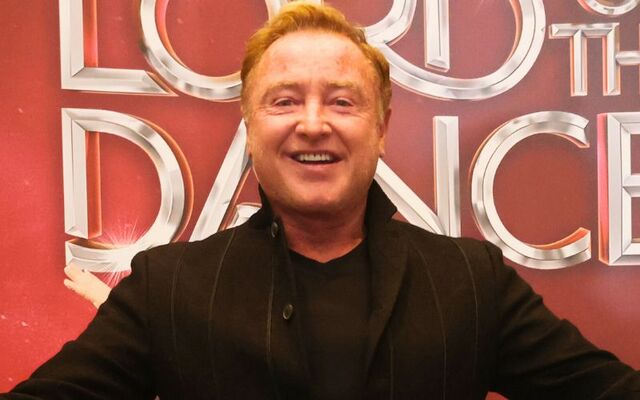
Michael Flatley has pledged to stage "the greatest show ever" in Dublin next week after overturning a court order that had barred him from interfering with the upcoming Lord Of The Dance tour.
An 11th-hour deposit of €500,000 from a financial backer helped the dancer over the line in the court battle for control of the show.
Speaking after the decision was given by the High Court in Belfast, Mr. Flatley told Extra.ie: "I’m delighted, over the moon, not just for myself but for our whole team, and also for my wonderful dancers, cast and crew, and all the people who have bought tickets to see the greatest dance show in the world."
Mr. Flatley said he would now be "calling everyone to get them into rehearsals" including his lighting and sound engineers, set designers, and dance captains.
"What happens now is that we are going to put on the greatest show ever, back in Dublin, where it all began with Riverdance. We owe it to the Irish public, and we are going to deliver," he vowed.
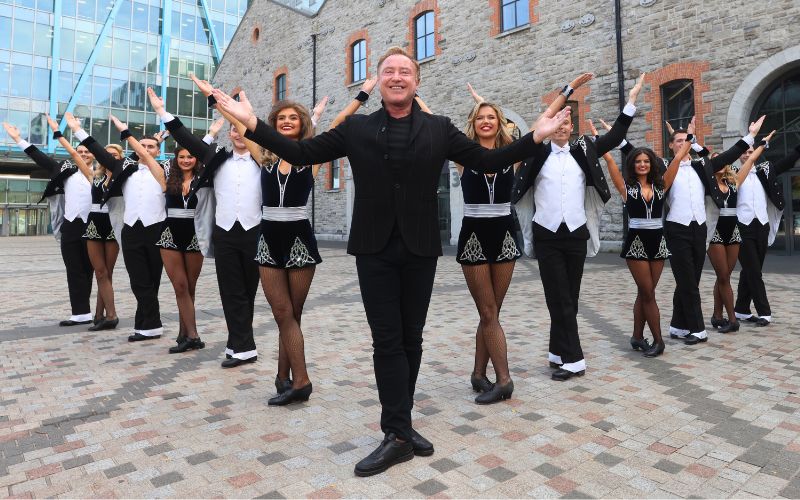

September 24, 2025: Michael Flatley in front of the 3Arena in Dublin, announcing details of the 30th anniversary celebrations of Lord of the Dance. (RollingNews.ie)
At Belfast High Court on Thursday, Judge Gerald Simpson said he had based his ruling in part on a deposit of €500,000, which had been paid into Mr. Flatley’s solicitor’s account this week by a financial backer.
This would cover any limited damages that the dancer could have to pay to the company suing him, Switzer, which was itself allegedly insolvent, he said.
Judge Simpson said the temporary injunction he imposed earlier this month had restrained Mr. Flatley from "cancelling, postponing or in any way interfering with" the tour. He said this included a bar on Mr. Flatley contacting promoters or venues in relation to the show.
Switzer is also seeking damages from Mr. Flatley for an alleged breach of contract, negligence, misrepresentation, interference with its economic interests, causing loss by unlawful means, and trespass to property.
Judge Simpson said he had been told the matter was urgent, as the tour is due to open in Dublin next Thursday.
Switzer had said it applied for the injunction on January 13, without Mr. Flatley being able to give his response, because it believed that otherwise the dancer would "accelerate his efforts to damage the show," the judge said.
Switzer had said it became concerned last month about Mr. Flatley’s behaviour in relation to the show, showing a screenshot of a text to Switzer director and music producer Joe Gallagher on December 30 from a contact of the dancer, which stated that he would have no further involvement whatsoever with the tour.
The judge said he had given Mr. Flatley a chance to respond as quickly as possible, noting that he was "a well-known Irish dancer and musician" who had "created, produced, choreographed and starred in" Irish dance shows, including Riverdance and Lord Of The Dance, which had enjoyed worldwide success.
"He has been in the entertainment business for over 40 years," the judge noted.
Judge Simpson said that many allegations, "some trenchant and quite personal," had been made and denied during the case. He said that in an injunction application, a court should not try to resolve "hotly disputed issues of fact" on the basis of affidavit evidence.
This could only happen following a full trial of a case, with witness evidence, he said.

Michael Flatley performing in Lord of the Dance in Dublin in 1996. (RollingNews.ie)
One of the "puzzling" aspects of the case, which he did not have to decide immediately, concerned two differing deeds relating to the ownership of Switzer, he said.
Mr. Flatley had claimed he was the sole beneficial shareholder of the company, but a second document indicated that this would only be so after he had fulfilled certain legal obligations.
The judge said the background to the case was a deteriorating relationship between Mr. Flatley and Philip Moross, who had formed a partnership to run Lord Of The Dance in 2019.
He said Mr. Moross, of music services group Cutting Edge, was owed £2.9million (€3.35million) by Mr. Flatley in July 2024, which under a settlement agreement was to be repaid on a monthly basis from 50% of the royalties earned by the Lord Of The Dance shows, while Mr. Flatley would receive the other 50%.
So far, both men have been paid just under €500,000 under the agreement, the court heard. Meanwhile, in a services agreement of the same date, it was arranged that Switzer would be paid fees of £35,000 (€40,000) a month for the first 24 months for its management of the tour, increasing to £40,000 (€46,000) a month for the final 36 months.
Judge Simpson said the terms of this service agreement were key to the case. He said the services to be supplied by Switzer would be "business management, accountancy, payroll and banking services" and advice and assistance to maximise revenues.
The agreement could be terminated if it was breached by Switzer, or if Switzer became insolvent, the judge said.
Mr. Flatley has alleged that Switzer had "wholly failed to provide most of the services" and that its ‘recent actions have cut across the effective and successful marketing and production’ of the tour.
This is disputed by Switzer, which has pointed to the steady payment of royalties to Mr. Flatley. However, the judge ruled that Switzer only has a licence to do the things identified in the services agreement, for the set fee. "Accordingly, the plaintiff [Switzer] has no proprietary interest in the Lord Of The Dance shows," he said.
"…Importantly, the plaintiff has no right to any share of the profits of Lord Of The Dance."
This meant that if it won its case for a wrongful termination of its contract, it could only claim repayment of the fees due, not damages "at large."
By contrast, he found that the potential losses to Mr. Flatley caused by a continued injunction were "unquantifiable."
The judge said Mr. Flatley’s solicitor, Barry Creed, had confirmed that €500,000 had been deposited with his firm, on behalf of Mr. Flatley.
He said it had come from a company called Stolensky, "an investment company which has had dealings for some time with the defendant."
The firm is controlled by construction magnate Maurice Regan. Mr. Creed undertook to hold the money, pending the full resolution of the case. He said the company had agreed to pay any monthly service fee that was due to Switzer.
The judge said he was satisfied that Mr. Flatley had the money to pay any damages which Switzer could claim. By contrast, he said Switzer had a "negative balance" on its accounts when it had asked for the injunction – something he said he should have been told about.
The judge ruled that he would lift the temporary injunction, and listed the case for mention next week, when dates will be set for the trial of the remaining dispute between Mr. Flatley and Switzer.
*This article was originally published on Extra.ie.



Comments