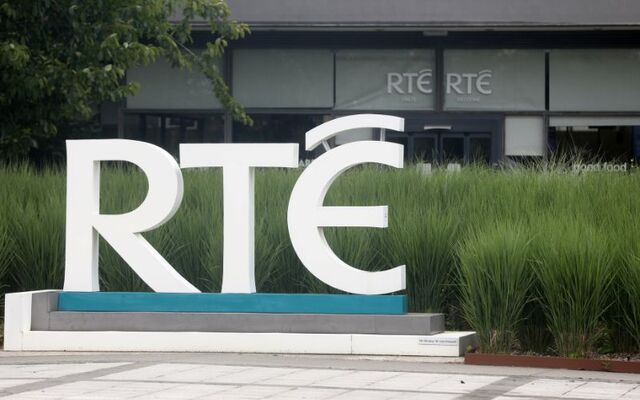
Ireland, as well as Spain, the Netherlands, and Slovenia, are boycotting the Eurovision Song Contest 2026 after Israel was confirmed to be eligible to compete.
“Following today’s EBU Winter General Assembly in Geneva at which Israel’s participation in the 2026 Eurovision Song Contest was confirmed, RTÉ’s position remains unchanged," RTÉ said in a statement on Thursday, December 4.
"RTÉ will not participate in the 2026 Eurovision Song Contest, nor will RTÉ broadcast the competition.
"RTÉ feels that Ireland’s participation remains unconscionable given the appalling loss of lives in Gaza and the humanitarian crisis there which continues to put the lives of so many civilians at risk.
"RTÉ remains deeply concerned by the targeted killing of journalists in Gaza during the conflict and the continued denial of access to international journalists to the territory.”
Ireland has participated in the Eurovision Song Contest 58 times since 1965, missing only the 1983 and 2002 editions.
Dutch broadcaster AVROTROS and Spain's public broadcaster RTVE also said on Thursday that they will boycott Eurovision 2026 due to Israel's inclusion.
Meanwhile, Germany had said it would not take part if Israel was barred.
RTÉ's announcement comes after a secret ballot vote on proposed reforms during the European Broadcasting Union's (EBU's) General Assembly in Geneva on Thursday.
The new measures and safeguards, announced last month, include:
- Stronger limits on promotion to curb disproportionate third-party influence, including government-backed campaigns
- Voting cap halved for 2026, encouraging fans to spread support across more entries
- Professional juries return to Semi-Finals, with expanded, more diverse panels, including young jurors aged 18–25
- Enhanced technical safeguards to detect and block coordinated or fraudulent voting activity
According to RTÉ News, the proposed reforms came after allegations that Israel unfairly boosted support for its entrant at this year’s contest, where it finished second, through a state-backed online advertising campaign and other efforts to drive up televotes. Israel has rejected accusations of improper interference.
The EBU said on Thursday that ahead of the vote, "there was a wide-ranging discussion where Members expressed a variety of views on participation in the Eurovision Song Contest.
"Many Members also took the opportunity to stress the importance of protecting the independence of public service media and the freedom of the press to report, not least in conflict zones such as Gaza."
Ultimately, the vote passed.
The EBU added: "A large majority of Members agreed that there was no need for a further vote on participation and that the Eurovision Song Contest 2026 should proceed as planned, with the additional safeguards in place."
Thursday's vote means all EBU Members who wish to participate in the Eurovision Song Contest 2026 and agree to comply with the new rules are eligible to take part, the EBU said.
Responding, President of Israel Isaac Herzog said: "Israel deserves to be represented on every stage in the world, and I am fully and actively committed to that.
"I am happy that Israel will participate in Eurovision again and hope that the competition will remain one that celebrates culture, singing, and friendship between nations and cross-border cultural understanding.
"Thanks to all our friends who stood up for Israel's right to continue to contribute and compete in Eurovision. I was happy to take part in the struggle and assist as much as I could.
"This decision is an appreciated gesture of solidarity, brotherhood and cooperation, symbolizing victory over those who seek to silence Israel and spread hatred."
The 70th Eurovision Song Contest is set to be hosted by ORF at the Wiener Stadthalle in Vienna, Austria, in May 2026.




Comments