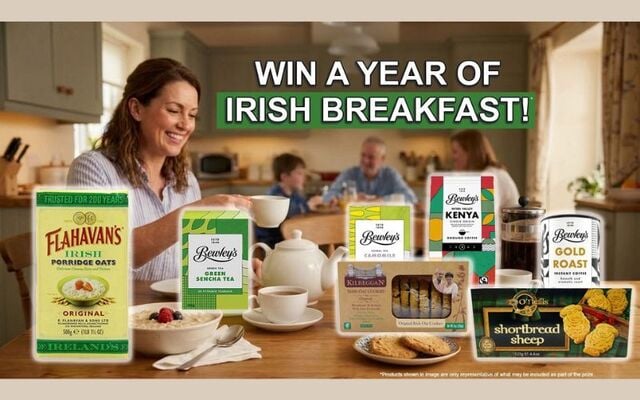
Bewley's Irish Imports is giving one IrishCentral reader the chance to wake up to a proper Irish breakfast every morning for a year. The prize hamper brings together Flahavan's oats milled in Co. Waterford, Bewley's tea and coffee, Folláin preserves from West Cork, and biscuits from Kilbeggan and The Foods of Athenry. Enter to win a quarterly box from Bewley's for a year, big HERE!
Ask any Irish emigrant what they miss most, and breakfast is usually near the top of the list, from porridge made on the stove to a pot of tea that never seems to empty and jam that tastes like actual fruit. This giveaway is a chance to taste the difference at your own kitchen table.
Enter to WIN!
Why an Irish breakfast tastes different – and what's behind it
Ask an Irish-American what they miss most after a trip home, and breakfast usually comes up: porridge made on the stove, a pot of tea that never seems to empty, toast with jam that tastes like actual fruit, and a biscuit with the second cup. Nostalgia is part of it. So is the way food is grown, made, and regulated on the other side of the Atlantic.
Ireland makes its food under European Union law, and the EU takes a noticeably more cautious approach to ingredients than the United States does. In the US, many ingredients reach the market through a system that lets companies declare them safe, and older approvals are rarely revisited. In the EU, additives must be approved in advance and are periodically re-evaluated, and a credible concern about harm can be enough to restrict one while the science is still being debated.
Here's what that looks like at the breakfast table.
In your bowl: Flahavan's Irish oats
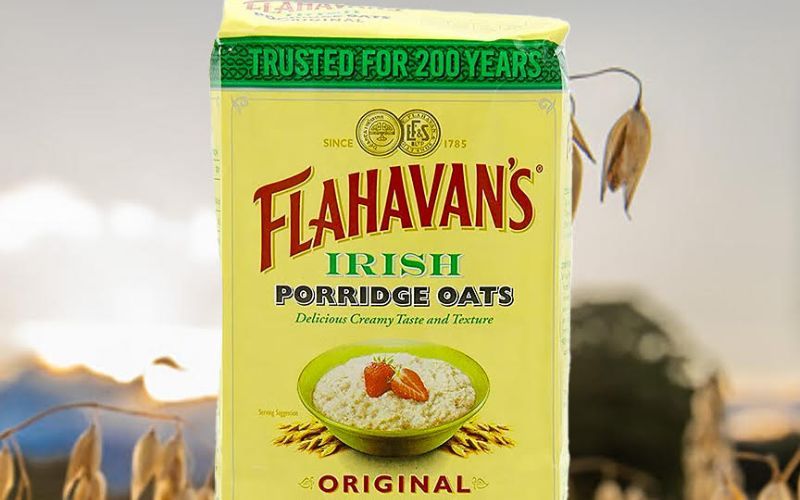

Flahavan's Irish oats.
Flahavan's has been milling oats beside the River Mahon in Kilmacthomas, Co. Waterford, for more than 200 years, using oats grown within about 60 miles of the mill. Ireland's cool, damp climate is famously good for oats, and the long, mild growing season lets the grain fill out slowly. Flahavan's milling process also cooks the oats twice, which is a big part of why its porridge turns out so creamy.
The farming rules matter too. Some North American farmers spray oats with glyphosate just before harvest. The herbicide is registered for late-season weed control, but it also helps the crop dry out faster and more evenly. The EU's legal limit on glyphosate residue in oats is in line with international norms, so the bigger difference comes from millers themselves. Flahavan's prohibits its growers from using glyphosate at any stage of growing its oats, and says independent testing of recent harvests found no detectable residues.
Mold toxins are another quiet difference. EU law sets legally binding maximum levels for naturally occurring mold toxins in grain, and producers are responsible for making sure their oats comply. In the US, federal levels for most of these toxins are advisory guidance rather than enforceable limits.
In your cup: Bewley's tea and coffee
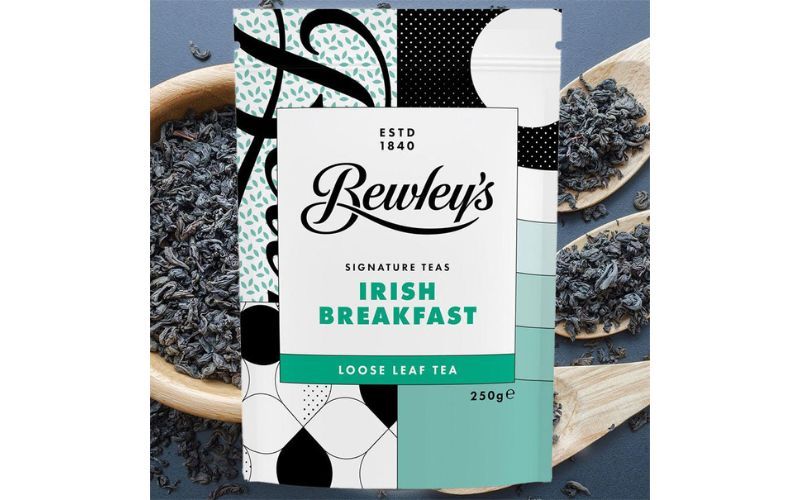
Bewley's Irish Breakfast tea.
Bewley's traces its roots to 1835, when Samuel Bewley and his son Charles became the first to ship tea directly from China to Dublin, landing more than 2,000 chests from Canton. The company dates its founding to 1840, and its Grafton Street café, open since 1927, is still a Dublin landmark. "A cup of Bewley's" remains shorthand for a proper brew.
Part of what makes Irish tea taste stronger is the blend itself. Irish breakfast teas typically lean heavily on Assam, a robust black tea that stands up to plenty of milk.
The rules play their part as well. Tea and coffee aren't grown commercially in Ireland, so the EU's protections work through imports. All tea and coffee sold in the EU must comply with its limits on pesticide residues, and importers are responsible for ensuring they do, backed by risk-based border checks. For coffee, the EU also sets a legal ceiling on ochratoxin A, a mold toxin that can form in beans during drying and storage. The United States has no equivalent federal limit.
On your table: Folláin jams and preserves
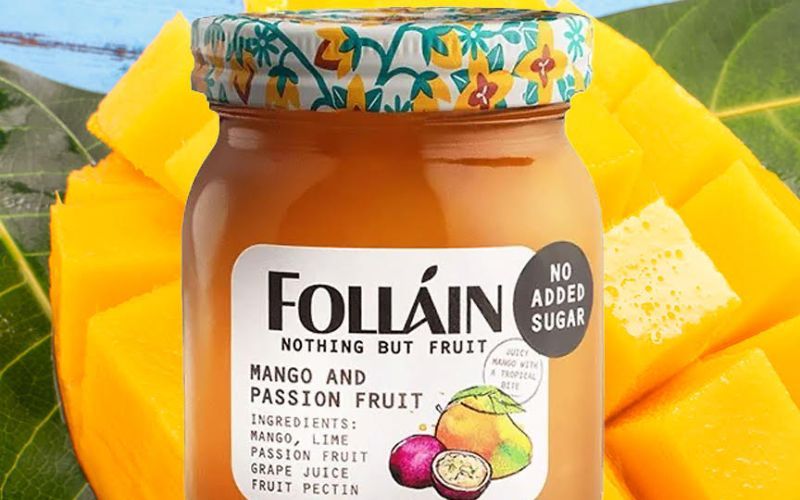
Folláin jams and preserves.
Folláin is the Irish word for "wholesome," and the name fits. The company started in the 1980s in Cúil Aodha, a small Irish-speaking village in West Cork, making preserves the way you would at home.
In the EU, "jam" is a legally protected name. Since June 2026, anything labeled jam must be made with at least 45 grams of fruit for every 100 grams of finished product, up from 35 grams, and "extra jam" needs at least 50 grams. Folláin's classic jams clear that bar comfortably: its raspberry jam is made with 50 grams of fruit per 100 grams, and its strawberry with 55. Only a few preservatives are permitted in jam, mostly in reduced-sugar varieties, so a Folláin ingredient list reads like a recipe card: fruit, sugar and fruit pectin, with no added colors or preservatives. Its Nothing But Fruit range goes a step further, using unsweetened grape juice in place of added sugar.
Something sweet: Kilbeggan cookies and the Foods of Athenry
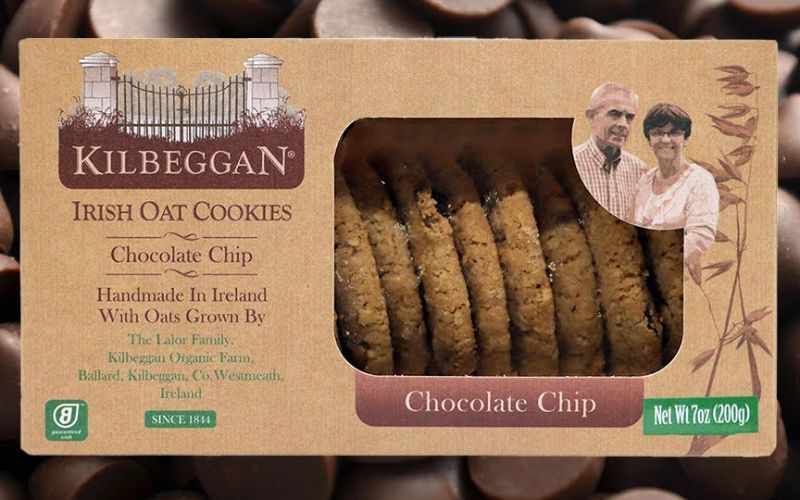
Kilbeggan cookies and the Foods of Athenry.
No Irish breakfast is complete without something from the biscuit tin, and baked goods are where the gap between EU and US rules is easiest to see.
Several ingredients still permitted under US federal rules are banned in the EU. Potassium bromate, used to strengthen bread dough, has long been prohibited in Europe because of cancer concerns. Azodicarbonamide, a flour conditioner, isn't authorized either. Titanium dioxide, used to make frostings and candy coatings bright white, was banned as a food additive in 2022. The EU also requires bakers to take active steps to reduce acrylamide, a compound that forms when baked goods brown, and to check their products against benchmark levels. Binding maximum limits are now being drawn up.
What this means in practice is a shorter, more familiar ingredient list. Kilbeggan cookies are a good example. They're baked from a generations-old recipe of the Lalor family, who grow certified organic oats on their farm in Co. Westmeath. The ingredients are oats, Irish butter, unbleached wheat flour, muscovado sugar, baking soda, and sea salt, and the result is a buttery, hearty crunch that's ideal with a cup of tea.
For some readers, though, what matters most is what's left out. The Foods of Athenry began as a family bakery in Athenry, Co. Galway, and has become one of Ireland's best-known names in gluten-free baking. Its bite-size Cookie Shots are made without gluten, wheat, dairy or eggs, and its granola bars use oats specially grown and processed to keep them free of gluten contamination. The EU and US both set the gluten-free threshold at 20 parts per million, but their labels differ in a practical way. EU labels must highlight allergens, usually in bold, within the ingredient list itself. US labels can instead list major allergens in a separate "Contains" line. On an Irish label, anyone checking for wheat, milk, or eggs can spot them at a glance, right where they appear in the recipe.
None of this means American food is unsafe. Both systems test food and enforce limits. The difference is where each one sets the line and how quickly it acts when questions come up. For shoppers who want the extra caution, Irish food offers it without giving up any flavor.
Win an Irish Breakfast for a Year
Bewley Irish Imports is giving one IrishCentral reader the chance to bring these breakfasts home. The prize includes Irish oats, Bewley's tea and coffee, Folláin jams and preserves, and sweet treats from Kilbeggan and The Foods of Athenry. For more information about the contest and to enter for your chance to win – ENTER HERE.
Want the full story? For a deeper look at how EU food standards compare with US rules across the whole Irish pantry, read more in the Bewley Irish Imports Journal.