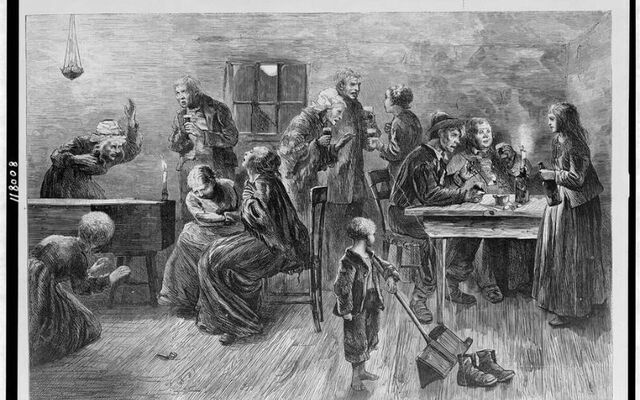
Say “apples and pears” for stairs or “tin of fruit” for a suit, and most people will picture an East End barrow boy rather than a Mayo navvy. Yet linguists, including Peter Wright, author of “Cockney Dialect and Slang,” have credited the Irish dockers, canal diggers, and railwaymen who built Victorian England with inventing the whole playful code, and plenty of it is still alive in Ireland today, from “brown bread” for dead to “cream-crackered” for exhausted.
According to the book “An Introduction to Language,” it’s said, “that during the building of the London docks at the beginning of the century, the Irish immigrant workers invented rhyming slang to confuse the non-Irish worker.”
This would seem to be backed up by the oft-used adage “the Brits may have invented English, but the Irish perfected it.”
Peter Wright, the author of “Cockney Dialect and Slang,” backs up the idea that it was invented by Irish dockers. Similarly, he suggests it was those Irish in England working on building the railways and canals, and the Cockneys who worked alongside them, who came up with the slang.
According to the DialectBlog the problem with pinpointing who came up with rhyming slang is the fact that is occurs so often. For example, Caló, a type of argot in Southwestern US Mexican Spanish, also relies on rhymes, and Yiddish-English also contributed a type of rhyming slang to the American idiom. We all know this one, which would go something along the lines of “Nice schmice. Do you even like the guy?”
Regardless of its origins, this rhyming slang is still used today in Ireland. Below are a few examples:
“Boat-race” = face
"Lovely body. Pity about the boat-race."
“Cream-crackered” = tired
“I’m cream-crackered! Can’t wait to finish work for the day.”
“Mae West” = best, mainly used in a negative context.
“How’s it looking? Not the Mae West.”
“Rock and roll” = dole (social welfare payments)
“Sure he’s out of work. Headed for the rock and roll.”
“Sallynoggin” = head (Sallynoggin is an area of Dublin)
“You were lashing into the pints last night. How’s the Sallynoggin today?”
“Brown bread” = dead
“If the teacher catchs you messing you’re brown bread.”
“Tea-leaf” = thief
“That young fella’s a bad one, he’s nothing more than a tea-leaf.”
H/T: stevenroyedwards.com and dialectblog.com.
*Originally published in February 2015, and updated in 2026.




Comments