From 1918 until his death in an ambush in Co Cork in August 1922, Michael Collins filled small working diaries with the scaffolding of a revolutionary’s day, the things to do, the people to meet, and the things left undone. In “Days in the Life”, Dolan and Murphy argue that these scraps tell us more about the man than any soul-searching entry ever could, because they catch him moving from one revolutionary among many to the most powerful figure in Ireland.
From 1918 to 1922, Michael Collins kept working diaries of his busy revolutionary life. They are a collection of hurried notes, necessary lists, names and appointments, things to do, and things not done. They are a record of his long working days, and they got him to where he needed to be on time.
Though these diaries do not contain conventional lengthy entries in which Collins finally reveals his innermost thoughts, they still tell us much about this extraordinary man.
In this book, Michael Collins’s biographers, Dolan and Murphy, capture the nature of this new Collins source. They reflect on how the diaries change what we know about him and challenge us to think differently about his life.
The diaries begin with Collins, a revolutionary among many. They end in 1922 with Collins as the most powerful figure in Ireland. They begin with Collins a single man. They end with him about to be married. The authors present thematic reflections on what the diaries reveal of his transformed life.
As they are also the diaries of his everyday life, the book examines very particular episodes, the curious and ordinary entries, which allow us to see Collins from new angles. Rather than offering the final piece that will solve the Collins puzzle, the diaries pose new questions to be asked.
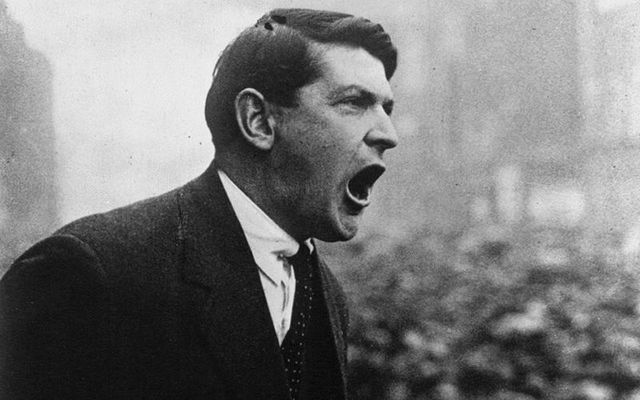
Michael Collins (1890–1922), was born in Co Cork, he was a staff captain in the GPO in 1916, and emerged as a leading figure during his internment in Frongoch camp.
As the Director of Organization with the Irish Volunteers, he masterminded their campaign in the Anglo-Irish War (1919-21). Having signed the Anglo-Irish Treaty, in 1922 he became chairman of the Provisional Government and commander-in-chief of the National Army.
Collins was killed in an ambush in County Cork on 22 August 1922.
You can learn more about "Days in the life: Reading the Michael Collins Diaries 1918-1922" on the Royal Irish Academy's website.
* Originally published in 2022 and updated in 2026.