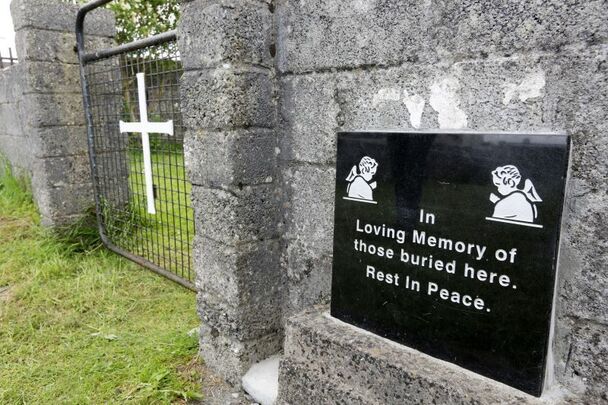
The list of the 802 children who died at the Tuam Mother and Baby Institution in Co Galway has been published online by the Office of the Director of Authorised Intervention, Tuam (ODAIT), which oversees the work concerning the children’s remains at the site.
The full list of 802 names, together with their date of death and age at death, is now available to view on ODAIT's website here.
ODAIT says the publication of the list is intended to assist potential family members in coming forward to provide a DNA sample.
Eligible family members can also come forward if they wish to register an objection to the participation in the Identification Programme of another eligible family member.
ODAIT says all information shared by families will be kept confidential.
Six additional Tuam names
Included in the newly published list are six additional names that were not previously on the lists of ‘796 Tuam babies’ that were available but were identified after research of the various material maintained by the Sisters of the Bon Secours (1925-1961). ODAIT notes that these would not have been accessible to general members of the public, nor to Catherine Corless when she was researching this issue.
These children’s deaths were not registered with the civil authorities, which explains why their death registrations had not been previously located, ODAIT said.
The six additional names, as well as their age at death and the date they died, are:
- Infant Clifford: 5 minutes old, December 2, 1938
- Thomas Crehan: 2 months old, August 15, 1927
- Patrick Anthony Devaney: 1 month old, February 16, 1951
- John Francis Fitzgerald: 3 weeks old, February 19, 1951
- John Gallagher: 15 days old, December 23, 1949
- Michael Sweeney: 2 and a half months old, November 19, 1931
According to the overall list, the youngest child recorded as having died at the Tuam institution was just five minutes old, while the oldest was nine and a half years old. The earliest child's death was recorded in August 1925, while the most recent was January 1960.
Acknowledging the sensitivity of publishing the new information, ODAIT shared details for support services online here.
Appeal for DNA samples
Daniel MacSweeney, Director of ODAIT, said: "In publishing the list of the deceased, according to the records available to ODAIT, we are seeking to balance, on the one hand, the privacy of living relatives and on the other the interest for family members to recognise their relatives’ names; to have the opportunity to either provide a DNA sample or object to the provision of a DNA sample.”
Eligible family members have until September 24, 2027, to apply to provide a DNA sample to help identify their family member.
As per Ireland's Institutional Burials Act 2022, eligible family members are defined as people who have reasonable grounds to believe that they are a child, parent, sibling, half-sibling, grandparent, grandchild, aunt, uncle, niece, nephew, half-niece, half-nephew, grandniece, grandnephew and / or first cousin of a person who is buried at the Tuam site.
ODAIT said this week that, to date, it has taken 74 DNA samples from eligible family members. The DNA samples, together with the information gathered from the forensic excavation and analysis of the human remains, will assist ODAIT in attempting to individualize and identify the deceased.
"This process is complex, and identifying the human remains will be hugely challenging and is only possible with the support of the family members," ODAIT said.
Anyone who thinks they might be related to someone who died in the Tuam Mother and Baby Institution can contact the ODAIT team by phone +353 (0)1 539 1777, email [email protected], or visit ODAIT.ie for more information.
Objections
Eligible family members may also register an objection to the participation in the Identification Programme of another eligible family member. The deadline to register an objection is February 26, 2027.
Ireland's Institutional Burials Act 2022 allows for the closest living relatives of the deceased (parent, child, sibling and half-sibling) to object to the participation of other related persons in the ID Programme. This may apply to some individuals, depending on their family situation.
Objections are provided for in order to balance the public interest in identifying human remains recovered from the Tuam site with the privacy rights of close living relatives.
ODAIT said that where an individual is providing a DNA sample as part of the Identification Programme, it will make reasonable efforts to contact possible objectors to give them the opportunity to object.
The Director will consider an objection on the basis of the closeness of the relationship of the applicant and the deceased, and the public interest of identifying human remains.