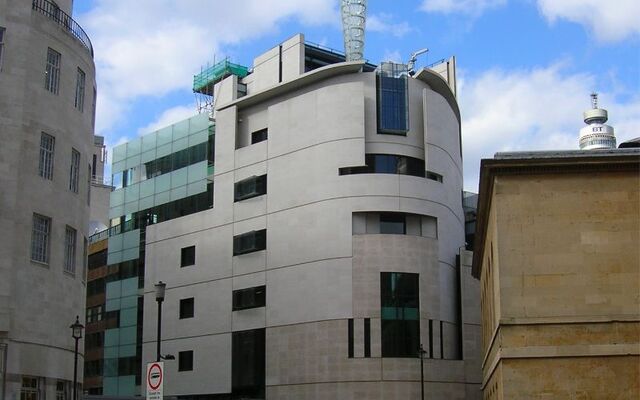
The BBC is cutting three of the five full-time jobs in its Irish language team, a reduction of 60 percent that campaigners warn will all but end live Irish language broadcasting in the north. Conradh na Gaeilge (the Gaelic League, the national membership organization that campaigns for the Irish language) says the move leaves BBC Northern Ireland with just two Irish-language staff across a workforce of 650.
Conradh na Gaeilge has reacted to news that the BBC will be cutting 60 percent of the full-time roles within the BBC Irish Language team. It is understood that staff were informed of the cuts on Thursday, 15 October 2026, via a Microsoft Teams presentation.
Conradh na Gaeilge has called the cuts entirely “disproportionate” in comparison to other units, teams and departments within the BBC, identifying the “devastating impact” they will have on the BBC’s live Irish language programs. The cuts will most likely mean that live, award-winning BBC Radio Ulster Irish language programs such as "Blas" will come to an end.
President of Conradh na Gaeilge, Ciarán Mac Giolla Bhéin, said the decision defied any logic given the current growth in the language.
“We understand that of the 5 full-time jobs in the BBC’s Irish Language team, 3 of those are being cut. That is a 60% cut to the Irish language workforce. At a time where the Irish language is going through phenomenal growth across society, between Irish Medium Education, adult classes, families using Irish in the home, it is difficult to comprehend any logic or rationale to cut 60% of the BBCs Irish language team whilst the Irish language audience is growing and expecting increased provision.
"Those levels of cuts, to what is an award-winning broadcast team within the BBC’s Irish Language Unit, will be devastating to the Irish language in broadcasting here in the north, and seem to be entirely disproportionate to the cuts taking place elsewhere within the BBC. We cannot imagine any other sector, team or unit is facing a 60% staffing cut.”
He contrasted the provision for Irish with what the broadcaster offers the other indigenous languages of these islands.
“As things sat prior to these cuts, the Irish language was already the poor cousin in the context of BBC’s provision for our indigenous languages. In Wales, there are 2 bespoke Welsh language radio stations, BBC Radio Cymru [Cymru is the Welsh word for Wales] and BBC Cymru 2, broadcasting around 200 combined hours per week, with an annual budget of £12.8m. In Scotland, BBC Radio nan Gàidheal [Scottish Gaelic for Radio of the Gaels] broadcasts for at least 90 hours a week and has an annual budget of £3.7m.
"Here, there is no Irish language BBC station. None. We get around 30mins a day, or around 5 hours a week on BBC Radio Ulster. And now BBC are cutting 60% of the team providing that already limited service. Those who have made these cuts should be ashamed. The Irish language team’s expertise and experience should all be protected and indeed increased to allow them to address the growing needs of the Irish language community and those with an interest in the language here.”
Mac Giolla Bhéin said the corporation was becoming harder and harder for Gaeilgeoirí [Irish speakers] to work with.
“The BBC, however, seems to be becoming an increasingly hostile space for the Irish language. They have no Irish language corporate policy. They have no dual-language signage on their premises. They have an embarrassingly small library of content for young people and families. They have no Irish-language radio station. And now they are disproportionately targeting Irish language jobs and reducing an already reduced team. BBCNI will only have 2 Irish language staff amongst their 650 workforce. Live Irish language output will be decimated as a result of these cuts.”
Conradh na Gaeilge is now calling for the matter to be escalated politically, pointing to obligations set out in the Good Friday Agreement.
“We would remind the BBC, and in particular the Department for Culture, Media and Sport, of their duties under the Good Friday Agreement, namely to take ‘resolute action to promote the Irish language’ with bespoke reference to the relative British authorities regarding broadcasting. We believe these devastating cuts must be raised within the Executive, with the Secretary of State and directly with Culture, Media and Sport Minister Lisa Nandy MP, with the Irish Government, and ultimately with BBC Director Adam Smyth.”


Comments