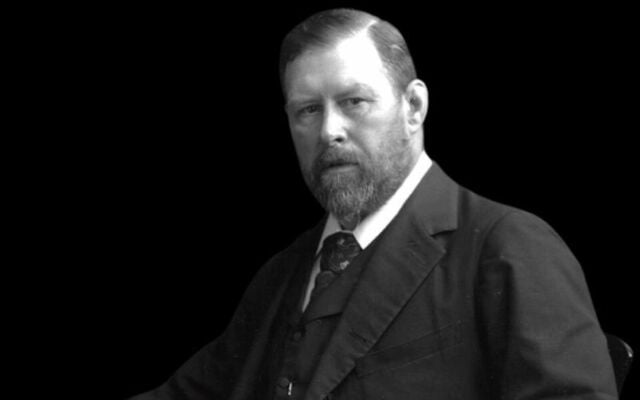
A sickly child who spent much of his boyhood in bed, Bram Stoker saw more of his mother Charlotte than any of his siblings did, and she filled the hours with stories from her youth in Sligo and Donegal. They were hardly gentle, taking in a great-uncle hanged after the 1798 Rebellion and a 1,400-year-old psalter his O'Donnell ancestors carried into battle as a talisman.
Long before he created Dracula, a young Bram Stoker was immersed in stories from his own family history.
Filled with rebels, betrayal, ancient kings, sacred relics, and remarkable ancestors, these stories no doubt left an impression on the boy who would become one of the world’s most famous writers of Gothic fiction.
George Blake and the 1798 Rebellion
Charlotte Stoker mother, and Bram’s grandmother, Matilda Blake, was descended from the Blake family, who settled in the western province of Connacht by the 14th Century.
One of the "Tribes of Galway", the family was mariners and merchant princes who owned sea-going ships, exporting timber and leather hides to the western coasts of France and Spain, while importing wines, silks, and spices.
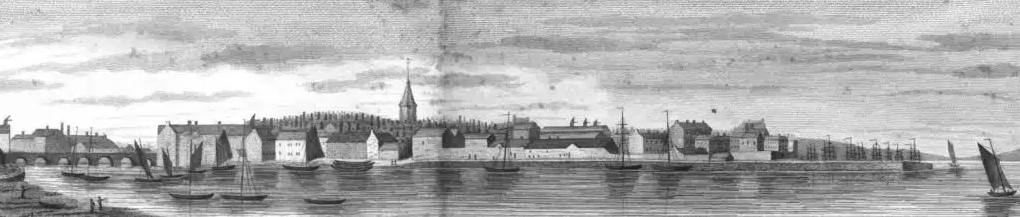

Historic engraving of Galway from Hardiman’s History of Galway.
Matilda Blake was the younger daughter of Richard Blake and Eliza O’Donnell. One of the most dramatic family stories concerned her older brother and Bram’s great-uncle, General George Blake. During the 1798 Rebellion, Blake led an estimated 1,500 Irishmen in the Battle of Ballinamuck against General Humbert’s French force of 800.
The Irish rebels were armed mainly with pikes, which they used as bayonets, hopelessly ill-equipped to face an army with guns and heavy artillery. The outgunned rebels surrendered without terms. Estimates suggest 500 to 600 were killed in battle, and hundreds were hanged afterward during a wholesale slaughter of the Irish rebels.
Local tradition records that with so many Irish rebels, the crown forces held a lottery using cards marked "life" and "death" to reduce the executions to more manageable numbers. Those who drew ‘life’ cards were set free. Those prisoners who drew "death" were taken to be hanged at Ballinalee.
George Blake was captured several days after the battle and was hanged at Kiltycreevagh Hill. A contemporary newspaper gives an account of his death.
"Blake, the insurgent leader, who had joined the French and was lately deservedly hanged as a traitor, begged to be shot. When that was refused, he requested to be indulged with the noose of the rope that was for his execution being soaped, that it might run free to shorten the time of dying. This, we hear, was granted, and he prepared it in that manner with his own hand."
- Freeman’s Journal 15 September 1798
These stories about the 1798 Rebellion and the gruesome end met by General George Blake and the rebels were widely known across Ireland. When Bram heard them, he would have had the knowledge of knowing that his great-uncle led an estimated 800 to 1000 Irishmen to their deaths.
Ancient artifacts of the O’Donnell family
Charlotte also entertained Bram with stories from the O’Donnell line of the family, including one that provided a link between the ancient past and Bram’s early childhood.
In 1843, Sir Richard O’Donell, Charlotte Stoker’s close cousin, deposited some ancient artifacts with the Royal Irish Academy. The Psalter of St. Columbcille and the shrine box that held it had been passed down through the O’Donnell family between 561 A.D. and 1843 A.D.
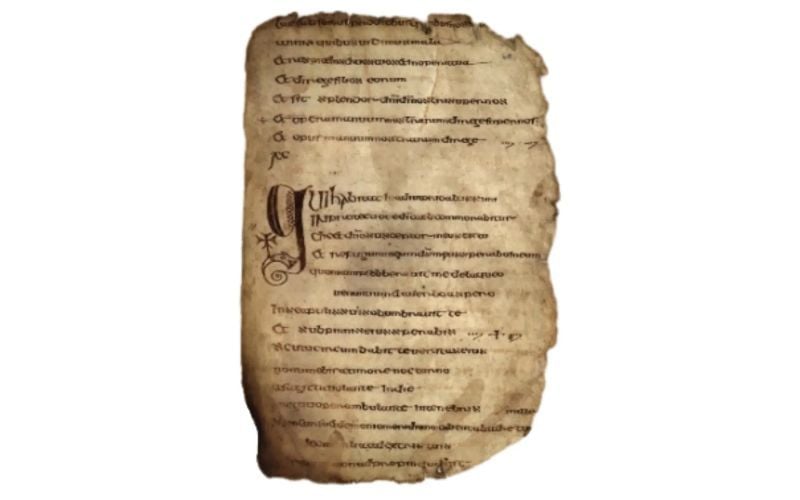
Page from the Cathach (Psalter of St. Columbcille).
O’Donnell’s decision to donate them was inspired by the "Celtic Revival", a renewed interest in the lost classical history and culture of Ireland. His donation was enthusiastically covered by the Irish newspapers and was a cause for celebration because of its cultural importance.
The Psalter of St. Columbcille
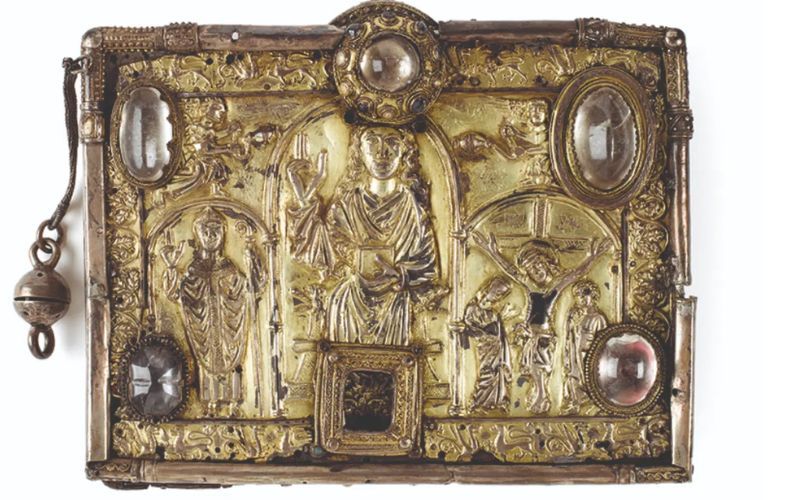
The Cathach shrine used to protect the ancient manuscript.
Also known as the Cathach, the Psalter of St. Columbcille is the earliest surviving Irish manuscript, dating from the late sixth century, consisting of a collection of Psalms that would have been copied by St. Columbcille himself.
Over time, the manuscript became one of the most treasured possessions of the O’Donnell family. It was carried into battle as a sacred relic and served as a powerful symbol of the family’s status and influence.
In the 11th century, a richly decorated shrine was commissioned to protect the manuscript. Adorned with precious metals and gemstones, the shrine reflected the importance of the Cathach to generations of O’Donnells.
The manuscript remained in the family’s care for centuries before leaving for France in 1691 during a period of political upheaval. When the last in this French line of O’Donnells died without children in 1802, the book and shrine were returned in a trunk to Ireland.
However, it wouldn’t be until 1813 that the Irish O’Donnells were reunited with the ancient relic, when renowned genealogist William Betham was invited to inspect the contents of the trunk and attributed it to the O’Donnells of Newport.
After centuries abroad, one of Ireland’s most important cultural treasures had found a home again.
The family history that inspired a young Bram Stoker
The story of the Cathach was more than just an interesting tale from Irish history. For Bram Stoker, it was part of his own family history.
Through his mother, Charlotte Thornley Stoker, we can trace Bram’s direct lineage twelve generations from Manus O’Donnell, or Manus the Magnificent, Lord of Tír Conaill, who died in 1563.
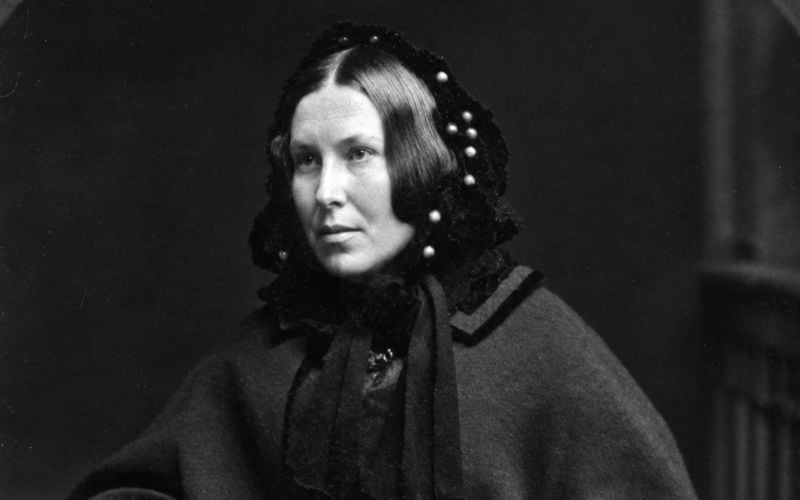
Charlotte Thornley Stoker.
What’s more, Bram’s direct lineage can be traced back even earlier, because the O’Donnell lords were one of the oldest recorded lineages in Ireland. Bram could trace his own direct family line back not as a ‘clan member’ but as a direct descendant.
As a result, Bram’s family shared a connection with the dynasty that had protected and preserved the Cathach for centuries.
For a young boy captivated by tales of ancient dynasties, sacred relics, and extraordinary ancestors, the story of the Cathach was exactly the kind of story that fired the imagination and surely inspired parts of his epic Draculian adventure,
Trace your own family history
If you would like to explore your own family history, the expert genealogists at the Irish Family History Centre can help uncover the people, places, and stories that shaped you and your family.