My father's (1900–1975) memory was overwritten in a 2017 Austrian documentary broadcast on RTÉ in 2018.
The film promotional texts stated: "He fought as a young man at the side of the legendary freedom fighter Michael Collins for Ireland's independence."
It suggested that the violent acts he had supposedly committed weighed on him: “He did not talk much about the time in the Civil War, but we know he killed people. That left a dark shadow on his soul.”
The film repeatedly links my father to Michael Collins, stating that he was a member of one of Collins’s guerrilla squads which ambushed and killed British soldiers and civilians.
I believe those claims are all untrue.
There had been no prior mention, nor any military or other record, of my father fighting alongside Collins or anyone else! Perhaps his years as a Garda Síochána in Dublin (1927–1961) weighed on him. However, I believe the real “shadow on his soul” was his horrific illness, atherosclerosis, along with the ostracization of his unmarried sister and her baby. She gave birth in the workhouse in 1917. Abandoning his sister was a “dark” secret and cross, which he guarded from his wife and children for thirty-four years. When his sister died in 1971, his secret was exposed, and his mental health declined further...
I was born when he was 61, and, as a curious child, I would question him about his family. He would sometimes change the number of his siblings. In those answers, there were at least three children who had died in childhood, yet there was sometimes a sister who had survived but never featured in his final family count. I would keep asking questions and counting on my fingers until my mother would finally interrupt: "Stop annoying your father!"
But imagine if someone, more experienced than a curious six-year-old, had asked questions—and recorded the answers before he completely lost his mind…
Knowing my father's character, he might not have embraced the idea. However, his younger brother Packie (1902–1982), the last surviving sibling in his family, had sidestepped the norms of his times and secretly maintained contact with their sister. In his latter years, he may have liked to pass on his memories. What a difference that would have made. Besides clarifying our own family history, it would certainly have included fascinating stories of everyday life in Lusmagh.
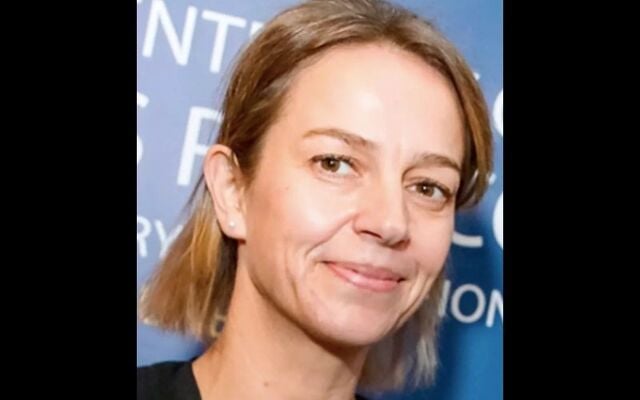
It takes a special kind of person to conduct that sort of interview. It requires intelligence, sensitivity, patience, and the ability to inspire trust. Irish writer, journalist, and interviewer Ally Bunbury is such a person, and her Memory Boom project is a gem.
Ally, who is also a novelist, has spent more than 20 years working alongside her husband, historian and broadcaster Turtle Bunbury, preserving personal histories and family memories. Memory Boom recordings are often commissioned as birthday, anniversary, retirement, or Christmas gifts for parents and grandparents. Following a Zoom interview, families receive a private digital audio recording together with a keepsake box containing the interview on a USB drive.
Ally speaks with people from every walk of life and has a remarkable gift for putting them at ease and gently drawing out memories, humor, and life experiences. As she says, "Many families plan to record a parent or grandparent someday, but life gets busy. Questions remain unasked, stories go uncaptured, and memories disappear.”
If we don't preserve someone's own voice, their story may one day be drastically rewritten. Her interest in storytelling and memoir has been featured in The Irish Times and on RTÉ Radio 1's Drivetime. She told me about a close friend who suffered memory loss following a stroke. Years earlier, the family had created a memory book, which became an invaluable way of reconnecting her with the people, places, and experiences of her life. The experience reinforced something Ally has always believed: memories matter.
As she puts it: "Memory Boom was created to preserve not just names and dates, but personalities, voices, humor, wisdom, and family stories that might otherwise be lost."
Since 2018, I have devoted countless hours trying to piece together bits of my father's story and that of my aunt and her daughter. I was incredibly fortunate that generous people in Offaly helped me fill in important gaps through their memories and enquiries. Other information came from census records, historical documents, and the military archives, but that part was painstaking work.
In his book "The Man of the Triple Name" (1984), John B. Keane mentioned how many Irish people living in the south-west of Ireland in the 1930s and 1940s ended up in the Killarney District Lunatic Asylum, a banishment often induced by “pure loneliness and the lack of sex.” I would add that there were, and are, many troubled Irish people due to repressed memories, generational family secrets, untruths, and partially erased truths. First-hand memories and the authentic stories of those we love are among the most precious gifts we can carry into the future. Recollections of the good and bad times people lived through also help us understand our history and our families in a way no official record ever can.
Oscar Wilde believed the Irish to be “the greatest talkers since the Greeks,” and Ally’s interview with John Buckley McQuaid, troubadour, seanchaí, bard, poet, musician, and singer-songwriter, proves Wilde right.
McQuaid’s Memory Boom is a feast of profound and humorous conversation, interwoven with music and lyrics. McQuaid’s own voice has been described as “a voice for the voiceless.”
Ally firmly believes that “Every Voice Has a Story,” and when the dust settles, “the most valuable family heirloom may be a voice.” The memories, stories, laughter, and truths of loved ones, preserved for future generations and cherished with their families, are truly a priceless legacy.
(P.S. My own recording will be filled with memories of friends and family, and the dismantling of a false narrative that began just nine years ago: the claim that my father fought alongside Michael Collins and killed people. It will also tell how his own 'execution' was ordered by those who had believed themselves most at risk—his shell-shocked wife and 14-year-old daughter, Mé Féin—and had nothing whatsoever to do with Sinn Féin or Michael Collins...)
This article was submitted to the IrishCentral contributors network by a member of the global Irish community. To become an IrishCentral contributor click here.


Comments