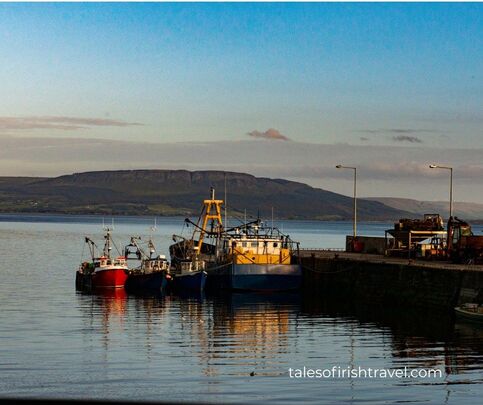
In 1883, more emigrants sailed from the port of Derry than had sailed from it in 1847, the worst year of the Great Hunger. They did not board in the city, but eighteen miles downstream at Moville, where the water of Lough Foyle was finally deep enough for an ocean liner to drop anchor.
In 1883, more emigrants sailed from the port of Derry than had sailed from it in 1847, the worst year of the Great Hunger.
That is not a misprint. The famine is the year everyone knows. But the exodus from the northwest of Ireland did not peak during it. It peaked almost forty years later, long after the potato had come back, when leaving had simply become what you did.
In that single year, 15,217 people boarded 154 steamers. Of those, 10,496 were bound for the United States and 4,721 for Canada.
They did not board at Derry. They boarded at Moville.
Moville is a small town on the Inishowen peninsula in County Donegal, eighteen miles downstream from Derry on the western shore of Lough Foyle. The reason it mattered is dull and entirely practical. The Foyle at Derry is too shallow for ocean liners. At Moville, the water is deep enough for them to anchor.
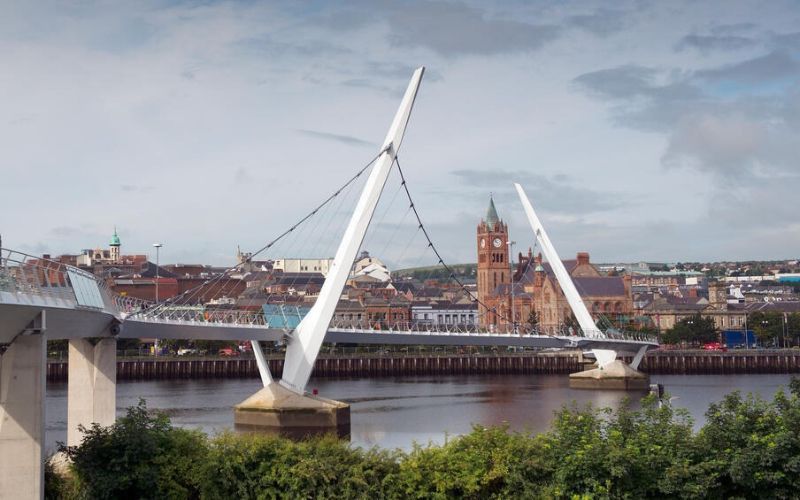

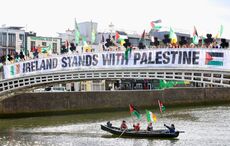
The Peace Bridge, over the River Foyle, at Derry City.
So from 1861 until 1939, the Atlantic ships of the Anchor Line, the Allan Line, the Anchor-Donaldson, and the Dominion Line stood offshore at Moville, and the emigrants were brought down to them from Derry on small tenders. You left the city by river, transferred to a liner in open water, and watched Inishowen go past on your right as you went.
Between 1877 and 1897 alone, 193,887 passengers embarked at Moville for North America. 153,886 of them went to the United States. 40,001 went to Canada. Across the longer span of 1851 to 1920, 407,781 people left Counties Derry, Donegal, and Tyrone for somewhere beyond the British Isles. Traffic through the port grew from 200,000 tons in 1866 to a peak of 940,000 tons in 1905.
Moville is about an hour from Derry. When you get there, it looks like any other small port. There is no monument and no visitor center. A pier, a handful of fishing boats, the water, and the hills of Derry on the far side of the lough.
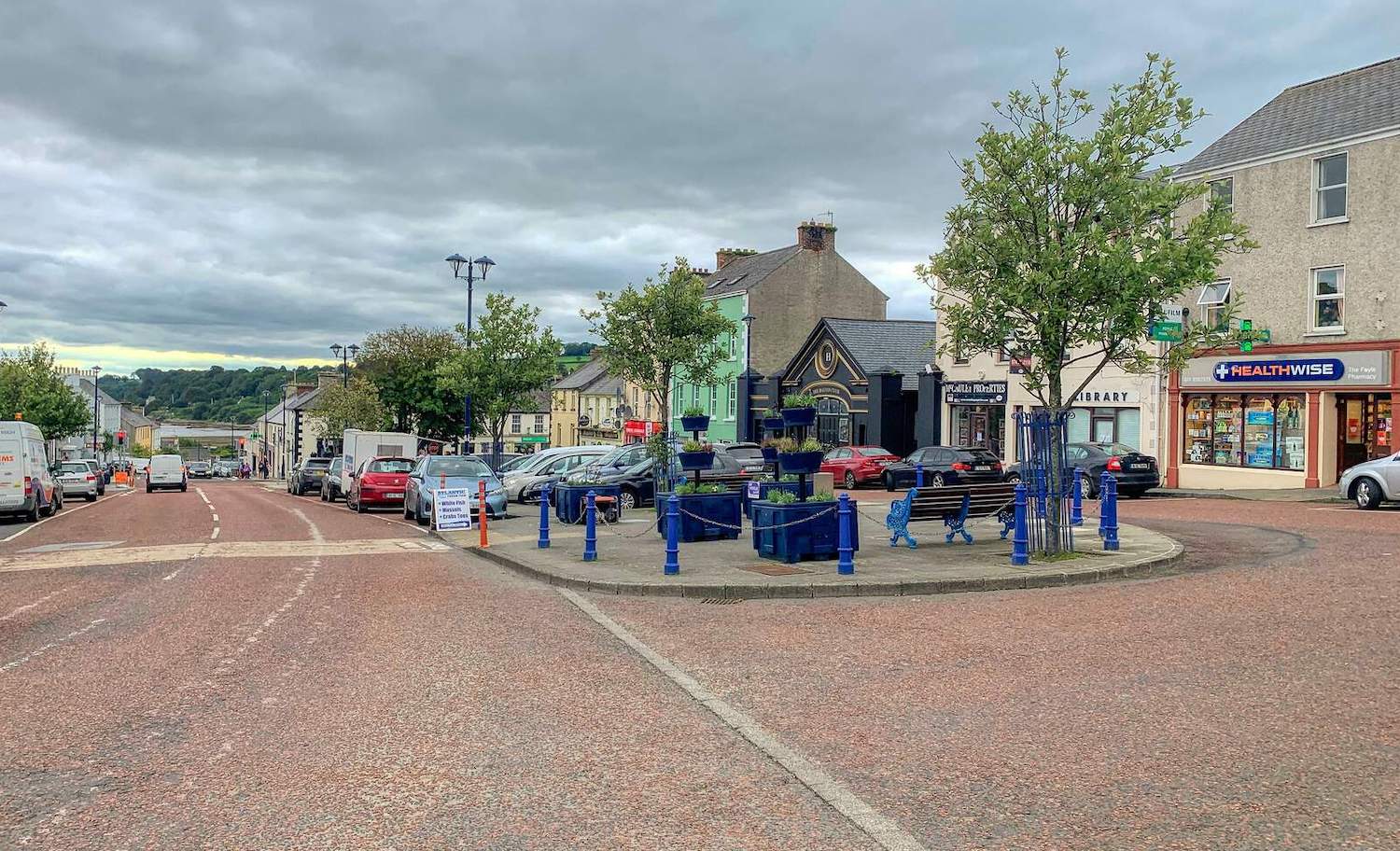
Moville, County Donegal.
That is arguably the point. Cobh has a heritage center, a statue, and a museum, and it deserves them. Moville has a pier. And 193,887 people left from it.
What strikes you about the numbers is how ordinary the process had become. There was no single catastrophe driving the 1883 figure. There was a poor harvest, there was poverty, and there was a well-organized shipping industry that had made leaving easy, routine, and cheap. Agents in every town. Printed schedules. A tender timetable.
For the hundreds of thousands of Americans whose families came out of Donegal, Derry, and Tyrone, that stretch of water is almost certainly the last part of Ireland their people saw. Not Cobh, which gets the attention. A small town in Inishowen, with the hills of Derry on one side and the Atlantic ahead.
It is still there. You can drive to it in an hour from the city and stand roughly where they stood, and nothing about the place will tell you what happened there.
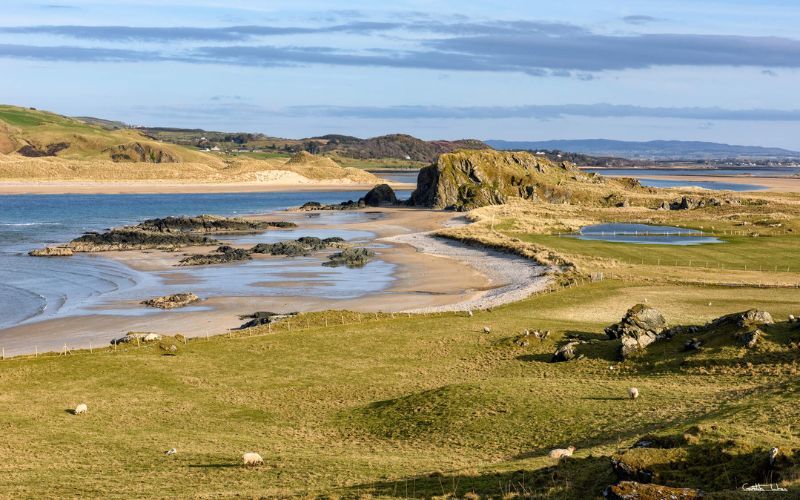
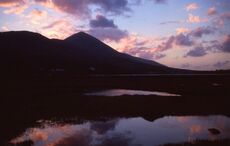
Isle of Doagh, at Inishowen, in Donegal.
This article was submitted to the IrishCentral contributors network by a member of the global Irish community. To become an IrishCentral contributor click here.


Comments