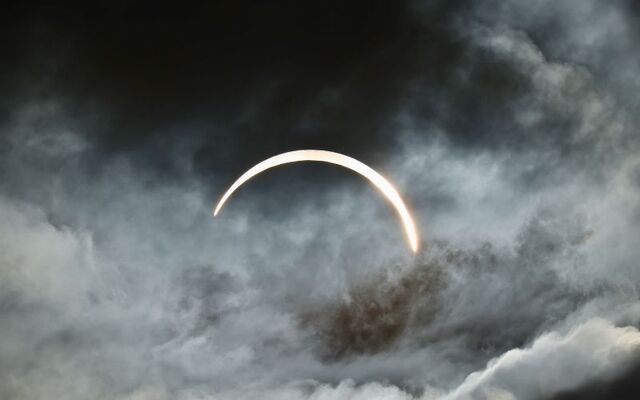
Ireland stood still for a brief period on Wednesday as all eyes turned to the sky for the solar eclipse.
The rare event saw the Moon covering more than 90% of the Sun at one stage, with 98% coverage seen in Cork city.
The moment was the most dramatic solar eclipse in Ireland since 1999.
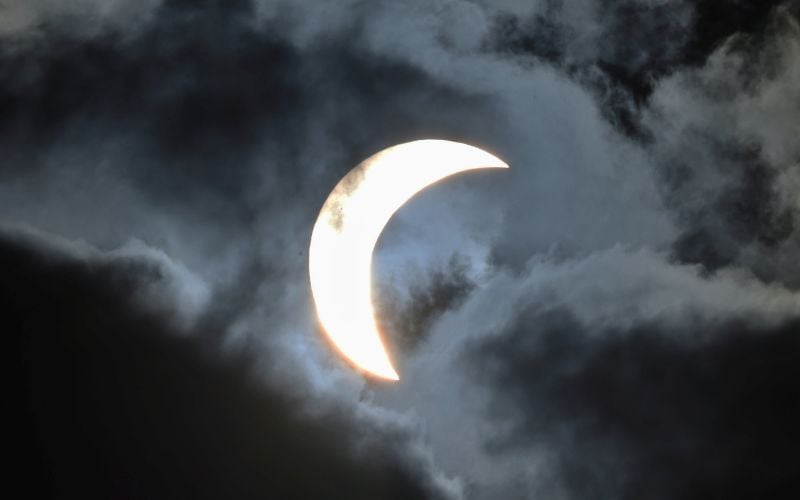

August 12, 2026: Solar Eclipse as seen from the Curragh Plains in Co Kildare. (RollingNews.ie)
Unfortunately, an eclipse of this magnitude won’t be visible for another 70 years, though there are some other celestial events before then.
A partial solar eclipse will be visible next year on August 2, 2027. The event will begin at around 9 am local time, with those in Ireland and the UK seeing around 40% of the Sun blocked out by the Moon.
More southern countries will see more obscuration such as Portugal and Spain, which will see 74% and 85% respectively.
September 2081 will be the next time the Sun is covered by more than 80% of the Moon, while the next total solar eclipse visible from Ireland will be seen on September 23, 2090.
It will be the first total solar eclipse in 91 years, meaning Wednesday’s event was particularly monumental.
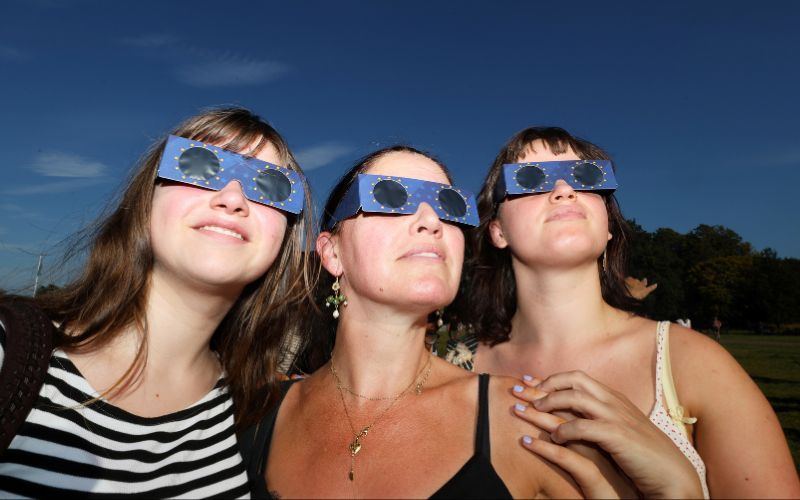
August 12, 2026: Andrea Caro with her daughters Pearl and Iris at the vistors centre in Dublin's Phoenix Park during the Solar Eclipse. (RollingNews.ie)
As the dust settles on the huge moment, an optometrist has revealed the tell-tale signs to look out for those who sneaked a peek at the eclipse with their naked eye.
Directly looking at the sun can cause damage to the back of the eye, with Chair of the Welsh Optometric Committee Nkosi Yearwood explaining that symptoms can take between a few hours or a "couple of days" to appear.
Signs you may have damaged your retina include blurring in vision, distortion, and a dark spot or change in the colour of your vision.
Should you experience any of these symptoms, Yearwood urges people to seek advice from an optometrist immediately.
*This article was originally published on Extra.ie.



Comments