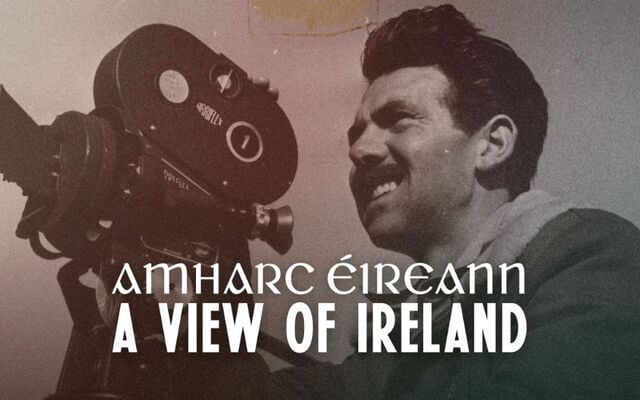
The Irish Film Institute (IFI) in Dublin, in association with Gael Linn, has launched a new collection of historically significant newsreels, "Amharc Éireann: A View of Ireland."
This collection of Gael Linn newsreels from the 1950s and 1960s is now available to stream free worldwide on the IFI Archive Player and suite of apps.
Additionally, IFI Digital Platforms has developed a new immersive, interactive map of Ireland, which allows users to explore the collection in depth and find stories relating to villages or counties. Explore over 250 moments - each tied to a village, town, or county - as you browse Ireland geographically.
The interactive map is mirrored on app by Irish tech company Axonista, and the IFI Archive Player app is available to download from Google Play, the App Store, Amazon TV, Android TV, and Roku.
Launching during Seachtain na Gaeilge 2026, the IFI says it is delighted to present 257 films from the Amharc Éireann series, with the support and partnership of Gael Linn and its app provider, Axonista.
View this post on Instagram
What is Gael Linn?
Gael Linn was founded in 1953 with the mission of promoting and revitalising Irish language and culture through a variety of outlets.
The Amharc Éireann newsreel, launched in 1956, was the first regular, indigenous cinema newsreel since the Irish Events newsreel (1917–1920). The newsreel was released initially as a series of short, monthly magazine-style items and later as a weekly issue. A total of 267 editions were released in a five-year period from 1959 and were shown in cinemas across the nation as a curtain raiser to the main feature film. Each episode contained two or three short features of interest to Irish cinema-goers.
The series provides a vivid chronicle of the rapid development of modern Ireland during a particularly progressive period under the stewardship of T.K. Whitaker, Secretary of the Department of Finance, and Taoiseach Seán Lemass.
The series ran until 1964, when the introduction of television and broadcast news ultimately led to a decline in the cinema newsreel as a popular form of information and entertainment. However, the impact of Gael Linn’s Amharc Éireann on Irish cultural identity still resonates today, as these newsreels capture a wealth of historic documentation through an Irish lens.
The key production team comprised producer Colm Ó Laoghaire, cameramen Jim Mulkerns, Vincent Corcoran, and Nick O’Neill, soundman Peter Hunt, scriptwriters Breandán Ó hEithir and Máirtín Ó Cadhain, narrator Pádraic Ó Raghallaigh, and composer Gerard Victory. Other crew members included George Morrisson, Val Ennis, and Morgan O’Sullivan.
"Valuable audio visual record of social history" in Ireland
Speaking upon the launch, IFI Director/CEO Ross Keane said: "The Irish Film Institute is delighted to partner with Gael Linn on this launch of this historically invaluable collection.
"The Amharc Éireann collection is another significant project from the IFI Irish Film Archive that further progresses its vitally important mission of preserving Ireland’s national film heritage.
"We are grateful to Réamonn Ó Ciaráin and all the team at Gael Linn for their collaboration, and to our partners at Axonista for helping bring the collection’s interactive map to life."
Gael Linn Chief Executive Réamonn Ó Ciaráin added: "Amharc Éireann is a valuable audio visual record of social history portraying Ireland at a time of great social change.
"These short films made a significant contribution to the revitalisation of the Irish language, and they are now set to continue doing so not only in Ireland but across the globe.
"Gael Linn is delighted to be collaborating with IFI on this major initiative which will ensure that Amharc Éireann is accessible now in both Irish and English. "
Axonista CEO Claire McHugh commented: "Amharc Éireann demonstrates how new technology can unlock archival footage for audiences in entirely new ways.
"By surfacing over 250 stories through an interactive map, we’ve added a powerful layer of place alongside time - enabling viewers to explore Ireland’s history geographically as well as chronologically.
"Axonista's close, award-winning partnership with IFI since 2017 has been built on exactly this: applying thoughtful technology to deepen cultural discovery and access. "
In addition to the launch and the materials available free online and via the app, the Irish Film Institute will explore the background to the films’ production and their ongoing cultural value with a screening of MacDara Ó Curraidhín’s documentary "Ireland in the Newsreels" ("Éire na Nuachtscannán"), followed by a panel discussion with Dr. Ciara Chambers of University College Cork, Gael Linn’s Réamonn Ó Ciaráin, Amharc Éireann cameraman Nick O’Neill, journalist Helena Mulkerns, and Áine Gallagher (comedian, Guerrilla Gaeilge Activist). This ticketed event will take place on Monday, March 9, at 6:30 pm.
What's available to stream on "Amharc Éireann: A View of Ireland"?
The modernisation and economic progress of Irish society in the 1950s and 1960s is documented through a broad array of stories, such as "Thrills for Dubliners: Speedboats on the Liffey," "Mansion House - Ideal Homes Exhibition," and a variety of fashion shows.
Industrialisation is charted through newsreels like "Electrification of Connemara" and "Ireland’s First Oil-Fired Power Station."
However, this modernisation is set alongside the continued importance of the Catholic Church in Ireland, with notable entries including "Annual Blessing of Aer Lingus Fleet" and "Gift of Bull Sent to Pope."
International celebrities such as Princess Grace of Monaco, John Huston, and Arthur Miller appear, while more everyday events are captured in "Keeping Warm in the Big Freeze" and in films of GAA games, including the 1959 All-Ireland Camogie final between Dublin and Mayo and the 1960 All-Ireland Senior Football semi-final between Kerry and Galway.
A growing interest in international relations is evident in several stories, such as "Irish Forces in the Congo," while foreign travel was becoming increasingly accessible, as seen in "Dublin-New York: Irish Jet Liner Inaugural Flight" and "Dublin - Malaga: Aer Lingus Start Winter Sunshine Flight."
A glittering array of nighttime entertainments unspool in the "Nigerian Independence Ball," at a host of ballroom dancing competitions, and at a student hop where "Art Students Get Twisted."
The collection paints a complex picture of life across the island at this time, with the nation’s changing economy referenced in stories such as a farmers’ protest march in Limerick and a trade union conference in Buncrana.
Irish cultural life evident in various Fleadhanna Ceoil in Clones, Tuam, and Mullingar, and many historical commemorations which nod to the country’s recent turbulent past. Dramatic hard news stories were regularly captured, such as the 1961 delivery by helicopter of supplies to Inishturk island and the Shannon Air Disaster: 83 Dead, No Survivors.
The IFI is principally funded by the Arts Council.


Comments