
July 2026 was the second hottest July since 1900, the driest July on record, and one of the sunniest months on record for Ireland, according to Met Éireann.
Ireland's national mean July temperature was 17.25 °C, making it the second hottest July since 1900, falling just behind July 2013, which was 17.34 °C.
July was also the third hottest month overall; the hottest month remains August 1995, 17.75 °C.
Additionally, provisional gridded rainfall for Ireland shows July 2026 was the driest July on record with 16 mm, or 17 % of the 1991-2020 long-term average (LTA).
The exceptionally warm, dry, and sunny month was due to high pressure dominance, which saw numerous station records being broken, Met Éireann said in its Climate Statement for July 2026.
Heatwaves were recorded at seven stations, lasting between five and 13 days.
The South and the East experienced long dry periods of high temperatures and sunshine, while the North and West experienced some rain and cloud, particularly early and late in the month.
In the last week of the month, the high pressure moved away to the southwest, bringing cloud, with some rain and showers.
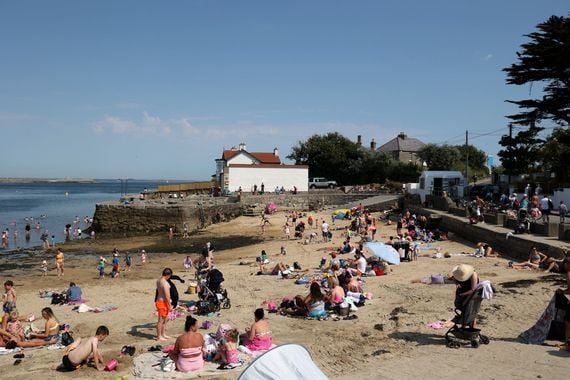

Sandycove, Dublin.
Met Éireann said high pressure dominated the month, driving the national mean temperature to 2.4 °C above the 1961 to 1990 long-term average and 1.87 °C above the more recent 1991 to 2020 average.
Individual weather stations around the country recorded their own historic milestones. Cork Airport had its driest, warmest and sunniest month on record. Johnstown Castle in Co Wexford had its driest and sunniest month on record, breaking the national record for sunniest month overall. Moore Park in Co Cork and Oak Park in Co Carlow each recorded their driest and warmest month on record.
Dublin was not spared either. Phoenix Park and Casement Aerodrome both logged their warmest month on record along with their driest July on record, while Valentia Observatory in Co Kerry and Roches Point in Co Cork recorded their warmest July on record, with data at both Phoenix Park and Valentia stretching back 127 years.

Sunny weather in Stephen's Green, Dublin.
Heatwave conditions were widespread. Seven weather stations reported heatwaves lasting between five and 13 days. Moore Park in Co Cork experienced the second longest heatwave on record, with 13 days of sustained heat, according to Met Éireann.
The weather split the country in two for much of the month. The south and east experienced long dry spells of high temperatures and sunshine, while the north and west saw some rain and cloud, particularly early and late in July. In the final week, high pressure shifted to the southwest, bringing cloud along with some rain and showers.
The extreme heat followed weeks of warnings earlier in the summer. In mid-July, Met Éireann's meteorologists described a stretch of very warm, dry and settled weather driven by high pressure centered near the Faroe Islands, which pulled a warm and humid airmass into Ireland from continental Europe. Temperatures widely reached the 20s, with some areas nearing 30 °C, and nights stayed unusually warm as well.
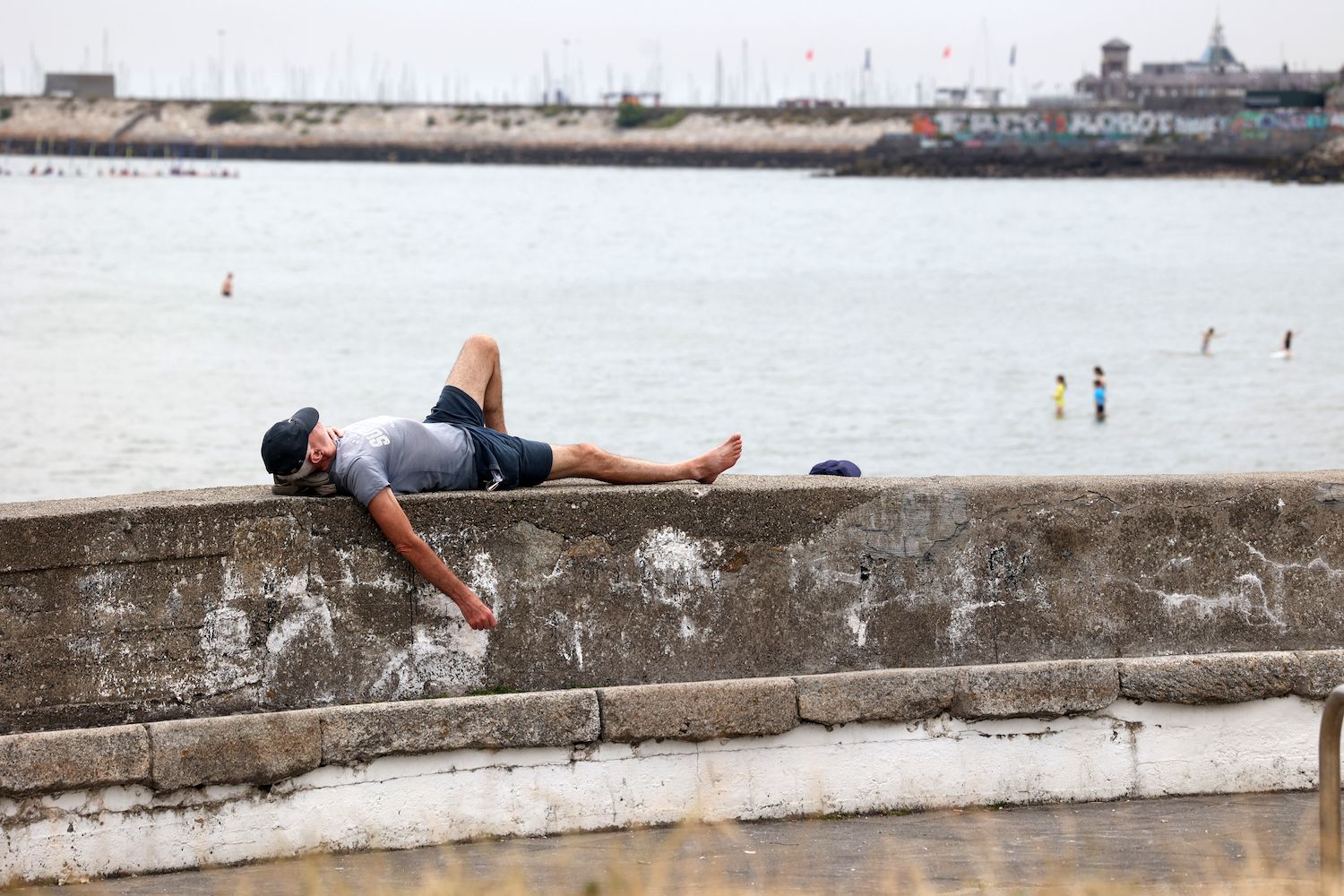
Seapoint, Dublin.
The prolonged heat brought real consequences on the ground. Water restrictions were introduced at 13 supplies across the country, affecting counties including Kilkenny, Tipperary, Donegal, Cork and Meath, as authorities moved to manage demand during the dry spell. A hosepipe ban was also put in place nationally as the drought conditions worsened through July.
The heat carried tragic consequences too. A 15-year-old boy died after getting into difficulty in Lough Ree in Co Westmeath during a weekend of high temperatures, one of several incidents that prompted Met Éireann to issue repeated water safety warnings alongside its heat alerts.

The Forty Foot, in south Dublin.
Met Éireann has linked the intensity of the month to the broader pattern scientists have been tracking for years. Extreme heat events are becoming more frequent and more intense due to climate change, as a warming atmosphere increases the likelihood of prolonged hot spells and shifts in established weather patterns.
Whether July 2026 becomes a one-off or a sign of things to come will depend on how the rest of the year unfolds. Met Éireann's seasonal outlook had already flagged that temperatures across July, August, and September were likely to run above average, even as forecasters expected rainfall to pick back up later in the summer.
For now, the records stand. Ireland just had its driest July ever, its second hottest July in 126 years of data, and its third hottest month of any kind since records began. For a country long defined by its damp, green landscape, that is a remarkable shift, and one that Met Éireann and climate scientists will be watching closely in the months ahead.


Comments