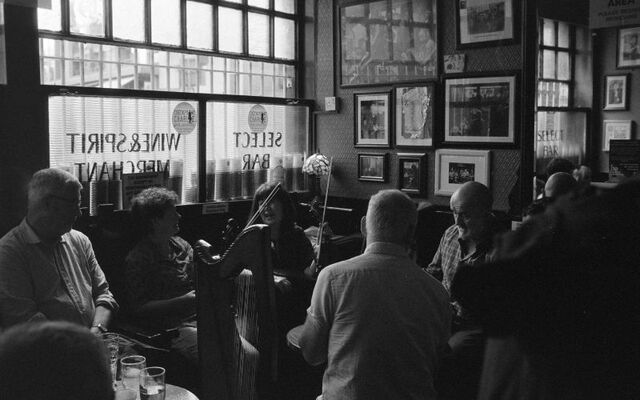
As revelry and reflection meet this season the essays range from intimate pub portraits to global case studies and ask whether coffee shops gyms and at home drinking are quietly displacing the traditional watering hole. Reviewer Brendan Daly praises the book's clear prose while flagging demographic and behavioural changes that threaten pubs across Ireland.
When and how was the Irish pub invented? Or indeed the "Irish pub" - now to be found in thousands of places across the world. How has the pub evolved to become a global symbol of Irishness and how has it come to occupy a central position in our drama, poetry, novels, art and design? Does the pub remain a crucial place in the Irish community, or has it been usurped by the coffee shop and the gym? Does this matter? Often labelled an institution "in crisis", what indeed does the future hold for the Irish pub in Ireland and internationally?
As St. Patrick's Day approaches, it's work considering Ireland’s most iconic social hub with "The Irish Pub: Invention and Re-invention" edited by Moonyoung Hong and Perry Share.
This is the first book-length academic study of this celebrated institution. Consisting of 20 scholarly but accessible essays, contributors from across history, design, literary studies and the social sciences interrogate the many ways the Irish pub has been invented and reinvented over the centuries. It offers hidden histories, inside stories, new perspectives and perceptive analyses. From Dublin’s Long Hall to Oliver’s Place in Lapland, it draws on the experiences of hundreds of Irish pubs, both celebrated and obscure, to provide a complex picture of this global phenomenon.
In his recent review of the book, Brendan Daly has praised it for its compelling narrative, stating that "the book’s drumbeat is deeply researched, fastidiously marshalled arguments that probe and reveal. [...] the prose is crisp and lucid, appealing to both a specialist and general audience."
Whether you are a scholar, history enthusiast, Irish culture aficionado, pub lover and crawler, or someone celebrating St. Patrick's Day, this book offers a rich and engaging exploration of Ireland’s ever-evolving and re-invented institution. This fascinating volume will inspire some concerns, and some hope, about the Irish pub's future trajectory and place in the world.
Read more
Here is an extract from the conclusion discussing the future of the Irish pub:
The greatest threat to the survival of the pub in Ireland may be long-term shifts in social behaviour. Reflective of broader trends in relation to demography, time-use, working patterns and health concerns, coffee shops, gyms or other ‘third spaces’ have increasingly come to occupy the role once held by pubs, especially amongst older patrons. Consciousness of health and well-being has changed attitudes to alcohol consumption, obvious in movements such as ‘Dry January’ and ‘sober curiosity’ and reflected in significant successes in the marketing of zero- and low-alcohol beverages such as Guinness 0.0. There is evidence that overall per capita alcohol consumption in Ireland has declined, but such figures are difficult to assess and there are multiple ways to measure consumption. What is clear is that there has been a significant shift towards ‘at home’ consumption, rather than in the pub setting. This trend, accentuated by regulatory forces, comparatively low supermarket alcohol prices and improvements in domestic facilities, may constitute the biggest threat to the ‘traditional’ pub.
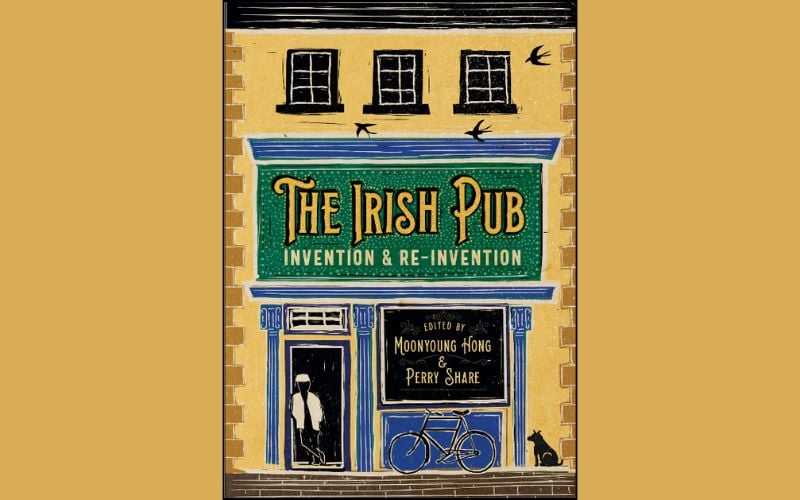

The Irish Pub: Invention and Re-invention" (Cork University Press, 2025), edited by Moonyoung Hong and Perry Share.
So, what of the future of the Irish pub? At the international level it appears to have cemented itself as a feature of contemporary hospitality, as ubiquitous and enduring as the Italian pizza restaurant and the Middle Eastern or Turkish kebab shop: also products of extensive global diasporas. No obvious competitor (German bier keller, Hungarian kocsma, Australian hotel?) has yet emerged to challenge this global success story, despite occasional prophecies of doom. That is not to say that the global Irish pub will not evolve and mutate, as it hybridises with the local cultures of Greece, Kazakhstan or Korea. On the home front, the pub continues to thrive in many locations, albeit that an inevitable rationalisation of rural and country town pubs is in evidence, reflective though not as severe as the whittling down of banks, newsagents and hardware stores. Pubs that existed to serve motorists are perhaps the most vulnerable, reduced to a small number of multi-purpose enterprises that are reliant on carvery and other food offerings. The resurgence of such hostelries no doubt awaits the eventual – and much anticipated – development of the self-driving car.
At a public policy level, there are important debates to be had about the relative dearth of pubs in new residential areas, particularly as the country is being urged to engage in extensive home construction. In addition, we know little of the place of pubs in Ireland’s increasingly diverse and multicultural community. Should we expect to see a growth in Polish, Brazilian or Indian pubs, and if not, what implications does this have for new and older communities? How can we reconcile the insistent warnings of public health advocates, who call for increasingly stringent controls on alcohol availability, with the needs of pub users, who seek community, conviviality and company in such establishments? How can we justify a pub industry increasingly dependent on tourism, when the planet is experiencing climate breakdown caused at least in part by global travel?
In terms of cultural expression, it is undeniable that our rural and urban built environment is being reshaped by the changes in the pub industry. While some former pubs are successfully repurposed as domestic homes, shops, or for other uses, too many lie forlorn and derelict. As well as the loss to community and craic, there are unique architectural features that may disappear. In our literature, theatre and visual arts, the pub seems secure as a setting, a symbol and a subject. It may be that the static, conversational stage set will give way to the more fluid, dynamic, visual and auditorily vibrant club setting, but drinking establishments will always remain a seductive part of human interaction. We may expect to see Irish pubs popping up in fiction, drama, documentary, graphic design and song – perhaps even in virtual and augmented reality – for many a year to come.
Find out more about Moonyoung Hong at the University of Hong Kong or on her LinkedIn here. Find out more about Perry Share on his LinkedIn here.


Comments