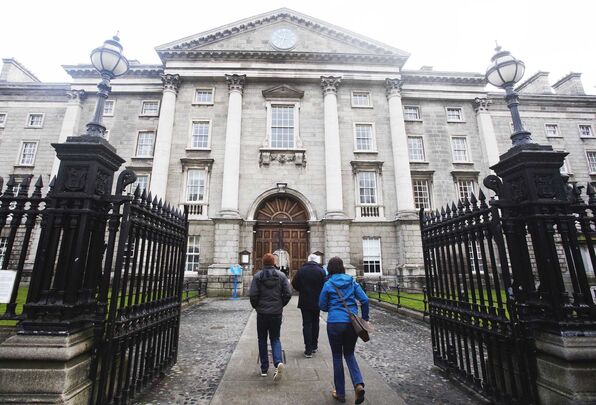
On May 1, 1794, Trinity College Dublin entered a new era. In the wake of the Catholic Relief Act of 1793, Catholics were legally permitted to attend and study at the university for the first time, a change that marked a major break with the older penal system that had tied higher education to religious exclusion.
For generations, the barrier at Trinity was not simply social prejudice but law and oath. Students had been required to make declarations that included rejection of the doctrine of transubstantiation, a demand that made formal entry incompatible with Catholic belief. Once that requirement was removed, Trinity could no longer be treated as a closed Protestant preserve in the same way, and Catholics were able to enter and take degrees.
That opening was a start, but not the whole journey. Catholics still faced restrictions on the most prized academic prizes, since scholarships and fellowships remained reserved for Protestants long after ordinary admission became possible. Trinity’s own history notes that all religious tests, except those connected with the Divinity School, were not abolished until 1873, and contemporaries observed that the first Catholic to win a foundation scholarship did not do so until after that reform.
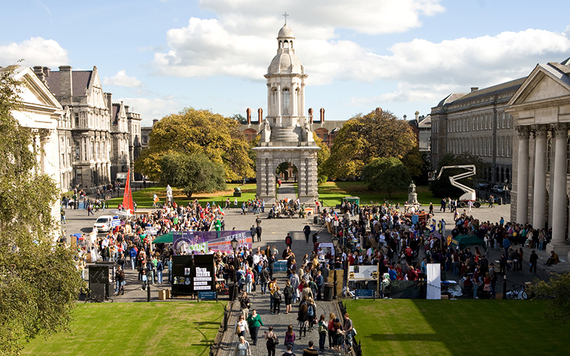

The Front Square at Trinity College Dublin.
The significance of the change reached beyond the college walls. Trinity was still the leading university in Dublin, and access to it mattered for the legal, clerical, medical, and administrative careers that shaped public life in Ireland. By allowing Catholics inside, the law did not erase the old confessional divisions overnight, but it did begin to loosen one of the most visible barriers between Irish Catholics and the island’s elite educational institutions.
This is just part of the long arc from exclusion to participation that defined so much of Irish Catholic history, from penal restrictions to gradual civil equality and, eventually, wider access to education and public life. Trinity’s reform in the 1790s did not end that journey, but it gave Irish Catholics a foothold inside one of the country’s most influential institutions and signaled that the old order was beginning to change.

Comments