During my travels with my donkey, Missie, in 1979, I spent three nights recuperating from a wasp’s sting with Jimmy Harrington, an elderly bachelor and horseman living in Castletownbere, County Cork.
Sitting at his kitchen table on those summer evenings, I would pull out pocketfuls of notes scribbled on napkins and beer coasters and transfer them into my journal. Jimmy, whom neighbors described as a “sturdy lump of a fellow,” took delight in my labors while gleefully uncapping two pint bottles of Guinness.
“Did you ever hear of one’s head been worn before?” I asked him, as I jotted down an expression I heard in a pub a week earlier.
“Hear tell of it,” he grinned widely, pouring our drinks into two dusty tumblers. “Just a century back, a child hereabouts wore a head worn once before.”
“What causes it?” I asked my hospitable host.
“’Tis a rare phenomena, but when a family member dies within moments of another being born, the knowledge of the deceased person is passed on without a wrinkle of loss to the newborn. Thus, the saying, ‘a head worn once before.’”
The horseman, noting my eagerness, took a healthy swallow of stout and galloped into a tale.
“This gifted child lived outside the ruins of Dunboy Castle, home of O’Sullivan Beare, the last Cork hero to stand up against the Elizabethan forces. Why, by the age of 5, the brightest solicitors in Ireland would gather to hear this lad’s exhortations, for he had inherited the collected wisdom of his grandfather, who was as wise, they say, as King Solomon himself.
“Now, during this lad’s time, when copper was fetching a fine price, and the seas around Bantry were thick with mackerel, four fairs were held each year in Castletownbere. It happened during the summer fair of Lughnasa, when the town was filled with horses, cattle, and big money, a certain gentleman from Bantry left five pounds—a huge sum of money in those days—to the proprietor of the inn where he was staying, for safekeeping, you see, lest it be stolen by pickpockets known to work the festive crowds. Are you with me?”
“I am,” I answered, dropping my pencil for glass.
“The following morning, when the Bantryman went to collect his five quid, didn’t the bold innkeeper say he knew nothing of the money, and cheekily asked the Bantryman to leave his establishment if he persisted to voice such an accusation.
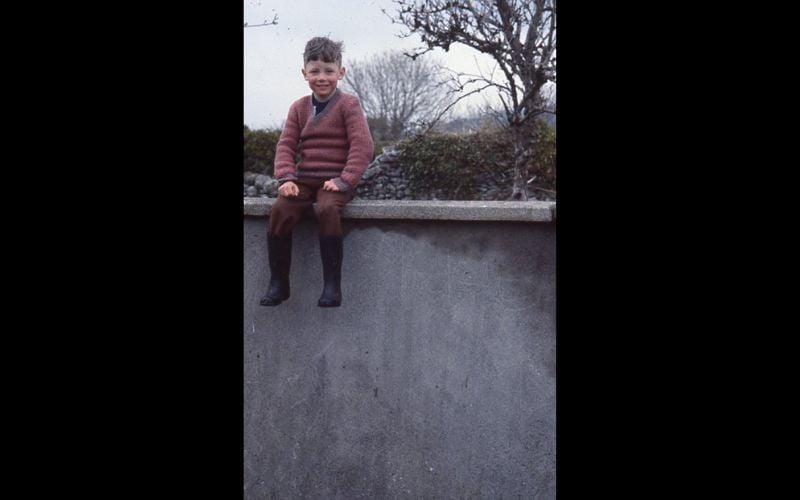
“In a quandary, the Bantryman, having heard of the Dunboy lad, went to seek his counsel, finding the poor child pitching marbles in a mud hole in front of his rundown cabin for, as brilliant as he was, wasn’t he still as penniless as his neighbors. Espying this ragamuffin, the Bantryman thought he was wasting his time. But when he turned on his heels to leave, the little lad gave out, ‘What ails ye?’
“‘I gave an innkeeper five pounds to keep secure,’ says the Bantryman, ‘but when I went back to collect it, he threatened me, saying he never held a shilling of my money.’
“‘Go back tonight with two friends, apologize for your mistake, and say you were drunk and road-weary,’ the lad answered without hesitation. ‘Then have yourself a drink, but upon retiring, give him a second five pounds for safekeeping before your witnesses. Now, do as I say, and be back to me tomorrow,’ instructed the gossoon.

“The Bantryman did as told, but only for the oracular tenor in the lad’s voice. The next day, the Bantryman returned to find his dirty-faced advisor still at his marbles.
“‘Did ye manage it?’ the boy asked, never looking up from his game.
“‘I did,’ came the reply, ‘but I don’t see how I’m any better off. Amn’t I just sending good money after bad?’
“‘Go back yourself tonight, have a pint, and be the last out the door,’ instructed the wise pup. ‘But, when leaving, kindly ask your man for your five pounds as ye’ll be departing on the early coach in the morning.’
“Doing as told, the Bantryman was relieved in receiving his latter five pounds, and returned the next morning to the wee scholar. ‘Did ye have any luck?’ asked the wise head.
“‘I did,’ said the Bantryman. ‘But, sure, with all my comings and goings, I’m still out my initial five pounds.’
“The little lad smiled at the foolishness of this grown and successful man. ‘Godsakes, man,’ moaned the wee sage, ‘don’t tell me ye haven’t a blooming clue on what to do next?’
“‘That, I haven’t,’ the humbled Bantryman replied.
“‘Go in at noon today when your man’s inn is full of patrons. And with your witnesses by your side, ask loudly but politely for your five quid. And, I assure you, dear sir, the innkeeper will place your five pounds on the oak counter for all to see, knowing he’s been rightly beaten at his own crooked game.’
“Now, then,” clapped Jimmy at the conclusion of his tale, “isn’t that surely a lad whose noggin had been worn once before? Now, de ye have any more madcap queries to ask me?”
I rummaged excitedly through my pile of scraps and picked up a soiled matchbox cover. “Do you know anything about crane bags and serpent stones?” I asked, deciphering my pencil scratching.
“Crane bags and serpent stones!” exclaimed Jimmy, making lively toward the press for two more pint bottles. “Why, there’s this old fella down Dunmanus way, a Mickey Fitzgerald ...”
*Kevin O’Hara is the author of “Last of the Donkey Pilgrims: A Man’s Journey through Ireland.” Contact him at [email protected].


Comments