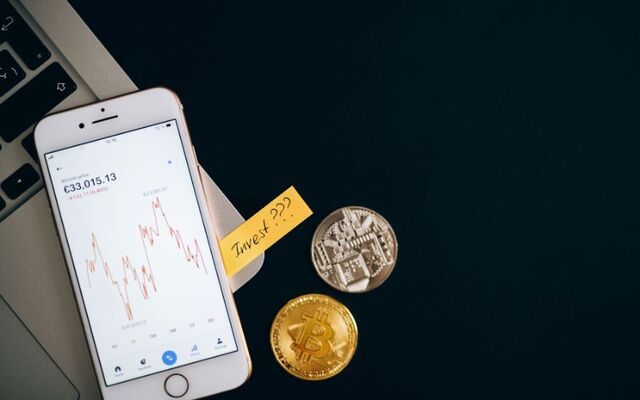
Both consumers and businesses are beginning to understand the role blockchain can play in the future of finance, and this interest is manifesting itself in the increased use of digital currencies. Litecoin is one of the oldest cryptocurrencies, one of the first altcoins in wide use, and is still traded worldwide to this day, having launched in 2011.
The following article examines the evolution of the Litecoin price and explores its current discourse and value drivers. Undoubtedly, the relationship between technology and money continues to evolve, and recent statistics provide a clearer picture of crypto ownership and market activity.
The increasing use of digital currency in Ireland
The interest in digital assets is generating more discussions in Ireland about their risks and rewards. With these nascent discussions, there is an interest in the use of crypto and the potential of blockchain technology. The real use of crypto-based services is an exponential step ahead of the formal integration of crypto- and blockchain-based services.
Litecoin is one of the first coins, and its creator, Charlie Lee, created Litecoin as a more efficient way of confirming transactions compared to Bitcoin.
Results from the 2024 European Central Bank survey show cash transactions are increasingly being replaced with card payments. In 2024, 44% of Eurozone customers indicated a preference for card payments. Many methods of transfer currently exist. However, due to the increase in volumes of trade and transfers, many new payment systems have been developed, which have been the subject of debate and discussion.
It is believed the financial system for some Litecoin ‘disruptors’ (who have some background in financial technology) is, at the very least, several decades away from allowing payment and securities settlement systems that are beyond the current constraints of crypto.
Global crypto market and the surge of Litecoin
The Litecoin price page on Binance tracks current prices, previous trades, and market evaluations of Litecoin. Like all cryptocurrencies, the price of Litecoin is determined through the balance of market demand versus supply and is a reflection of the overall state of the industry.
Litecoin is one of the earlier well-known cryptocurrencies and is also one of the first cryptocurrencies to introduce new technology. Like Bitcoin, Litecoin is also a blockchain cryptocurrency; however, Litecoin facilitates faster transaction confirmations via a different mining process and a shorter time to create a block.
Litecoin remains one of the longest-standing cryptocurrencies. Seeing as it is still listed on many major trading platforms and as many other cryptocurrencies have flooded the trading platforms, Litecoin still remains one of the most visible trading options. The cryptocurrency market is fickle, and change is constantly occurring. Economic changes, changes in regulations, and even changes in technology can all affect the perceived worth of cryptocurrencies. These changes can affect the optimism and pessimism of those interested in and trading Litecoin, as well as the analysts.
Reason behind interest in alternative finance
Traditional banking and finance options are now seen as less appealing than the options of digital finance, and cryptocurrencies are becoming more mainstream. Although modern finance options allow one to transfer and store their value in a more efficient manner, there are security and regulatory risks that traditional banking also has. These options have their own risks.
The 2024 International Monetary Fund Global Financial Stability Report stated that although concerns for market stability and consumer protection are apparent, the integration of cryptocurrencies in modern consumer finance has been positive.
Ireland hosts many global technology companies and has a strong fintech sector. As a technology hub, the ways of modern financing and technology have not drawn less interest. Litecoin is one of the easier ways for one to get introduced to trading, as it is a popular trading option still. It is also an easier way for someone to get introduced to blockchain technology and why it is appealing. Cryptocurrencies allow for a decentralized method of digitally verifying transfers of value. As a result, many users who are interested in an alternative to modern banking systems find these technologies appealing as well.
Yet, experts still emphasize understanding the associated dangers. Unlike government-backed currencies, cryptocurrencies lack protective mechanisms, and users have to assess the markets before deciding to trade.
Blockchain in contemporary payment systems
Litecoin and numerous other cryptocurrencies are built on blockchain, and many of their transactions are based on the Blockchain Operating System. This technology records transactions on a distributed network to create a verified record for all network participants.
Financial Services and Technology companies have begun exploring the use of Blockchain beyond cryptocurrencies. These branch out to provide innovations within the payments ecosystem and beyond into supply chain management and improved efficiencies around record-keeping.
Deloitte’s 2024 Global Blockchain Survey states that a considerable number of organizations are still exploring the use of Blockchain technology in their digital strategies. The report goes on to say that while industries have taken a wait-and-watch approach due to regulatory concerns, businesses have prioritized exploring the use of Blockchain.
While presenting some challenges in navigating, Blockchain technology answers the question of how to efficiently maintain a verifiably secure digital record. In this respect, the proposition of all cryptocurrencies, including Litecoin, has captured the imagination of a public audience. With the ongoing investigations around digital assets by governments and corporate entities, Blockchain technology continues to hold a central position in the future of financial systems.
Conversation around digital money shifting
Litecoin has been present for much of cryptocurrency’s history. Launched in 2011, the same year as the early growth of the cryptocurrency market, Litecoin has continued to exist and trade in global markets.
Litecoin also demonstrates an ongoing trend with digital assets that members of the growing Irish technology user and cryptocurrency following communities are taking notice of. While the future of cryptocurrency is unknown, interest in blockchain doesn't appear to be declining. This may indicate that discussions about digital currency are going to remain prevalent.





Comments