Why "The Quiet Man" Endures
Posted on Wednesday, March 17, 2010 at 10:01 AM
RSS 
Recent Posts
- Remembering Morton Downey, Jr, the father of trash TV
- Father Andrew Greeley’s powerful faith - remembering the larger than life Chicago priest
- Ireland’s rotten Apple scheme - two-bit operation need to pay their dues to maintain “civilized society”
- Sleazy secrets and the American Dream of Dublin born spy Kevin Richard Halligen
- 'The Great Gatsby' author F Scott Fitzgerald’s death and burial another Catholic lesson
Archives
This St. Patrick’s season you surely came across it. On Turner Classic Movies or on a DVD player.
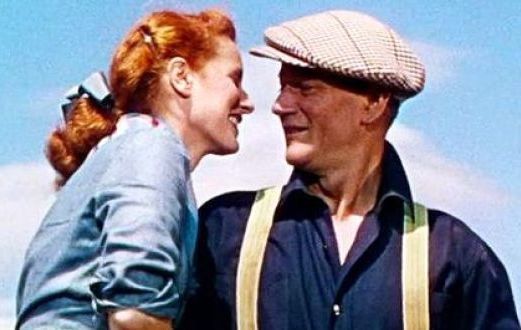
John Ford’s 1952 film The Quiet Man has been a St. Patrick’s Day staple for nearly 60 years now.
And for just as long the film has had its detractors. Those who grumble that the film is little more than a brightly-colored jaunt through Irish stereotypes -- the drunks, the brawlers and all those befreckled redheads.
Well, I have some bad news for the haters. The Quiet Man is growing in stature, not merely as entertainment, but as a work of art.
The sign of any great, enduring story is that it can be reimagined and reinterpreted by younger generations. And so, The Quiet Man -- for all of its legitimate flaws -- is going to be with us for many more St. Patrick’s Days.
Martin Scorsese, who’s got tons of cinematic street cred and just had a smash hit with Shutter Island, recently said The Quiet Man was a major inspiration.
Meanwhile, last month, it was announced that Aidan Quinn is among the stars of a new movie entitled Connemara Days, a romantic comedy which is actually set during the film shoot of The Quiet Man.
But the most interesting new take on The Quiet Man is Roddy Doyle’s forthcoming book The Dead Republic.
Doyle is one of Ireland’s more famous
contemporary writers. His book The Commitments went on to become a classic indy film, while his novel Paddy Clarke Ha, Ha, Ha won several major awards.
Doyle’s latest project is a trilogy or Irish historical novels based around the character Henry Smart, a sort of Irish Forrest Gump, who floats through the country’s history and has a knack for being at the center of key events.
In previous books, A Star Called Henry and O Play That Thing, Henry rose from the Dublin slums to become a leader of the Easter Rising, before traveling to New York and Chicago to rub elbows with gangsters and guide the career of a young musician named Louis Armstrong.
One of Doyle’s key aims here is to reexamine Irish American history. Believe it or not, this has made him some enemies.
Traditional historical writers such as Morgan Llywelyn believe Doyle is playing fast and loose with the facts.
The problem is, history is more than just a collection of facts. So, Doyle feels free to have some fun undermining readers’ conventional wisdom about the past.
In Doyle’s latest book The Dead Republic, Henry Star finds himself on the set of a film with Henry Fonda and the irascible Irish American director John Ford.
They are shooting a western, but Ford desperately wants to make a movie about
Irish rebellion. So, he has hired famous rebel Henry Smart to serve as “IRA consultant.”
But what began as a gritty tale of Irish liberation gets crammed into Ford’s myth-making machine and what emerges, instead, is what some believe to be the worst piece of paddywhackery Hollywood ever produced -- The Quiet Man.
Along the way, Henry Smart sees that Ford is transforming the story. “All references to the war and the IRA had gone. The Sean in the picture wasn’t a kid of the Dublin streets, and all the killings had become one big punch in a boxing ring,” writes Doyle.
But Doyle is not merely lamenting the whitewashing of Ireland’s past. He is examining the deeply complicated way myth and reality collide. How complicated?
Well, if it seems like an “IRA consultant” for a Hollywood movie is a priceless slice of Doyle’s imagination, guess again -- Ford’s film, indeed, had just such a hard man on set, the Irish Civil War veteran Ernie O’Malley.
And that begins to explain why The Quiet Man endures. For all of its donnybrooks and thatched-cottage charm, there are deep, violent undercurrents in the film.
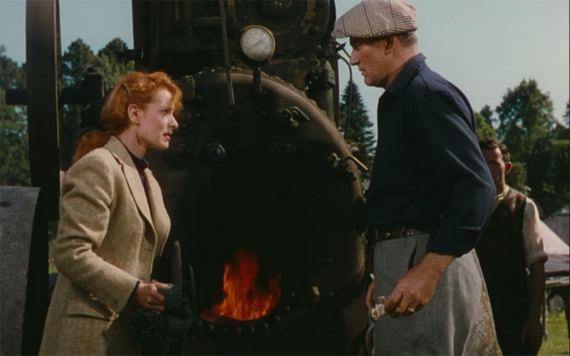
As Notre Dame professor Luke Gibbons has written: “The Quiet Man bears out the Celtic stereotype that, in Ireland, the tear and smile seem twin-born, and comedy is shadowed by tragedy.”
Is that why millions love the film? No. Many, indeed, love Barry Fitzgerald’s drunken shenanigans. But such stuff cannot carry a film for decades.
This St. Patrick’s Day, give The Quiet Man another viewing. And really watch it this time. You might be surprised.
(Tom Deignan will be discussing “Twenty Books Every Irish American Should Read”
at the mid-Manhattan branch library, 455 Fifth Avenue, April 17. Contact
tomdeignan@earthlink.net or facebook.com/tomdeignan.)
John Ford’s 1952 film The Quiet Man has been a St. Patrick’s Day staple for nearly 60 years now.
And for just as long the film has had its detractors. Those who grumble that the film is little more than a brightly-colored jaunt through Irish stereotypes -- the drunks, the brawlers and all those befreckled redheads.
Well, I have some bad news for the haters. The Quiet Man is growing in stature, not merely as entertainment, but as a work of art.
The sign of any great, enduring story is that it can be reimagined and reinterpreted by younger generations. And so, The Quiet Man -- for all of its legitimate flaws -- is going to be with us for many more St. Patrick’s Days.
Martin Scorsese, who’s got tons of cinematic street cred and just had a smash hit with Shutter Island, recently said The Quiet Man was a major inspiration.
Meanwhile, last month, it was announced that Aidan Quinn is among the stars of a new movie entitled Connemara Days, a romantic comedy which is actually set during the film shoot of The Quiet Man.
But the most interesting new take on The Quiet Man is Roddy Doyle’s forthcoming book The Dead Republic.
Doyle is one of Ireland’s more famous
contemporary writers. His book The Commitments went on to become a classic indy film, while his novel Paddy Clarke Ha, Ha, Ha won several major awards.
Doyle’s latest project is a trilogy or Irish historical novels based around the character Henry Smart, a sort of Irish Forrest Gump, who floats through the country’s history and has a knack for being at the center of key events.
In previous books, A Star Called Henry and O Play That Thing, Henry rose from the Dublin slums to become a leader of the Easter Rising, before traveling to New York and Chicago to rub elbows with gangsters and guide the career of a young musician named Louis Armstrong.
One of Doyle’s key aims here is to reexamine Irish American history. Believe it or not, this has made him some enemies.
Traditional historical writers such as Morgan Llywelyn believe Doyle is playing fast and loose with the facts.
The problem is, history is more than just a collection of facts. So, Doyle feels free to have some fun undermining readers’ conventional wisdom about the past.
In Doyle’s latest book The Dead Republic, Henry Star finds himself on the set of a film with Henry Fonda and the irascible Irish American director John Ford.
They are shooting a western, but Ford desperately wants to make a movie about
Irish rebellion. So, he has hired famous rebel Henry Smart to serve as “IRA consultant.”
But what began as a gritty tale of Irish liberation gets crammed into Ford’s myth-making machine and what emerges, instead, is what some believe to be the worst piece of paddywhackery Hollywood ever produced -- The Quiet Man.
Along the way, Henry Smart sees that Ford is transforming the story. “All references to the war and the IRA had gone. The Sean in the picture wasn’t a kid of the Dublin streets, and all the killings had become one big punch in a boxing ring,” writes Doyle.
But Doyle is not merely lamenting the whitewashing of Ireland’s past. He is examining the deeply complicated way myth and reality collide. How complicated?
Well, if it seems like an “IRA consultant” for a Hollywood movie is a priceless slice of Doyle’s imagination, guess again -- Ford’s film, indeed, had just such a hard man on set, the Irish Civil War veteran Ernie O’Malley.
And that begins to explain why The Quiet Man endures. For all of its donnybrooks and thatched-cottage charm, there are deep, violent undercurrents in the film.
As Notre Dame professor Luke Gibbons has written: “The Quiet Man bears out the Celtic stereotype that, in Ireland, the tear and smile seem twin-born, and comedy is shadowed by tragedy.”
Is that why millions love the film? No. Many, indeed, love Barry Fitzgerald’s drunken shenanigans. But such stuff cannot carry a film for decades.
This St. Patrick’s Day, give The Quiet Man another viewing. And really watch it this time. You might be surprised.
(Tom Deignan will be discussing “Twenty Books Every Irish American Should Read”
at the mid-Manhattan branch library, 455 Fifth Avenue, April 17. Contact
tomdeignan@earthlink.net or facebook.com/tomdeignan.)
5 Comments
See all comments
McNamara31 | Mar 23, 2010, 08:25 AM EDT
Going to Cong next week. Can't wait to see the actual town where it was filmed. Thanks goodness for channels like TCM who run the beautiful old movie's
Report abuse
Donnaruth | Mar 19, 2010, 09:59 AM EDT
I named my son Sean because of this movie.
Report abuse
LindaJB | Mar 17, 2010, 10:31 PM EDT
Just finished watching the Quiet Man- it's a favorite of mine an of my husband. We've watched it dozens of times - we can almost recite the entire script by now. Although it is somewhat stereotypical, it nevertheless reflects what Ireland is - its rich history and culture, spiritual foundations, music, the beauty of the land, and the courage and spirit of its people.
Report abuse
Irish54 | Mar 17, 2010, 12:51 PM EDT
I grew up on the Quiet Man. Never more proud of my heritage. While in the Military I was able to visit Ireland several times. wish I could go back and stay. Can't wait for the new movie to come out.
Report abuse
5 Comments
Report abuse