roots


The forgotten voyager - the story of an Irishman who discovered America and inspired Columbus’ voyages

In search of the Galway man and explorer onboard the Nina, the Pinta and Santa Maria


Lost in time Galway man William Harris inspired Columbus' voyage to the Americas
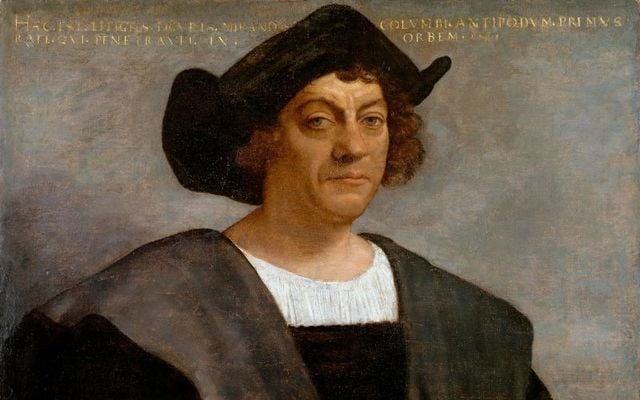
Photo by Google Images

Guinness PubFinder Ad

In a box, in the archives of the National University of Ireland Galway, lie a bundle of yellowed letters dating from 1935 to 1936 about a mysterious Galway man who sailed with Columbus on his first voyage to the west in 1492.

It seems that in 1935, a Chicago-based organization named the Guillermo Herries League, enlisted the help of historians, librarians and scholars, determined to prove that this Irishman had in fact discovered America before Columbus. They hoped to name a new bridge after this brave Irish explorer but unfortunately, their hopes were never realized.

The Irishman in question was recorded in the Spanish navy records as Guillermo Herries, an unlikely name for an Irishman you might think, and you’d be right. Perhaps, if he had been known by William Harris, rather than the Portuguese translation of his name, then he would be better known in Irish history. Surely every Irish child should learn that an Irishman was part of the famous voyage of the Nina, the Pinta and Santa Maria.

To this day, St Nicholas’ Church in Galway is known to have been visited by Columbus in 1477 and it was supposedly here that Guillermo met Columbus and inspired him with tales of lands to the west that he had visited himself.

The legend of Saint Brendan’s voyage were said to have provided extra fuel for Columbus’ dreams. It is certainly not impossible that Guillermo could have reached America before 1492 as Leif Erikson and his band of Norsemen had already discovered America 500 years beforehand. Tim Severin’s reenactment of St. Brendan’s voyage proved that the 6th century monk may have even reached America centuries before that. So why not Guillermo? Unfortunately, the voyage of 1492 was to be his last.

Guillermo’s name can be seen on the list of 38 people left behind on what is now modern day Haiti to form the first European settlement in the New World. Although the Galway man lived in peace with the natives for a time, by Christmas of 1492 the locals rebelled and the entire garrison was thought to be slaughtered. However, in the records of the Guillermo Herries League, a rumor persists of a daring escape in the pinnace of the Santa Maria by the Irishman and several others to the coast of Mexico where they were shipwrecked near the mouth of the Mississippi river, in the vicinity of the present day city of New Orleans.

Despite the hopes of the league that championed his name, Guillermo never did provide the name for the new bridge in Chicago and the honor went to Leif Erikson. The facts, fiction and mysteries of this little-known Irish explorer remain in the archives of Galway University and although we may never know how Guillermo died, we can be proud of the fact that he was part of such a significant event in world history.


See more: Irish Ancestry , Irish Roots , Irish History
Nster.com


16 Comments

See all comments

Since we're looking at the Irish in Spanish America, I vote for Bernardo O'Higgins to be our poster boy. A true hero and liberator whose name should live forever in the annals of freedom fighters.
Sorry about the anti Columbus rhetoric, but I am tired of hearing the claims he discovered America. He was not the first European to sail to the Americas. He did land at what is now known as the Dominican Republic and Haiti and eventually South America which he thought was Asia. He was a significant figure in the European colonization of South America. " Columbus was arrested on accusations of tyranny and brutality toward native peoples of the Americas, but was released by King Ferdinand after six weeks in prison." Just for the record, John Cabot was another explorer looking for a route to Asia and he believed he had landed in northeastern Asia when in fact he landed either in Cape Breton, Newfoundland, or Labrador. Anyway the Vikings settled in the Americas before Columbus or Cabot. Marco Polo, his father and uncle traveled through Asia in the late 1200's and it was his writings that inspired other explorers to find another route to Asia. Enough said on this subject.
For the natives of the land who have seen all they had destroyed by a rag bag mongrel horde of Europeans it probably makes little or no difference which disease carrying Christian hypocrite stumbled across the place first.
Commentator: "I made no reference or comparison in regard to England." So why didn't you? You claim to be a big expert on 16th century colonialism. This is an Irish-oriented site, why don't you start by analyzing England's record in Ireland at the same time as the Spaniards were colonizing the Americas? Or maybe you're only interested in attacking Spain, for whatever weird reason?
WoundedKnee, I made no reference or comparison in regard to England. I merely stated facts about the extermination by the Spaniards of indigenous populations. I am of Irish descent on my mothers side and Scottish descent on my fathers side and certainly entertain no illusions about the devastation and influence the Brits inflict upon Scotland and Ireland. The only bias I have is in regard to foolish claim that Columbus discovered America. It is a myth perpetuated by ignorant people that do not know factual history. It is comparable to a fisherman coming upon a stream by accident and claiming he found the stream that has been fished by people in the region for thousands of years. In regard to Irish history, Ireland is a nation of immigrants over a very long period. (as are most areas of the world we live in) The earliest known inhabitants in Ireland were present about 9000 years ago. We all originated in Africa and just arrived at our various destinations at different times. Some new arrivals assimilated with the indigenous population, some decimated the indigenous population, others overpowered and controlled by force and others did a bit of each.
The Portuguese were known to fish the banks off New England well before Columbus. Perhaps this man really was a Portuguese who happened to go to Ireland. Trade between Galway City and the Iberian Peninsula was well established.
TO WHOM IT MAY CONCERN: In 1492 there was no country called India so Columbus couldnt have thought he was somewhere that did not exist. In 1492 modern day India was called HINDU-STAN...got it? And secondly, when he went ashore in the Antilles, Columbus was so blown away by the welcome of the people he met, and their willingness to share what they had that he refered to them in his diary as a people "..en Dios..", a people "in God" or a Godly like people. Over time as words get mis translated etc, "en Dios" became "Indios" and eventually the Anglosized Indian. And now you have the rest of the story.....
Us Irish have been in America for thousands of years. In Ohio there is a serpentine form shaped into the landscape. In celebration of St.Patrick.
The Irish have always been smart fishermen. The northern banks of America, until recently, teemed with many delicious species of fish. If YOU had discovered a fabulous new fishing hole, would YOU announce it to the rest of the world? Irish fishermen were/are smart, not only in the ways of fish, but also in the ways of men! The current decline and rationing of many species from over fishing (combined with temperature and salinity changes in the northern banks) prove their fears were well founded. As long as we are recapping America's many "Discoverers," don't forget Henry Sinclair, Norman (Norse-Man) Prince of Orkney, Lord of the Scottish Midlands, founder of the Scottish Rite of Masons and rumored Templar Knight. Read about him in the Geno Narrative which it is rumored Columbus (Columba that is - strange how these Irish names get changed by southern europeans) studied before setting sail and reference the Kensington Stone and the McKay effigy stone in American archeology. Every early explorer who left a tale about discovering what became America described it as an archipelago, not as a continent, so naturally Columbus thought he could sail east through the islands to the part that had been discovered by sailing west as the Indies. East Indies, West Indies what's in a name? Oh yea, there is that whole Pacific Ocean thing.
"Unfortunately for the indigenous populations in Ireland in the sixteenth century, the same time the Spanish were colonizing Latin America, the English brought disease and devastation to them. They murdered priests and massacred the Irish. The decimation of a defenseless population is certainly something to be proud of". Any comparison of Spanish colonialism with the English onslaught on 16th-century Ireland will prove that many Spaniards showed respect for the cultures and languages they came across. In contrast, no English showed respect for the culture and language they found in Ireland. So spare us your bigotry, commentator.
Whether or not Guillermo/Harris was with Columbus or not, it is entirely plausible that he could have been to the Americas before Columbus. The Vikings were a presence in Ireland and it is very likely there was intermingling of the Vikings and Ireland's lasses. It is possible that "Harris" was of Viking descent or at least associated with descendants of the Viking and did sail the seas. Regardless of whether or not he sailed with Columbus, Columbus was certainly lost and thought he had arrived in India. There is at least one verified settlement of Vikings in the "New World" and Columbus didn't discover anything. He merely visited a land mass unknown to the Spaniards. Unfortunately for the indigenous populations in South America, the Spaniards brought disease and devastation to them. They murdered nuns and massacred the Incas. The decimation of a defenseless population is certainly something to be proud of.
Pass me a large plate of salt. The Spanish were great record keepers, and a Boston woman by the name of Gould worked for years and was able to come up with a definitive list of the 85 or so men who sailed with the Great Admiral. And guess what? Gould nowhere mentions any person of the name of Herries or anything like it. I also think the article is wrong in the date it gives for Columbus' stop at Galway--1477 sounds much too early for me, but I could be wrong. The article's statement "It is certainly not impossible that Guillermo could have reached America before 1492" is just nonsense. It is not impossible that Guillermo invented the internet before 1492, but I'd like a little evidence before I believe it.
Sorry, don't forget the Duhare irish tribe of the Carolinas
What about Patrick Maguire?
Native Americans of many tribes had lived within these shores fof about 10,000 years before Columber and Guillermo, St. Brendan or any other European laid eyes on America.


Log into IrishCentral with your Facebook account


or sign-in directly

E-Mail:
Password:
 Remember me Forgot my password
Not a member? Register Now!
print this article Print
email this articleE-mail