roots


The revolutionary friendship of an escaped slave and Irish Lord in 18th century Dublin

African American Tony Small and United Irishman Lord Edward Fitzgerald’s unusual relationship


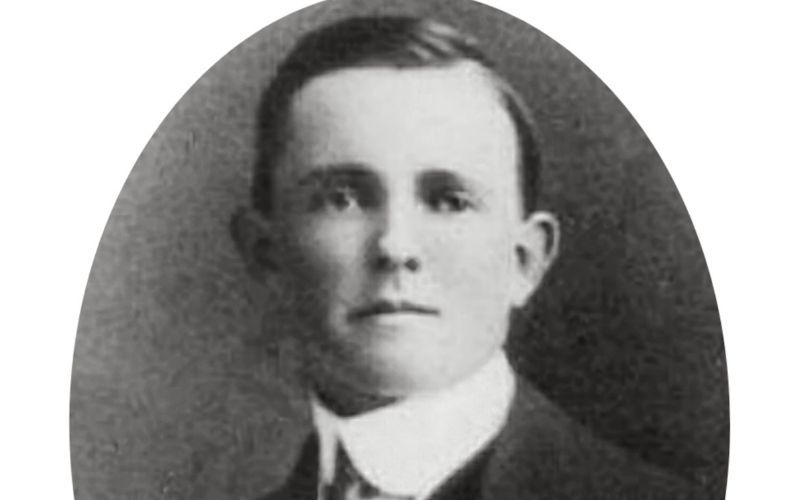
Tony Small
Tony Small
Photo by Come Here to Me

Guinness PubFinder Ad

In the 1780s and 90s, African American Tony Small was an unusual sight in Dublin. Brought to Ireland by Lord Edward Fitzgerald after Small saved his life during the American Revolution, the two shared a close friendship until Fitzgerald’s death in the 1798 rebellion for Ireland’s freedom. 

In her biography of Lord Edward Fitzgerald, Stella Tillyard explains Small was a slave living in South Carolina when his owners fled the state in 1781. 

The American Revolution, still dragging on and moving south, had motivated them to leave and Small, who escaped slavery, stayed behind in South Carolina. He wandered onto a battlefield, where he saw Fitzgerald in British uniform, alive and unconscious. Small took him back to his small hut and dressed his wounds, saving his life. Edward offered him work as servant in return for wages. 

In Dublin, Small lived with Fitzgerald in Leinster House, which today serves as the house of the Dail, the lower house of the Irish Parliament. Although slavery was common in the 18th century, few slaves traveled to Ireland. African American Small was an uncommon sight among the predominantly Irish and British people in Dublin. Often referred to as “faithful Tony,” by Fitzgerald, the two formed a close friendship. 

Dublin history blog “Come here to me!” mentions a 1963 Irish Times article by John Brennan that tells of when Fitzgerald was returning home, Small warned him about British soldiers inside and saved Fitzgerald from arrest.  In 1786, Fitzgerald wrote in a letter quoted in History Ireland magazine, “I was going to send Tony to London to learn how to dress hair but when he was to go, I found that I could not do without his friendly face to look at and one that I felt to love me a little.” 

Small traveled with Fitzgerald to Canada, America, and much of Europe. In France, Fitzgerald met his future wife, Pamela, and was influenced by the ideas of the French Revolution, which replaced the monarchy of King Louis XVI and Marie Antoinette with a republic in 1792. Literature, such as Thomas Paine’s The Rights of Man, and his extensive travel also influenced Fitzgerald’s politics and ideology towards republicanism. 

In 1796, Fitzgerald joined the United Irishmen, which had been formed in 1791. The United Irishmen was a liberal, political organization seeking Parliamentary reform to establish an independent Irish republic. Under the leadership of Theobald Wolfe Tone, the organization was open to Irishmen of all faiths and sought to separate religion and politics. There was a rebellion in the spring of 1798, but it was crushed after a couple months by the British. Fitzgerald had played a large role in planning the insurrection and he was arrested in May and died in Newgate Prison due to denied medical treatment. 

Small, who was safely in England at the time of the rebellion, was devastated by the news. Not much is known about the rest of Small’s life. A recently discovered series of correspondence from the Fitzgerald family in the National Library of Ireland helps shed some light on this period. Historian Kevin Whelan, who currently teaches at Notre Dame, used some of the letters in his article on Fitzgerald in History Ireland magazine. 


See more: Irish Roots , Irish History
Nster.com


16 Comments

See all comments

Jesus, didn't do too much work on this beyond pillaging a Come Here To Me article eh?
@Searlit put that in Youtube ie 'We Make Nightmares'. Its a reference to the 69th bomb squadron or the 8th Airforce. While Nuclear Capable, and commanded by Tom Meagher, they are un sprited. The spirts of the 8th Airfo are in Mo. Weirdo. Buy a patch you can find it in google pictures under 'We Make Nightmares'.
@Searlit put that in Youtube. Its a reference to the 69th bomb squadron or the 8th Airforce. While Nuclear Capable, and commanded by Tom Meagher, they are un sprited. The spirts of the 8th Airfo are in Mo. Weirdo
@ darragh S, I like your spirited comments.
seamus60-It would be nice if that were true..
The best Irishpeople are those prepared to take to the streets to highlight injustices regardless of their stock.
The best Irishpeople are of anglo-norman stock..FACT
I'm reminded of what I once read about Lord Edward. It said that he drank a toast to "The speedy extinction of al hereditary titles and feudal distinctions". If this noble patriot were alive today, he would by vilified by many of the Dáil T.D.s who redicule the idea of full independence for the whole Irish nation.
Columnist Smith errs slihghtly in speaking about "unique friendship between the escaped slave and the United Irishman". Another former slave, a man called Equiano, visited Belfast during the 1790s and was feted by the United Irishmen.
I would put Fitzgerald second only to Roger Casement as the greatest Irishman of them all. Lord Edward is a fascinating figure. Those who travel the 1-95 corridor in SC might be interested that a very short detour off 1-95 will bring them to Eutaw Springs, site of the battle in which Lord Edward was wounded and given aid by Tony Small. It's about an hour, maybe a little bit more, south of the North Carolina line. I have always thought it shameful that the Irish government does not request permission to put a memorial to Lord Edward on the battlefield. Of course, I don't expect anything from Dublin governments. It's just a couple of decades since the Dublin government permitted the leveling of Fitzgerald's home in South Dublin, a house called Frascati, a place that any other nation would revere as part of its heritage. Fianna Fail and the Irish capitalists--there are few lower species on earth--knocked down the house and built a shopping mall.
'We Make Nightmares' boom
Gaelic resurgence (1350–1500, Tudor conquest of Ireland, Successive rebellions as the Gaels adopt Catholicism and bid for French and Spanish and other support from Catholic Enemies of the Tudors. Meanwhile the Tudors went on to Queen of Scots nutcase who tried to break the Gaels with Martial Law and then Plantations and the Flight of the Earls. Then came Cromwellian conquest of Ireland. 1691–1801 was marked by the Protestant Ascendancy. It was not until World War 1 that the British could no longer hold off an Irish Rebellion which is when the Republic of Ireland was born. These days Irish people like the Poms complain about things like Austerity and the European Union and Flags. And colored immigrants or eastern europeans etc. The main thing to point out here is that us Gaels Survived. Look for your last name or your mothers last name or your grand parents last name and so on and see how interconnected you are with your Gael roots. There could be a Gathering of Clans or something you could go to which would help you get back in touch with your people. None could hold nor contain us.
Most of the Normans died from the Plague Cill. What was left after the Plague joined us Gaels. Us Gaels also endured the next couple of Waves being the Tudors followed by the Ascendancy. What could be next. Arabs, Yanks, Australians?
Fitz being of invader of Norman origin - English Pope Adrian IV’s did not see the impact of his get thee into tame the Irish Bull during his lifetime. It was not until 1166, when Henry sent over Anglo-Norman soldiers in answer to Dermot MacMurrough, king of Leinster request for help retaking his kingdom that soldiers invaded Ireland. It was the invasions of Henry the VIII and Elizabeth I that led to the end of the old Gaelic order in Ireland.
English shipping of Irish slaves to the New World earlier in the 1600s has been documented in many works. In 1612 Irish people were sent to the Amazon River settlements. An English Proclamation of the year 1625 urges banishment overseas of dangerous rogues (Irish political prisoners). Ireland was already a prime source of supply for servants and by 1637 on Montserrat the Irish heavily outnumbered the English colonists; 69% of all white people on the island were Irish.


Log into IrishCentral with your Facebook account


or sign-in directly

E-Mail:
Password:
 Remember me Forgot my password
Not a member? Register Now!
print this article Print
email this articleE-mail