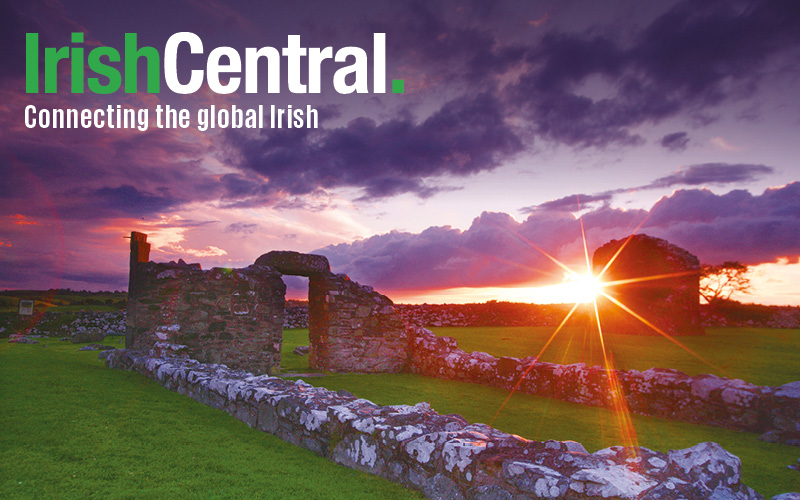
Munster is located in the southern part of Ireland and consists of six counties: Cork, Clare, Kerry, Limerick, Tipperary and Waterford. Its main centers of population include Cork City, the country’s third largest city after Dublin and Belfast; Limerick, the nearest city to Shannon Airport; and Waterford, on the southeast coast. It boasts a wide range of scenery, including the sheer cliffs of Moher in County Clare, the breathtaking beauty of the Dingle Peninsula, and the lush dairyland of north Cork, Limerick, and Tipperary, with such historic landmarks as the Rock of Cashel and Cahir Castle.
A vacation around Munster alone would suffice for many travelers. Each of its counties offers a rich historical lore as well as sumptuous scenery. Suitable starting points for an exploration of the province include Cork, where there is an international airport with connections to Dublin, Britain and Europe, and Shannon Airport, Co. Clare, only 20 miles outside Limerick and the landing point for all transatlantic flights. There are also connections by ferry from Cork to Roscoff in France during the summer months.
Cork
Kinsale in County Cork is a popular holiday resort for tourists and native Irish alike. Known for its gourmet restaurants, yachting, sea angling, and golf, the town also offers Irish culture with its art galleries and historic architecture. Seven miles beyond Kinsale, The Old Head Golf Links is one of the most unique golf courses ever conceived, built on a 220-acre diamond of land that juts out over two miles into the Atlantic Ocean. A few of the prominent buildings in Kinsale include St. Multo’s Church and the Church of St. John the Baptist, as well as Desmond Castle, built as a custom house by the Earl of Desmond circa 1500 A.D. and used by Spanish occupiers as a prison for captured American sailors during America’s War of Independence.
Cobh is a seaport town on the south coast of County Cork and historically significant as the departure point of 2.5 million of the six million Irish who emigrated to North America between 1848 and 1950, beginning in the years of the Great Famine. The Cobh Museum houses the cultural, social, and maritime history of the town and the Great Island.
Just five miles northwest of Cork City is the village of Blarney, with the nearby Blarney Castle and its world-famous Blarney Stone. Over 300,000 visitors come each year to kiss the Blarney Stone, said to give the power of more eloquent speech. It was named by Queen Elizabeth I after the Lord of Blarney, known for his ability to talk his way around and out of any situation.
Clare
County Clare’s history stretches back millennia, and its rich archaology is testament to this. Dotted across the landscape are Stone Age burial sites built by Clare’s earliest inhabitants, Celtic high crosses erected by early Christians, round towers utilized by monks as protection against marauding Vikings, and ruined medieval monasteries and castles. These historic sites are surrounded by stunning scenery: Clare’s natural beauty includes soaring sea cliffs, playful dolphins and the otherworldly limestone landscape of the Burren with its myriad rare flora and fauna. Consisting of 250 square kilometers of limestone, the Burren is an environment unlike any other. Here, Arctic, Mediterranean and Alpine plants grow side by side, colorful flowers growing from the cracks in the rock. Known as Ireland’s rock garden, the Burren is a paradise for walkers, cyclists and artists. Stone Age inhabitants left behind dolmen structures, single-chamber tombs made from upright stones. The most famous of these is Poulnabrone – the Hole of Sorrows – which has stood since at least 3800 B.C.
At the southwestern edge of the Burren area, near Doolin (where the pubs offer great traditional music), the Cliffs of Moher are one of Ireland’s most spectacular natural vistas. At 702 feet above the ocean, these sea cliffs provide incredible views of the Aran Islands and of the valleys and hills of Connemara in the Connacht province.
Bunratty Castle, built in 1425 and restored in 1954 to its former splendor, is the most complete and authentic medieval fortress in Ireland. It now contains mainly 15th and 16th-century furnishings, tapestries, and works of art that capture the mood of those times. One experience not to be missed is the unique Medieval Banquet and Entertainment. Within the grounds of the castle is Bunratty Folk Park, where 19th-century life is vividly recreated. Set on 26 acres, the impressive park features over 30 buildings in a ‘living’ village and rural setting.
Kerry
A county of mountainous landscapes and dramatic coastlines, where ancient historical sites sit alongside modern attractions, Kerry is what many travelers imagine Ireland to be. Its largest town is Tralee, which makes a good base for exploring Kerry with its abundance of high-quality lodgings and Ireland’s second-largest museum, which tells the story of the county from 8000 B.C. to the present, with audio-visual displays and an evocative re-creation of medieval town streets. From Tralee, many travelers choose to head west along the Dingle Peninsula, one of the most stunning stretches of scenery in all of Ireland.
West of Dingle, another of Kerry’s popular attractions is the Great Blasket Island. Inhabited until the 1950s, the island was home to a people who lived the most traditional of Irish lives, passing down oral history and folklore and maintaining a self-sufficient society. Visitors can walk around the island and explore the ruins of former homes, as well as learn more about the history of the island at the Blasket Centre back on the mainland.
Any trip to the Munster province should include a drive or tour bus through the Ring of Kerry, a route which begins in Killarney, heads around the Iveragh Peninsula and passes through Kenmare, Sneem, Waterville, Cahersiveen and Killorgin. The Ring encompasses some of Ireland’s finest beaches and panoramic sightseeing along the way. There is also an established walking path named the Kerry Way, which roughly follows the scenic drive.
Limerick
Limerick City is situated along the curves and island of the River Shannon, and is one of Ireland’s top tourist destinations. Limerick Museum, next to King John’s Castle, includes exhibits on the history of the area. Visitors should also explore St. Mary’s Cathedral, the oldest building in Limerick that is in daily use, and the Hunt Museum, which exists in a historic 18th-century custom house by the River Shannon. The museum holds about 2,000 artifacts from Ireland and abroad. Visitors can also take the Angela’s Ashes Walking Tour, designed to take travelers through the sights Frank McCourt described in his Pulitzer-winning novel, including Arthur’s Quay, Sutton’s Coal, Windmill Street, People’s Park Redemptorist Church, and many others.
Tipperary
County Tipperary is steeped in history, as a medieval foundation that became a center of population in the early 13th century. Cashel (meaning Stone Fortress) offers several historic tourism destinations, including the Cashel Folk Village, a series of informal reconstructions of various traditional thatched village shops, a forge, and other buildings. But the town is most renowned for the Rock of Cashel, a site that served as the traditional seat of the Kings of Munster for several hundred years prior to the Norman invasion. The ruined church and fortifications still stand on the elevation of stratified limestone. Also worth a visit is the Holy Cross Abbey, a restored Cistercian monastery near Thurles.
Waterford
Waterford City is the primary city of the southeast region of Ireland and is famous for being Ireland’s oldest city, founded in 914 AD by Vikings. Situated at the head of Waterford Harbor, it is a hub of historical significance and Irish culture. Waterford’s oldest cultural quarter is what is referred to as the Viking triangle: the part of the city surrounded by its original 10th-century fortifications. The Mall is a Georgian thoroughfare located near the People’s Park. Waterford’s Museum of Treasures is also worth a visit, housing a collection that spans over 1,000 years of the city’s history.
Comments