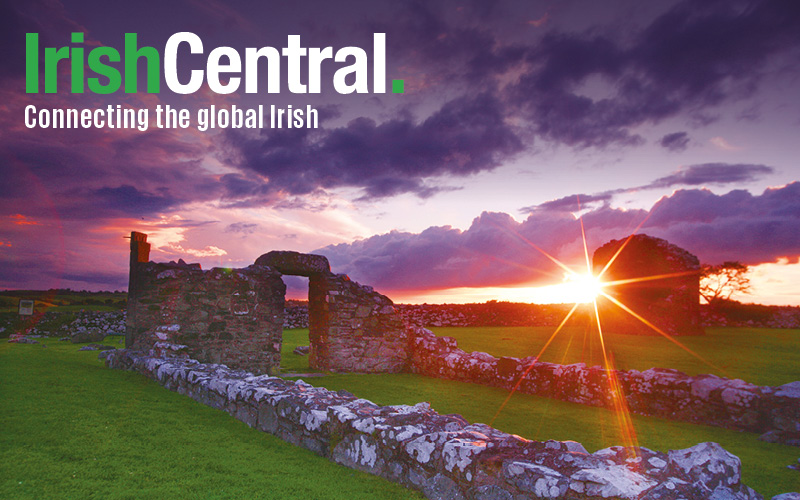
Seven sites around Ireland , including the Burren and Tara, have been submitted for consideration by the UN as potential nominees to the World Heritage List.
The list has been submitted to UNESCO for presentation to the World Heritage Committee meeting taking place from 25 July-3 August in Brazil, and if successful will see the number of World Heritage Sites in Ireland jump to 10.
The existing sites are the prehistoric Brú na Bóinne complex of Newgrange, Knowth and Dowth in Co Meath, the seventh century monastic complex of Skellig Michael, 12km off the Co Kerry coast, and the Giants Causeway in Co. Antrim, a collection of over 40,000 interlocking basalt columns which developed as a result of an ancient volcanic eruption.
The seven sites are the Burren, Céide Fields and Mayo Boglands, the monastic city of Clonmacnoise, Georgian Dublin and its Literary Tradition, early medieval monastic sites like Durrow, Glendalough, Kells and Monasterboice, royal sites like Cashel and Tara and the Western Stone Forts (see below for details).
The Burren
The Burren is located along the west coast of Ireland, encompassing the North of County Clare and the south east of County Galway. The Burren - from the Gaelic Boireann meaning "place of stone" - is defined by the presence of exposed limestone which extends over an area of approx. 72,000ha.
The Burren is an excellent example of a glaciated karst landscape displaying all the classic karst features such as bare pavements, cave systems, turloughs, dry valleys, sinkholes, dolines, poljes and micro-solutional features such as karren. The Burren is also thought to have the most extensive cave systems in Europe, with over 90km of navigable caves.
Ecologically it is very rich, containing over 70% of Ireland's native flora, including unusual combinations of Arctic, Alpine and Mediterranean species.
The Burren contains over 2,700 recorded monuments and has been described as "one vast memorial to bygone cultures". It also supports a very rich living tradition of music and folklore.
The submission highlights that the karst topography elicited a distinctive cultural response from its people, as seen in the extensive winter-based pastoral systems that prevail to this day and which contribute directly to the rich natural and cultural heritage of the region making it an excellent example of the ongoing creative utilization of natural resources by an agricultural society over six thousand years, and reflects the combined works of nature and of man.
Céide Fields and North West Mayo Boglands
The Céide Fields and North West Mayo Boglands comprises a Neolithic landscape consisting of megalithic burial monuments, dwelling houses and enclosures within an integrated system of stone walls defining fields, which are spread over 12km of north Mayo. Many of the features are preserved intact beneath blanket peat that is over 4m deep in places. The significance of the site lies in the fact that it is the most extensive Stone Age monument in the world and the oldest enclosed landscape in Europe.
The Céide Fields were constructed around 5,700 years ago by Neolithic farmers and The blanket bog landscape is of immense importance for its natural habitat value as well as for its illustration of environmental and climate history. This post-glacial landscape was dominated by woodlands, grasslands and heaths in a climate that was relatively warm and dry. The significance of the Céide Fields lies in the fact that along with their associated megalithic monuments and dwelling structures they provide a unique farmed landscape from Neolithic times.
The Monastic City of Clonmacnoise and its Cultural Landscape
The Monastic City of Clonmacnoise and its Cultural Landscape is located in Counties Offaly, Roscommon and Westmeath in the centre of Ireland. It is an outstanding example of a relict early medieval Insular monastic city unobscured by modern building development. It is set within a superlative semi-natural landscape that deepens it spiritual qualities, adding greatly to its authenticity and integrity.
The architectural ensemble at Clonmacnoise represents an outstanding example of an early medieval Insular monastic city and represents a significant stage in the development of early medieval Christianity in the North Atlantic Region.
Archaeological excavation coupled with exceptional documentary sources has demonstrated that Clonmacnoise was a civitas in reality as well as in name, unlike many other Irish sites, and, moreover, its dates are relatively early in the chronology of urban development outside the boundaries of the old Roman Empire.
The Historic City of Dublin
Following the Restoration (1660) Dublin became the second city, after London, of the British Empire, with major development and expansion in the Georgian period (1714-1830) - providing the institutional buildings and infrastructure, and setting out the city plan substantially as it survives today.
Georgian Dublin represents a significant moment in the history of the Age of Enlightenment. The establishment of the Wide Streets Commissioners and the founding of many charitable and public institutions, in buildings of high architectural quality, were high points of that period in Europe.
The Wide Street Commissioners, Europe's first official town planning authority, was established to make "wide and convenient streets" through the congested quarters of the city. Their remit, vision and interventions to improve the city by the rational application of scientific and aesthetic principles were exceptional - and were later copied in other cities - in a world where such functions were usually the preserve of royalty.
The city has made an extraordinary contribution to world literature - important both as formative influence and as a setting. The city plan and much of the fabric which provides the setting for texts of international significance, such as O'Casey"s dramatic trilogy and Joyce's Ulysses, survive.
Early Medieval Monastic Sites (Clonmacnoise, Durrow, Glendalough, Inis Cealtra, Kells and Monasterboice)
The sites are a representative sample of Early Medieval Monastic sites in Ireland, which embody the Celtic Church"s rich cultural and historical past, playing a crucial role in Europe's educational and artistic development.
The six Early Medieval Monastic Sites chosen are the epitome of the Early Medieval Monastic Cities which derived their unique settlement patterns from the major sites of pre-Christian Celtic Ireland which themselves developed over the several centuries of the Iron Age.
During these first centuries of the first millennium AD Britain and Western Europe fell into the orbit of the Roman Empire and the Christian Church, influences which Ireland largely escaped until the 5th century. The properties nominated are exemplars of centres of Celtic learning, teaching and enlightenment. The cultural tradition was unique and for a time the Irish monks were the only educators in Europe where these centuries are called the Dark Ages. For Ireland it was the Golden Age, as her missionaries kept the flame of knowledge and learning alive.
The Royal Sites of Ireland (Cashel, Dún Ailinne, Hill of Uisneach, Rathcroghan Complex and Tara Complex)
The Royal Sites represent unique expressions of Irish society as places of royal inauguration, ceremony and assembly. The sites are also significant as symbols of indigenous Irish culture and identity directly associated with politics and power in Ireland through the ages, stretching from pre-colonial kingship to early political mobilisation in the 20th century.
The myths, legends and folklore associated with the sites are also indicative of their role in the early indigenous belief systems of Ireland and in the transition to Christianity. As such, the sites also illustrate spiritual responses reflected in the transition from Irish Paganism to Christianity.
The sites illustrate creative responses and continuity, through the array of monuments ranging from Neolithic and Bronze Age tumuli, ring-barrows, ring-forts and sacred sites to Christian architecture and cultural landscapes. Situated on strategic and elevated locations, the Royal Sites are organically evolved relict cultural landscapes where the pre-Christian kingship in Ireland evolved and ended.
Western Stone Forts
The Western Stone Forts, comprising the Aran Islands, County Galway Group of seven Forts, Cahercommaun, the Burren County Clare, Caherconree and Benagh, Dingle Peninsula and Staigue, Iveragh Peninsula, County Kerry, represent the penultimate use of a distinctive settlement form i.e. the drystone, generally circular, enclosure, a class of monument that was widely used by the maritime communities of the north Atlantic seaboard of Western Europe, throughout much of later prehistory.
Western Stone Forts represent the apogee of the ringfort class of monument (an enclosed farmstead occupied by an extended kin group). The distribution, character, and hierarchy of forms of ringforts provide a mirror of the organisation, economy and polity of Irish society at a particular period (AD 700-1000).
Western Stone Forts constitute an impressive corpus of vernacular architecture and represent a creative human response to the stony environment of western Ireland. Although separated in time and place from other stone fort / roundhouse traditions of Atlantic Europe, the Irish forts, nonetheless incorporate elements of an architectural repertoire peculiar to that region, in particular the chevaux de frise feature, murus duplex method of wall construction, and intra-mural features.
The landscape setting of these forts testifies to a way of life (tribal pastoralist) that disappeared in Ireland, and across most of Western Europe, at the beginning of the second millennium AD, to be replaced subsequently by the feudal lordships of the medieval era.
For more information contact Lisa Kearns at [email protected]

Comments