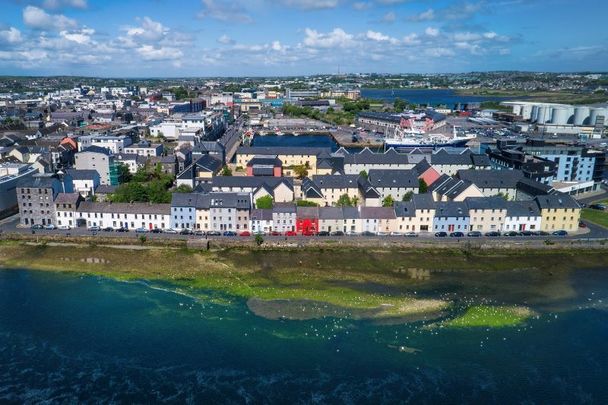
The following counties are among the most widely visited in Ireland. With their lively arts and culture attractions, it's not hard to see why.
Here are IrishCentral's guide and recommendations to Ireland's most popular counties!
County Antrim
Belfast City (in Irish, Béal Feirste) is the capital of Northern Ireland and is located in County Antrim, one of Ireland's most visited counties. History and politics have always played a major role in the fabric of Belfast, and perhaps for that reason, its citizens are among the most vivid and witty people you'll ever meet.
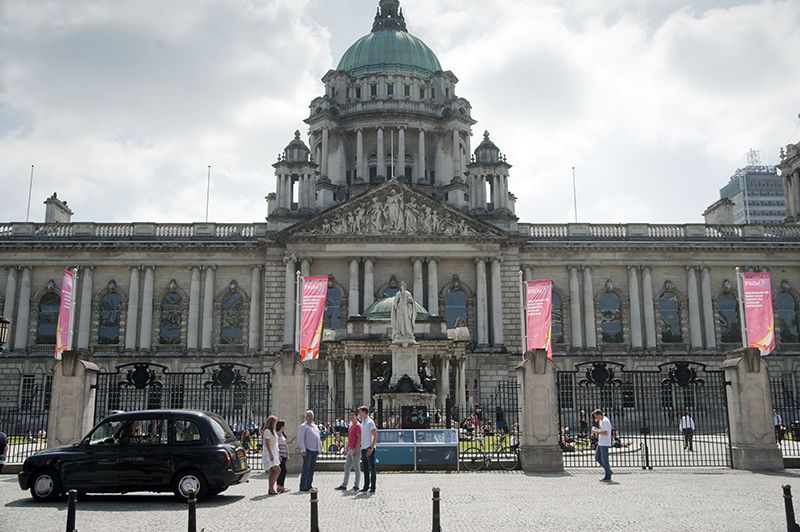

Belfast City Hall (Ireland's Content Pool)
Unsurprisingly, Belfast is rich in culture, art, music, dance, sports, shopping, attractions and historical sites. City Hall, one of the main seats of power, is located on Donegall Square and dominates the area with its magnificent classical Renaissance-style architecture and Italian marble interior. It was completed in 1903.
The Linen Hall Library, also located on Donegall Square, was established in 1788. It houses an Irish collection of over 20,000 volumes and a Robert Burns collection. Visit and you'll be keeping company with many noted Irish authors.
The Crown Liquor Saloon is the most famous pub in Belfast and, frankly, one of the most beautiful pubs in the world. Featuring Victorian architecture, with the outside covered in thousands of colorful tiles, the inside decor has stained and painted glass carved oak screens and mahogany furniture. Don't miss it.
The Botanic Gardens, the rose gardens, and herbaceous borders were established in 1920 and are unmissable. Two greenhouses dominate the gardens and the Palm House has a conservatory containing tropical plants like coffee, sugar, and banana plants. The Tropical Ravine has a high walkway that provides a great viewpoint.
Overlooking the city, Belfast Castle was built in 1870 and was the former home of the Donegall family, who gave the main square in the city center its name. The castle offers a spectacular view of the city. There is also a heritage center, antique shop, and children's play area on the premise.
County Clare
County Clare in the Republic of Ireland is steeped in history, and it offers beautiful seascapes, landscapes, lakes, cliffs, caves, and music. Highlights include The Burren (an ancient, perfectly preserved landscape), the Cliffs of Moher (700 foot high cliffs facing the wild Atlantic), and Bunratty Castle and Folk Park (an impressive castle dating from the early Middle Ages).
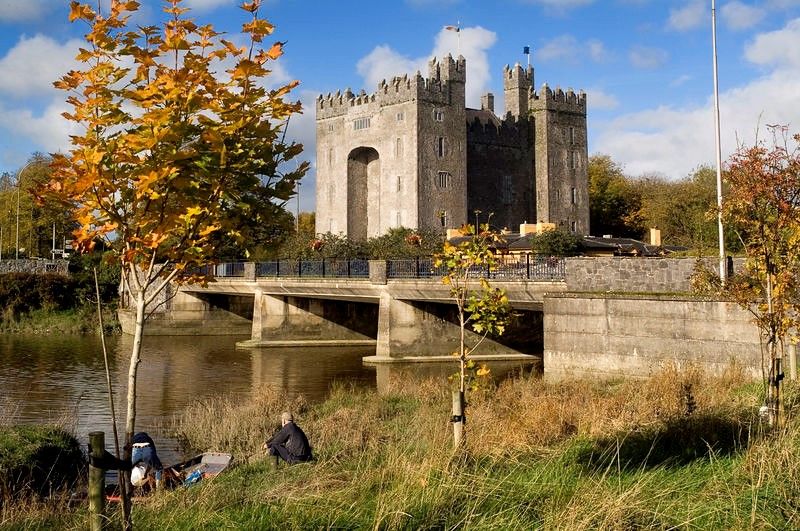
Bunratty Castle in Co Clare (Ireland's Content Pool)
The Burren is over 500 square miles of limestone located in the northwest corner of County Clare. The area is a haven for botanists and ecologists because of the unique flora and rock. The ground surface is a floor of gray rock with long parallel grooves, known as grykes. There is an amazing variety of flora with Arctic, Alpine, and Mediterranean plants growing in spring and summer. For that reason, there's also an amazing range of color in the flowers, ferns, and mosses.
Alwee Caves were discovered in the 1940s. There are caverns, underground waterfalls, stalagmite and stalactite formations and remains of brown bears, which have been extinct in Ireland for thousands of years. The caves are open for guided tours.
The Cliffs of Moher are one of the most spectacular sights of The Burren. These majestic cliffs rise more than 700 feet above the windswept Atlantic Ocean and stretch five miles along the west coast of Clare. Composed of shale and sandstone, the Cliffs' ledges make ideal roosting homes for birds. On a clear day, you can see as far as the Mountains of Kerry, Connemara and the Aran Islands.
Bunratty Castle and Folk Park is one of the most complete and authentic medieval castles in Ireland. This being Ireland it also has a long and bloody history.
The castle is a combination of earlier Norman castles and the later Gaelic Tower Houses furnished with a fine collection of medieval furniture, artwork, and ornate carvings. A four-course Medieval Banquet and entertainment with performers in traditional costume is offered in the evenings.

Are you planning a vacation in Ireland? Looking for advice or want to share some great memories? Join our Irish travel Facebook group.
County Cork
County Cork is the largest county in Ireland, and Cork City is the second-largest city in the Republic. A unique and lively second capital, the distinctive people are as much an attraction as the place itself.
The Shandon Bridge over the River Lee in Cork City (Ireland's Content Pool)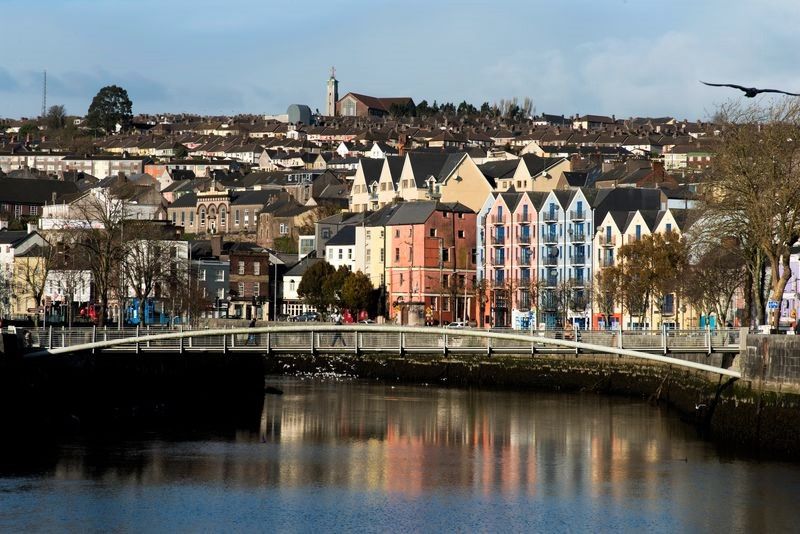
Saint Finbarr first built a monastery on the site that would later become Cork City in the year 650. The city grew along the banks of the River Lee at the point where it splits into two channels.
Cork City is essentially an island with 16 bridges. The main commercial area is located along St. Patrick Street, Grand Parade, Washington Street, Oliver Plunkett Street, and Main Street. The charm and beauty of Cork City revolves around the contrasts the city offers. There are a multitude of theaters and a variety of arts. There is also a diverse range of excellent restaurants, cafes, and pubs with traditional Irish music.
The city also has many unique and quaint shops. Across the Southern Channel are some of the oldest streets in Cork, along with the campus of University College, Cork.
The nearby Blarney Castle was built by Dermot McCarthy, King of Munster in 1446 and should be at the top of your must-visit list. The castle is located on a thousand acres of beautiful woodland and is partially hidden by trees, some up to a thousand years old. The castle has been witness to the triumph and turmoil of Irish chiefs and enemy armies.
Cobh, (pronounced cove) is a picturesque town located on the Great Island, one of three large islands in Cork Harbour. It was the port of departure for many Irish during the Great Hunger from 1844 to 1848 and has the distinction of being central for two of the worst maritime disasters in history. Cobh was the last port of call for the Titanic and the nearest port to the Lusitania when it was torpedoed and sunk off the south coast of Ireland. The Titanic sank on its maiden voyage while crossing the Atlantic after leaving Cobh (then Queenstown).
Nearby Kinsale is a fishing and resort town with a picture-perfect harbor. The town's narrow streets are lined with colorfully painted buildings and it is widely renowned for its art galleries and gourmet restaurants. Kinsale is also considered the Gourmet Capital of Ireland. Many of the pubs offer traditional Irish music and upscale fare.
County Donegal
With its sandy beaches, unspoiled boglands and friendly communities, County Donegal is a leading destination for many travelers. One of the county treasures is Glenveagh National Park, the only official national park anywhere in the Province of Ulster. The park is a huge nature reserve with spectacular scenery of mountains, raised boglands, lakes, and woodlands. At its heart is Glenveagh Castle, a beautiful late Victorian "folly" that was originally built as a summer residence.
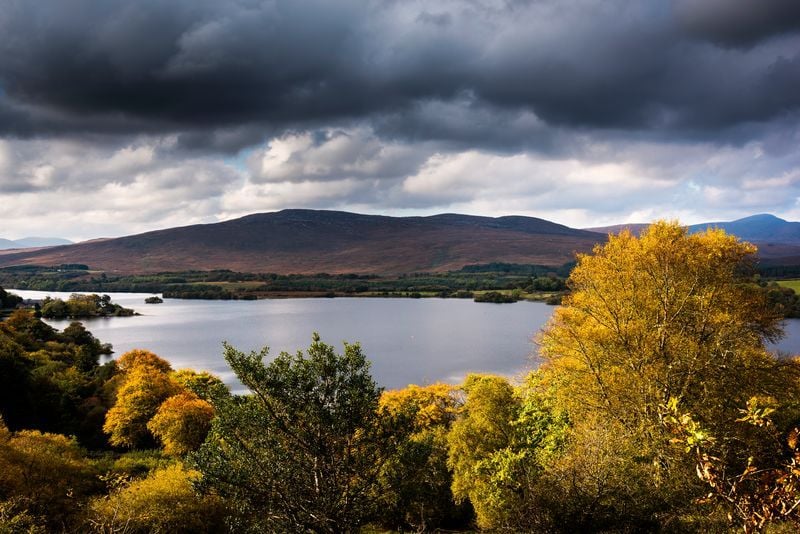
Glenveagh National Park in Co Donegal (Ireland's Content Pool)
Donegal's rugged landscape lends itself to active sports like climbing, hillwalking, scuba-diving, surfing, and kite-flying. Many people travel to Donegal for the superb golf links — long sandy beaches and extensive dune systems are a feature of the county, and many golf courses have been developed. Golf is a very popular sport within the county, including world class golf courses such as Ballyliffin (Glashedy), Ballyliffin (Old), both of which are located in the Inishowen peninsula. Other courses to note are Murvagh and Rosapenna.
The Donegal Gaeltacht (Irish-speaking district) also attracts young people to County Donegal each year during the school summer holidays. The three-week long summer Gaeltacht courses give young Irish people from other parts of the country a chance to learn the Irish language and traditional Irish cultural traditions that are still prevalent in parts of Donegal.
Are you planning a vacation in Ireland? Looking for advice or want to share some great memories? Join our Irish travel Facebook group.
County Dublin
Dublin is the capital of the Republic of Ireland and is divided by the River Liffey. The Royal Canal and the Grand Canal provide connections between the port area and the northern and southern branches of the River Shannon.
Dublin City (Ireland's Content Pool)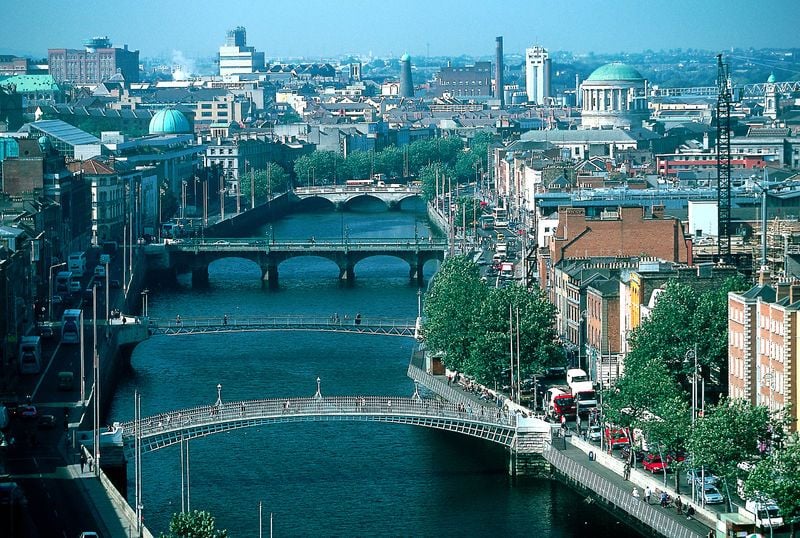
Dublin is a city steeped in history and boasts of having the oldest pub in Ireland, The Brazen Head, and the oldest university, Trinity College. It is a center of art and culture and the largest truly cosmopolitan city in Ireland.
O'Connell Street is the main thoroughfare and the widest street in Europe. At the south end, sits a huge monument of Daniel O'Connell, the Irish patriot. The General Post Office (GPO) is also located on O'Connell Street and was the headquarters of the Irish Republican Brotherhood, and the provisional government of Ireland in the 1916 Easter Rising.
The Dublin Writers Museum is a restored 18th-century mansion located at the north end of Parnell Square. The museum houses manuscripts and first editions of the works of some of Ireland's best writers, including Behan, Joyce, Shaw, Swift, Wilde, and Yeats. It is also home to an impressive collection of painting, photographs, and memorabilia of the various writers.
The Temple Bar Area is the cultural quarter of Dublin. This is a historical and eclectic area filled with art, theater, music, pubs, cafes, and the highest concentration of truly upscale restaurants. There's also the Market in Meeting House Square serving organic foods, unique shops, book, and music stores. It also plays host to many open-air events.
Trinity College is one of the oldest centers of learning, dating back to the 16th century. The library is home to the world-renowned Book of Kells, a Latin text of the four gospels, with meticulous artwork around the borders, created in the ninth century.
The National Museum of Archaeology and History is located on Kildare Street. This branch houses artifacts from 2000 B.C. through the 20th century and include the National Treasury with many archaeological treasures of Celtic and Medieval art, such as the Ardagh Chalice and Tara Brooch.
Christchurch Cathedral is Dublin's oldest place of Christian worship. The Christian Norse, King Sitric, founded it in 1038. Part of the structure goes back to the 12th century. It is presently an Anglican Church.
St. Patrick's Cathedral is the National Cathedral of the Anglican Church. Originally built in the 12th century, it is the burial site of Jonathan Swift, a former Dean, and author of Gulliver's Travels.
County Galway
Galway City is known as the City of Tribes after 14 merchant families who controlled and managed the city in medieval times and is situated along the River Corrib at the mouth of Galway Bay.
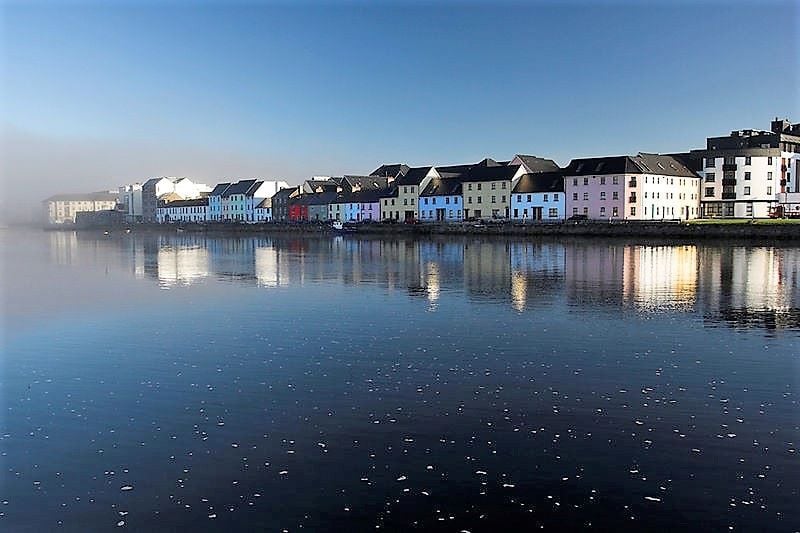
Galway Bay (Ireland's Content Pool)
Today, the city is a growing and thriving university city that offers the best theater in the country. There is also a vibrant nightlife and music can be found everywhere. During the summer, Galway offers many festivals.
Connemara, known for its wild beauty, is located north of Galway City, at the western tip of the county. It is one of the most unspoiled regions of Ireland and a vibrant Irish-speaking area.
The Aran Islands, also an Irish-speaking area, are located 30 miles off the Irish coast. The islands themselves consist of three islands, Inishmore, Inishmaan, and Inisheer.
Inis Móir, meaning Big Island, is eight miles long and two miles wide and has a population of 900. The fort of Dun Aengus is built on the edge of a sheer southern cliff with a defense forest of sharp stone spikes.
Inishmaan means Middle Island. It is three miles wide and two miles long, with fields bordered by high dry stonewalls, and marked by vast sheets of limestone rock. The island peaks at 300 feet and a series of giant terraces slope down to Galway Bay and the Atlantic Ocean. The island has a Gaelic speaking population.
Inisheer is known as the Little Island. It is 27 miles from Galway and covers 1,400 acres. It has a population of about 300. This island is an outcrop of the Burren landscape, consisting of bare limestone that is used for the many cottages, stone walls, roads, and pathways around the island. The Gaelic-speaking island is a haven for birdwatchers and those interested in flora and fauna.
County Kerry
The locals know County Kerry as The Kingdom, a reference to the contrasts you'll see in its astounding scenery, which suggest Ireland in miniature. The climate in Kerry is more unique than other places in Ireland, thanks to the warm waters of the Gulf Stream, and it's actually possible to swim here year round.
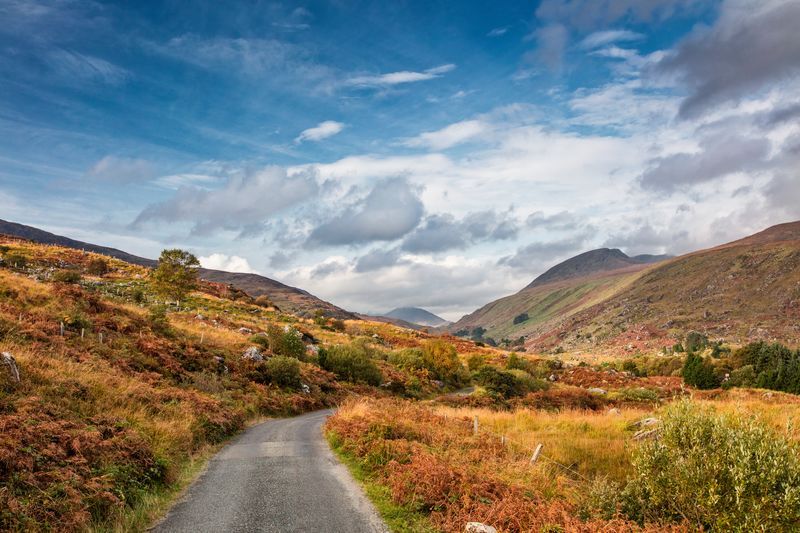
The Black Valley in Kenmare, Co Kerry (Ireland's Content Pool)
Kerry has preserved its heritage in many ways. The oak woods at Derrycunnihy and Tomies, for example, are the last of Ireland's primeval forests. There are many small villages that are still Gaelic-speaking too, adding to the character of the county. Dingle Town is a fishing village that offers a wonderful selection of shops, restaurants, and pubs with traditional music.
The Ring of Kerry is located on the Peninsula of Iveragh. It lies between Dingle Bay and The Kenmare River. It is 110 miles of gorgeous coastal and mountain scenery, enveloping the towns of Killorglin, Glenbeigh, Caherciveen, Waterville, Sneem, Kenmare, and Killarney. Each town has its own personality. The coastal drive is one of the most spectacular sites in all of Ireland.
County Kilkenny
Kilkenny is a county looked on enviously by other counties and not only because of the county's incredible track record in the ancient Irish game of hurling. Kilkenny is a county filled with enchantment and delight. From the spectacular scenery of the Nore and Barrow river valleys to the cultured beauty of Kilkenny City, the county provides the perfect setting for whatever holiday you desire.
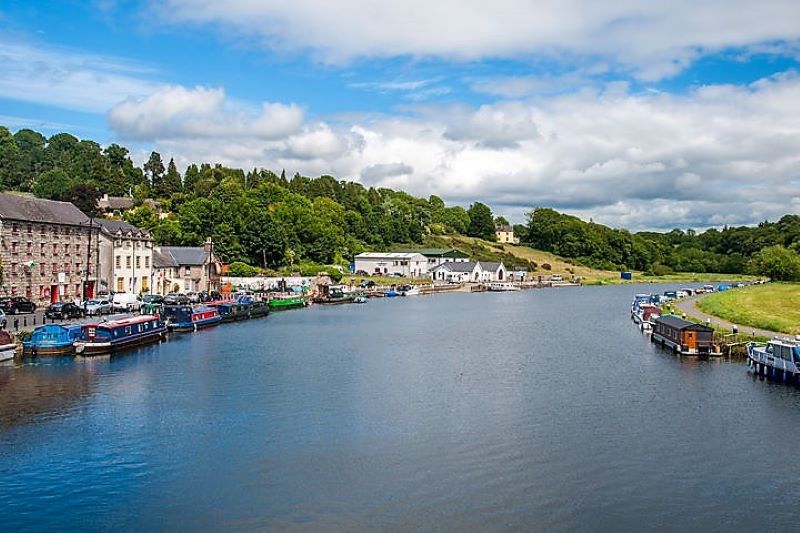
Graiguenamanagh, Co Kilkenny (Ireland's Content Pool)
Known through history as the Marble City because of its distinctive indigenous jet-black marble, Kilkenny City offers a curious, yet the undeniably attractive mix of perfectly preserved old buildings and the vibrancy of a modern city which has made festivals like the Kilkenny Cat Laughs comedy festival, an event with international recognition. St Canice's Cathedral and Kilkenny Castle are extremely important monuments and quality tours are available.
There are plenty of other things to see inside and outside the city and throughout Kilkenny's rural hinterland. Some of Ireland's finest craft studios are to be found in Kilkenny, from pottery to gold and silver-smithing. The experience of seeing a master craftsperson is not one to be missed.
For more physically active tourists, Kilkenny has no limit to the range of choices available. The Jack Nicklaus-designed golf course at Mount Juliet is one of the finest in the state. Arguably the best river wild trout fishing is to be found near Durrow on the River Nore.
The county has numerous ancient sites including Iron Age fortifications, inscribed stones and crosses, castles, and abbeys. The Dunmore Caves in Ballyfoyle are important both for historical and environmental reasons. The site of a massacre of the Irish by Viking raiders in 928, and according to legend, the place where The Lord of the Mice was slain Dunmore is best known these days for the wondrous sight of stalagmites of huge size dominating the chambers.
County Meath
County Meath has traditionally been known as the Royal County, being the seat of the ancient Kings of Ireland at Tara. In the Boyne Valley of County Meath are some of Ireland's most important archaeological monuments, including the Megalithic Passage Tombs of Newgrange, Knowth, Dowth, Fourknocks, Loughcrew, and Tara.
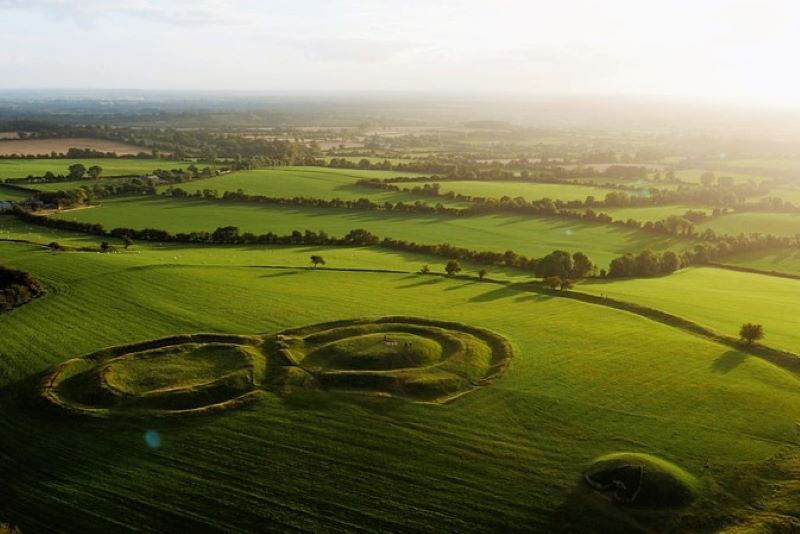
Hill of Tara (Ireland's Content Pool)
Newgrange is the most famous of these prehistoric monuments. It was originally built around 3,100 B.C. and was accidentally discovered in the 17th century.
County Offaly
The heart of the Midlands, County Offaly offers bogs, meadowlands, and undiscovered pastures. Clonmacnoise, located at Shannonbridge on the banks of the River Shannon, is one of the most famous monastic sites.
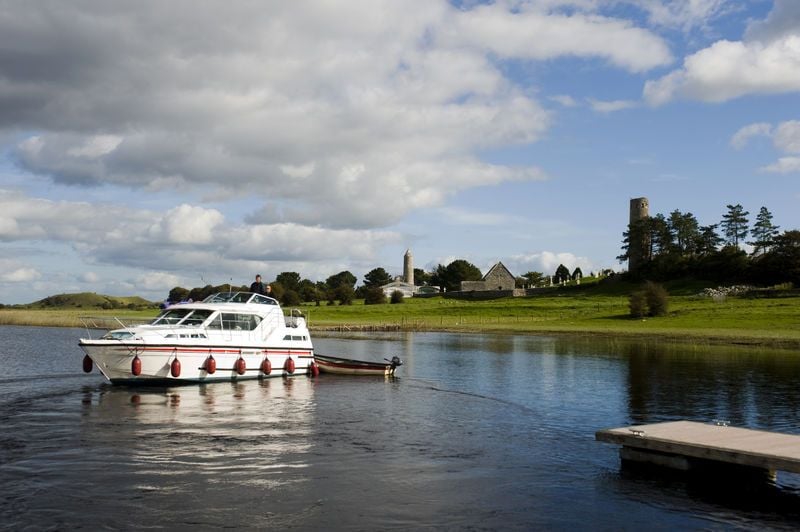
The River Shannon in Clonmacnoise, Co Offaly (Ireland's Content Pool)
Begun as an isolated monastery founded by St. Ciaran in 545 A.D. it is to this day an ecclesiastical site, with ruins of a cathedral, eight churches, and three high crosses.
Irish chieftains, Vikings, and Anglo-Normans plundered Clonmacnoise. Cromwell's forces devastated it beyond restoration. There are guided tours during the summer months; a video presentation at the Visitor Center, and an informative five-mile trail tour of the Blackwater.
County Tyrone
Located in the center of the historic province of Ulster, County Tyrone is blessed with an array of places to visit. The Ulster American Folk Park, for example, is located three miles north of Omagh.
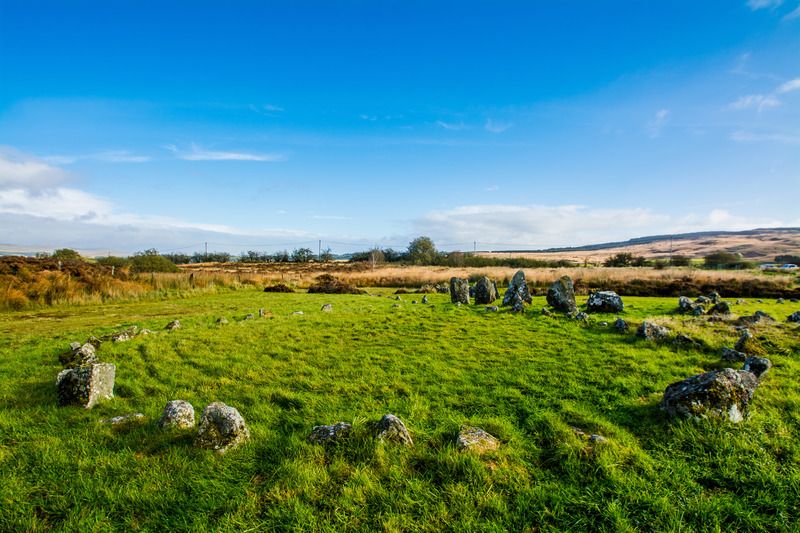
The Beaghmore Stones in Co Tyrone (Ireland's Content Pool)
The Folk Park is an open-air living history museum that explores Ulster's links to the many famous Americans who trace their ancestry to the North of Ireland. The park is comprised of an indoor gallery with information on the causes and patterns of immigration. Outside are a variety of reconstructed buildings of 18th and 19th century Ireland.
Throughout the park are costumed guides and craftsmen that add to the authenticity. Also on site is the Centre for Emigration Studies, an extensive research library. Plan at least half a day to explore the park.
County Wicklow
County Wicklow is often referred to as the Garden of Ireland, due to its breathtaking scenery and located just south of Dublin it makes for a wonderful day trip or overnight stay away from the 'big smoke.'
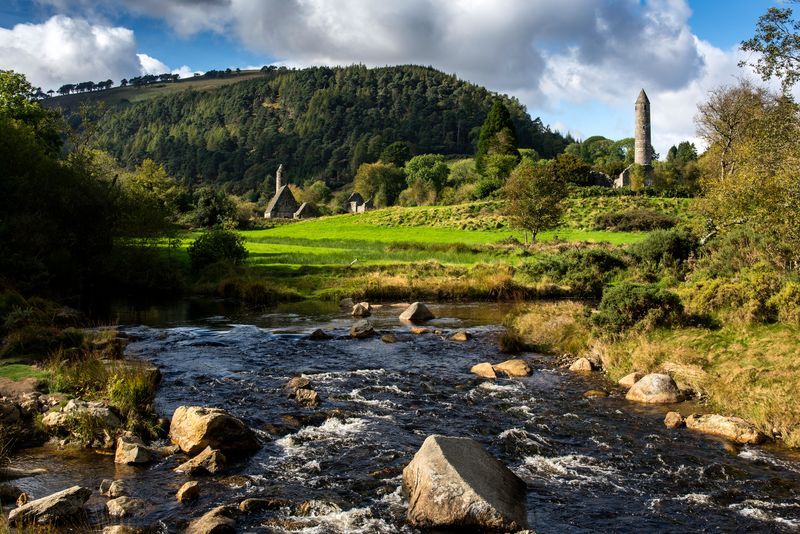
Glendalough in Co Wicklow (Ireland's Content Pool)
Glendalough is a 6th-century monastic site that was founded by St. Kevin.
Nestled in the heart of the Wicklow Mountains it offers a truly spectacular setting, featuring a stone tower that stands 110 feet tall. There is a visitor center and guided tours are available.
Wicklow National Park is an unspoiled natural wonder with nearly 50,000 acres of raw beauty. A drive through the Wicklow Gap from Glendalough to Hollywood is one of jaw-dropping beauty.
Powerscourt is a beautiful upscale estate with some of the finest gardens in Europe.
What's your favorite place to visit in Ireland? Let us know in the comments!
* Originally published in 2013, updated in March 2022.
Comments