The Irish Census: Finding my family online
Posted on Saturday, June 05, 2010 at 12:16 PM
RSS 
Recent Posts
- Moved by movement - Irish Rep’s ‘Noctu’ is mesmerizing - VIDEO
- Remember the Challenger in these challenging times
- Ireland: Real and Imagined
- No Blessings for St. Patrick's Old Cathedral School
- From the Irish Famine to the Irish on Wall Street
Archives
It’s a strange thing to sit at my desk in New York City to look out the window and see Sixth Avenue stretched out far below and in the distance the Huston River, and turn and look at my computer screen and see the signature of my great grandfather Patrick Harty on the 1901 census form.
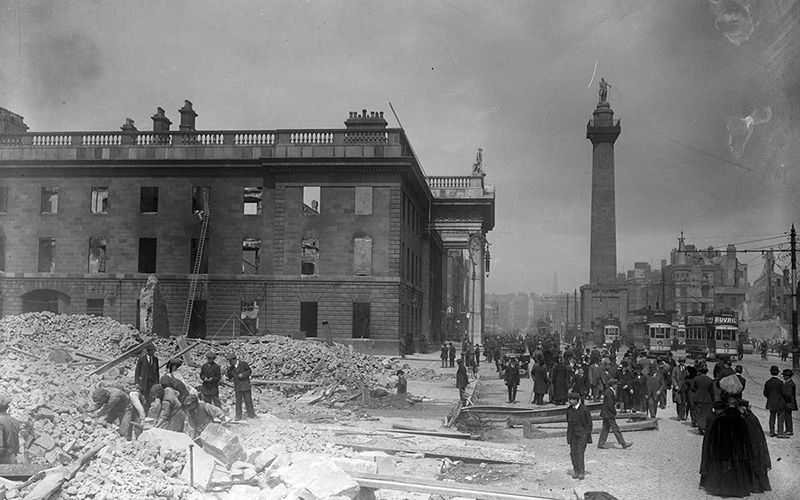
(Most of the records were burned in a fire in the Four Courts during the Civil War. But the two saved census records, 1901 and 1911, are now online.)
Patrick is 73 in 1901 and his wife Mary is 68. Their son William, who would become my grandfather, is 35 and still living at home with his brothers John and James and his sister Johanna. English is listed as their spoken language. They can all read and write. Roman Cathilik [sp] is listed as their religion. I don’t know if the misspelling of "Cathilik" is my great grandfather’s or the census taker, Constable William James Hughes.
In the neighboring town land, Mary Seymour, who would become my grandmother, is 17. She is living with her mother, Mary, 41, her father Stephen, 53, her sister Fannie, 21, and five brothers. They can all read and wright [sp] and they too are Roman Catalick [sp]. Ten of the 12 residents in the household are listed -- one is a servant Michael Furley, 24.
The two missing names are my grandmother’s sister, my great Aunt Agnes who immigrated to Australia (I’m in touch with her descendants who still live there today), and her brother, great uncle Martin who immigrated to America. Martin never married. He returned to Ireland late in life, lived out his retirement in our house and was known to one and all as “The Yank.”
The information on the census forms is not a whole lot, but yet it is.
It’s like splashes of paint that form a picture of the people whose DNA I’ve inherited. Ancestors who are buried in the graveyard where my father and mother are now buried, just a field away from the house I grew up in – the same house that my grandparents lived in and my great grandparents would have visited.
I can tell from the census records and some mental arithmetic that my great grandfather Patrick was 17 in 1845 -- the year the blight first hit the potatoes.
I can picture Patrick as a young man, the way I can picture my brother Patrick at 17, checking the potato rows and reporting back to his father.
In 1847, the worst year of the Famine when the potato crop failed completely, 55 thousand families were evicted in Tipperary.
Patrick’s family was evicted from their 10-acre holding sometime during or after the Famine. I recall my mother telling me that fact.
In 1901, according to the census, Patrick and his family are living on a farm in Ballyanny, which is across the fields from the farm that I grew up on, a farm that was once owned by the Kingsley family.
I find, what I believe to be, their census records too.
William Kingsley, 65, and his wife Mary, 50, are Church of Ireland. He is a retired Infantry colonel who was born in Westmeath. His wife was born in London. They have two Catholic servants. Mary Egan, 35, is listed as “a personal maid” who can read and write. Norah McGrath, 40, “a domestic servant” cannot read and write. Both Mary and Norah are single.
Between the census of 1901 and 1911, my grandfather William came into the Kingsley estate -- 189 acres of prime farmland. He was probably the first Catholic to own the land in hundreds of years.
By the year 1911, William’s father Patrick is dead. His mother Mary, 75, is listed as head of the household. His brother James, 40 and single, is still living at home, as is his sister Johanna whose age is listed at 28 (she would have been 32).
The census records for 1911 show that my grandfather William Harty (45) had married Mary Seymour (26). They have two of what would later become a family of nine children. My father, Patrick, is one year old and his sister Mary is two months. (I grew up with a portrait of Mary “Maureen” over the fireplace. She died of a burst appendix when she was 10).
Two servants, Bridget Healy, 16, and John Quigley, 66, are also listed. Bridget is as yet unmarried. John is single. They can all read and write.
According to the 1911 census my grandmother Mary can read and write in both English and Irish. This fact gives me pause. Most of the Irish language died out with the Famine and emigration. Mary’s father would have been born in 1848; did she learn Irish from him or her mother who was born in 1860?
I stare at grandfather William’s signature on the census form -- the way he writes “Harty” looks like it’s been penned by my own hand.
I wish I knew more about how my ancestors managed to cling on to life and land when so many died and emigrated during and after the Famine or what is more aptly called the Great Starvation.
I can tell from these two census records that the men in my family married late in life.
My great grandfather and his brothers worked hard to buy up land -- driven by a determination, or so I imagine, never to go hungry again. Only when there was a farm for each of the brothers, did they then did look to marry. The women they married were much younger. It was a practical matter, not romantic. A “made match.” I have a photograph of my grandmother on her wedding day. She does not look very happy.
My grandfather William died before he was 60, leaving my grandmother a young widow. He suffered from diabetes, which scientists now link to the “thrifty” gene that allowed people to store fat in times of plenty to prevent starvation in times of Famine. Today, my brother suffers from the same disease.
At fourteen, my father Patrick was in charge of the farm and responsible for his eight younger brothers and sisters. I believe that handling so much responsibility at such a young age shortened his life – he died in his 60s.
Part of the old Kingsley house that still survives as our “back kitchen” was a soup kitchen during the Famine, if I have the story from my mother right. I remember, too, though the memory is faint and “hushed” that when I was a child and workmen were digging the foundation for a new cow house, they found the skeleton of a young woman. My mother said she was from Famine times and had a mass said for her soul.
I keep rechecking the census forms trying to glean some more information -- something I missed. I discover in the 1911 census that Patrick’s widow, Mary Harty, my great grandmother, like my father’s mother, Mary Seymour, spoke English and Irish. And I discover another branch of Hartys that may be my great uncle John’s family.
In the 1901 census, John Harty is listed with two daughters, Bridget, 18, and Kate, 16. This discovery leads me to wonder if John was the one who purchased the land from the Kingsleys. Did my grandfather inherit our farm from his uncle because John’s daughters, as women, would not have been eligible to inherit the land?
There is so much I don’t know.
I turn to check my mother’s family in Waterford, and I get a message that the website is “temporary unavailable” due to maintenance. I wait for a while and try again, but I can't get access. I take it as a message from the ancestors that it’s time to leave things be.
I look out the window and see that night has fallen. The office is empty and I’m astonished that it’s grown so late. I have been in another world and I’m reluctant to leave.
In my mind I see the row of beech trees that were planted many generations ago on the land that became our farm. I can easily imagine some ancestor pausing there under the spreading branches. If only those trees could talk and tell me what they know of those who went before.
I long to know more, but I'm happy for what little I do know, and for the technology that allows me to reach in and probe the mysterious connections to the past.
Mortas Cine - Pride in our heritage.
(Most of the records were burned in a fire in the Four Courts during the Civil War. But the two saved census records, 1901 and 1911, are now online.)
Patrick is 73 in 1901 and his wife Mary is 68. Their son William, who would become my grandfather, is 35 and still living at home with his brothers John and James and his sister Johanna. English is listed as their spoken language. They can all read and write. Roman Cathilik [sp] is listed as their religion. I don’t know if the misspelling of "Cathilik" is my great grandfather’s or the census taker, Constable William James Hughes.
In the neighboring town land, Mary Seymour, who would become my grandmother, is 17. She is living with her mother, Mary, 41, her father Stephen, 53, her sister Fannie, 21, and five brothers. They can all read and wright [sp] and they too are Roman Catalick [sp]. Ten of the 12 residents in the household are listed -- one is a servant Michael Furley, 24.
The two missing names are my grandmother’s sister, my great Aunt Agnes who immigrated to Australia (I’m in touch with her descendants who still live there today), and her brother, great uncle Martin who immigrated to America. Martin never married. He returned to Ireland late in life, lived out his retirement in our house and was known to one and all as “The Yank.”
The information on the census forms is not a whole lot, but yet it is.
It’s like splashes of paint that form a picture of the people whose DNA I’ve inherited. Ancestors who are buried in the graveyard where my father and mother are now buried, just a field away from the house I grew up in – the same house that my grandparents lived in and my great grandparents would have visited.
I can tell from the census records and some mental arithmetic that my great grandfather Patrick was 17 in 1845 -- the year the blight first hit the potatoes.
I can picture Patrick as a young man, the way I can picture my brother Patrick at 17, checking the potato rows and reporting back to his father.
In 1847, the worst year of the Famine when the potato crop failed completely, 55 thousand families were evicted in Tipperary.
Patrick’s family was evicted from their 10-acre holding sometime during or after the Famine. I recall my mother telling me that fact.
In 1901, according to the census, Patrick and his family are living on a farm in Ballyanny, which is across the fields from the farm that I grew up on, a farm that was once owned by the Kingsley family.
I find, what I believe to be, their census records too.
William Kingsley, 65, and his wife Mary, 50, are Church of Ireland. He is a retired Infantry colonel who was born in Westmeath. His wife was born in London. They have two Catholic servants. Mary Egan, 35, is listed as “a personal maid” who can read and write. Norah McGrath, 40, “a domestic servant” cannot read and write. Both Mary and Norah are single.
Between the census of 1901 and 1911, my grandfather William came into the Kingsley estate -- 189 acres of prime farmland. He was probably the first Catholic to own the land in hundreds of years.
By the year 1911, William’s father Patrick is dead. His mother Mary, 75, is listed as head of the household. His brother James, 40 and single, is still living at home, as is his sister Johanna whose age is listed at 28 (she would have been 32).
The census records for 1911 show that my grandfather William Harty (45) had married Mary Seymour (26). They have two of what would later become a family of nine children. My father, Patrick, is one year old and his sister Mary is two months. (I grew up with a portrait of Mary “Maureen” over the fireplace. She died of a burst appendix when she was 10).
Two servants, Bridget Healy, 16, and John Quigley, 66, are also listed. Bridget is as yet unmarried. John is single. They can all read and write.
According to the 1911 census my grandmother Mary can read and write in both English and Irish. This fact gives me pause. Most of the Irish language died out with the Famine and emigration. Mary’s father would have been born in 1848; did she learn Irish from him or her mother who was born in 1860?
I stare at grandfather William’s signature on the census form -- the way he writes “Harty” looks like it’s been penned by my own hand.
I wish I knew more about how my ancestors managed to cling on to life and land when so many died and emigrated during and after the Famine or what is more aptly called the Great Starvation.
I can tell from these two census records that the men in my family married late in life.
My great grandfather and his brothers worked hard to buy up land -- driven by a determination, or so I imagine, never to go hungry again. Only when there was a farm for each of the brothers, did they then did look to marry. The women they married were much younger. It was a practical matter, not romantic. A “made match.” I have a photograph of my grandmother on her wedding day. She does not look very happy.
My grandfather William died before he was 60, leaving my grandmother a young widow. He suffered from diabetes, which scientists now link to the “thrifty” gene that allowed people to store fat in times of plenty to prevent starvation in times of Famine. Today, my brother suffers from the same disease.
At fourteen, my father Patrick was in charge of the farm and responsible for his eight younger brothers and sisters. I believe that handling so much responsibility at such a young age shortened his life – he died in his 60s.
Part of the old Kingsley house that still survives as our “back kitchen” was a soup kitchen during the Famine, if I have the story from my mother right. I remember, too, though the memory is faint and “hushed” that when I was a child and workmen were digging the foundation for a new cow house, they found the skeleton of a young woman. My mother said she was from Famine times and had a mass said for her soul.
I keep rechecking the census forms trying to glean some more information -- something I missed. I discover in the 1911 census that Patrick’s widow, Mary Harty, my great grandmother, like my father’s mother, Mary Seymour, spoke English and Irish. And I discover another branch of Hartys that may be my great uncle John’s family.
In the 1901 census, John Harty is listed with two daughters, Bridget, 18, and Kate, 16. This discovery leads me to wonder if John was the one who purchased the land from the Kingsleys. Did my grandfather inherit our farm from his uncle because John’s daughters, as women, would not have been eligible to inherit the land?
There is so much I don’t know.
I turn to check my mother’s family in Waterford, and I get a message that the website is “temporary unavailable” due to maintenance. I wait for a while and try again, but I can't get access. I take it as a message from the ancestors that it’s time to leave things be.
I look out the window and see that night has fallen. The office is empty and I’m astonished that it’s grown so late. I have been in another world and I’m reluctant to leave.
In my mind I see the row of beech trees that were planted many generations ago on the land that became our farm. I can easily imagine some ancestor pausing there under the spreading branches. If only those trees could talk and tell me what they know of those who went before.
I long to know more, but I'm happy for what little I do know, and for the technology that allows me to reach in and probe the mysterious connections to the past.
You can find the Census Records at:
http://www.census.nationalarchives.ie
Mortas Cine - Pride in our heritage.
Note: Check out the latest issue of Irish America magazine which commemorates the Irish Famine. www.irishamerica.com
31 comments
jacersisityourself | Jun 07, 2010, 06:38 PM EDT
GPJ1970 and others – fyi, if you keep yr posts below 450 characters, they should make it past the ICentral auto-monitoring editors.
Report abuse
jacersisityourself | Jun 07, 2010, 06:34 PM EDT
I even found my maternal great-grandfather with these census sources – delightful to see he couldn’t read or write and his signature marked by an ‘X’ mark placed by his name, written into the form by the census enumerator. Delightful to see too, on one form, a member of the family, 6 yrs of age, described as one who couldn’t read or write, being also described as a scholar. Yep, that’s definitely Ireland fer ya!
Report abuse
jacersisityourself | Jun 07, 2010, 06:33 PM EDT
Yep, nice article by Patricia. I started a family tree search years ago but without the Custom House records that she speaks of, I could only get as far back as my great grand-father. A younger cousin, more research savvy than me, found our great-great-grandfather but no further. Interesting how Patricia mentions addresses changing between 1901 and 1911. I found the same.
Report abuse
dottiedolittle | Jun 07, 2010, 04:31 PM EDT
Some of my cousins went to Ireland and searched Parish records. They have traced the family back to 1650. I still have relatives in Balina.
Report abuse
Liamkeyes | Jun 07, 2010, 03:16 PM EDT
People who retitre back to the Old Sod are known as "Returned Yanks" and are forever more referred to simply as "The Yank".
Report abuse
patrickesq | Jun 07, 2010, 12:03 PM EDT
The National Archives of Ireland are to be commended for the splendid preservation and digitalization of these Census records, as supplemented by other related records. It is a national treasure that is freely available to all internationally. There are many gaps in the memories of the current generation of Irish- Americans, relating to their Irish ancestors,that can now be more readily filled.
Report abuse
CaliforniaShamrock | Jun 07, 2010, 11:25 AM EDT
I have used the census in US and now Ireland I love to see the actual record - it is a form of "time travel" - on this day and in this place these people were living in this dwelling.
Report abuse
DawnMarie | Jun 07, 2010, 10:32 AM EDT
great article and so aptly relays what many of us of Irish descendency imagine from digging around in our ancestors lives.
thanks for the article. good reading
dawn in canada
Report abuse
TheYank | Jun 07, 2010, 02:21 AM EDT
Report abuse
GPJ1970 | Jun 07, 2010, 12:37 AM EDT
Why did you not print my last comment? I think it was relevant as you paint the finding of ancestors in such a rosy light, its only a matter of finding a name and some oral history to make you irish, and then romaticise the rural aspect of the country. Over 70% of "White People" in the USA claim Irish ancestry. The people who decide citizenship shoud be the people who these emmigrants from the USA will live amongst. I used the example of Jean to show how easy it is to use the census.
Report abuse
LinLinisme | Jun 06, 2010, 01:39 PM EDT
still looking for the link. Cardin is a well known name in England, France, Ireland, Scotland and Wales.
Report abuse
manhattan | Jun 06, 2010, 12:46 PM EDT
Both sets of my Grandparents immigrated to New York in 1908 and 1911. To be able to see there families, great grandparents etc. is amazing. My Kerry grandparents spoke Irish and English but the Longford grandparents did not. I was lucky that I knew the towns they lived in to make it easier to find. We irish americans have a history there and thank God we can now see it for ourselves.
Report abuse
hollabackgurl | Jun 06, 2010, 10:35 AM EDT
This is a terrific and moving article; speaking about your own Irish family you could just as easily be speaking for all of us.
Report abuse
quinntax | Jun 06, 2010, 08:10 AM EDT
Wonderful article. Expresses for many of us our feelings when we look up our own genealogies but cannot express it as well.
Report abuse
31 Comments
Report abuse