Today in Fromelles, France a joint Australian-British ceremony marked the occasion of the last burial of the 250 men from the Australian and British World War I armies whose bodies were recently found in a mass grave near the battle site. This follows last week's ceremony at Arlington when American soldier and Irishman Thomas Costello was buried with full military honors following the recent discovery of his body in eastern France.
The Australians who have been buried at Fromelles were killed 94 years ago today, in what was the worst day in Australian military history. July 19, 1916 was the first day that Australians fought on the western front and by the morning of the 20th nearly 2,000 were dead and another 3,000 were missing. More than 200 of those who were found in the grave were Australian.
The Australians who have been buried at Fromelles were killed 94 years ago today, in what was the worst day in Australian military history. July 19, 1916 was the first day that Australians fought on the western front and by the morning of the 20th nearly 2,000 were dead and another 3,000 were missing. More than 200 of those who were found in the grave were Australian.
The bodies of those who died were behind the German lines when the action ceased and the Germans buried them in a mass grave*, where they remained until the grave was found in 2007. The exhumation, identification and reburial process carried out by the Commonwealth War Graves Commission culminated in today's ceremony.
Many descendants and other family members from Australia and Britain traveled to France for today's events and there's great media interest in both countries.
Relevant to this site is the question of whether any of those who fought in the British or Australian forces were Irish? That's unclear, but there are Irish names among the 96 Australians whose bodies have been identified. There were no Irish regiments involved in the action, but it would hardly be a surprise to learn that some of those Australian or British soldiers were Irish immigrants or - even more likely - children of immigrants.
The British and Australian authorities are still trying to identify those soldiers who have not yet been identified and are still seeking DNA samples from people who believe that a family member was killed in the battle.
There are still hundreds presumed buried in other mass graves in the area. I heard one historian say on the news this morning that in the past few weeks another mass grave had been located meaning more bodies will be exhumed and identified, if possible.
Many descendants and other family members from Australia and Britain traveled to France for today's events and there's great media interest in both countries.
Relevant to this site is the question of whether any of those who fought in the British or Australian forces were Irish? That's unclear, but there are Irish names among the 96 Australians whose bodies have been identified. There were no Irish regiments involved in the action, but it would hardly be a surprise to learn that some of those Australian or British soldiers were Irish immigrants or - even more likely - children of immigrants.
The British and Australian authorities are still trying to identify those soldiers who have not yet been identified and are still seeking DNA samples from people who believe that a family member was killed in the battle.
There are still hundreds presumed buried in other mass graves in the area. I heard one historian say on the news this morning that in the past few weeks another mass grave had been located meaning more bodies will be exhumed and identified, if possible.
Although interest in the Irish involvement in World War I is pretty low, it has been increasing in recent years. Yesterday Sinn Féin's Martin McGuinness encouraged Irish nationalists and republicans to remember those who fought in the war. I hope many are encouraged to do so and that we have a better national memory of those Irish who suffered in the trenches.
I'd also like to think that this national remembering will include those who fought in the Austalian or New Zealand or Canadian or, like Thomas Costello and my grandfather, in the American army. It would be great to think of people here offering up DNA samples to help identify a forgotten family member lost in the trenches nearly a century ago.
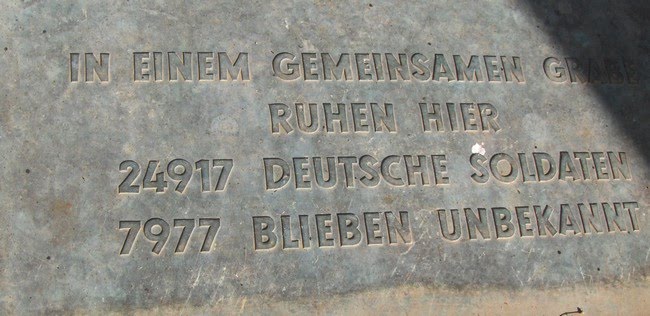
{* The bodies weren't just dumped in a big pit by the Germans. Each body was wrapped individually in a blanket. The Germans often buried their own dead this way. There are 25,000 German soldiers buried in a mass grave in Langemark Cemetery near Ieper in Belgium.}
{* The bodies weren't just dumped in a big pit by the Germans. Each body was wrapped individually in a blanket. The Germans often buried their own dead this way. There are 25,000 German soldiers buried in a mass grave in Langemark Cemetery near Ieper in Belgium.}

Comments