American in Ireland


Joining the euro was 1801 all over again in Ireland

Posted on Thursday, October 21, 2010 at 05:57 PM

RSS


Recent Posts

Archives

submit to reddit


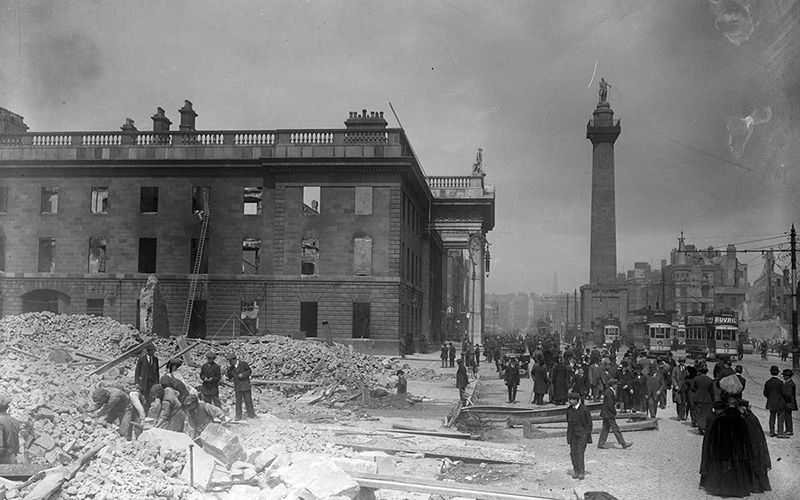
In 1800 the Irish parliament voted to accept union with Great Britain, a move which was an economic disaster that snuffed out a burgeoning economy, led to decline, de-industrialization and, eventually, a disastrous famine that killed a million people and drove more than that out of the country. A complete catastrophe unrivaled in Irish history. If anything comes close, it was 1992.

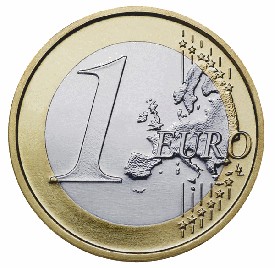
In 1992 the people of Ireland voted to accept the Maastricht Treaty, an arcane document that few voters really understood. It committed Ireland to joining a single European currency, but the pluses and minuses of such a decision were never even considered in the run-up to the referendum.

The Taoiseach (Prime Minister) Albert Reynolds sold the amended European Union treaty on the basis that we would get billions of dollars in aid and there would be no impact on our laws banning abortion. The only references made to the pending currency union were about how we'd enjoy the same low interest rates as the Germans. There was zero debate on the merits of joining a currency dominated by countries that, combined, accounted for about a third of Ireland's trade.

Today we're reaping what was sown in 1992. Most people here are blaming the "greedy bankers" or the "greedy property developers", but that doesn't explain why this property bubble and subsequent crash were so much worse than those that had gone before. Greed is part of the human condition and bankers' and/or property developers' greed is a constant.

No, another explanation is required and that's where the euro comes in. We exercise no control over the euro. Interest rates are determined to suit Germany & France, but the Irish economy does not move in synch with those economies. Ireland's two largest trading partners are the United States and United Kingdom, both of which are outside the euro. The fluctuations in the exchange rates between the euro and the dollar are not a reflection of economic conditions in Ireland, but serve to enhance our boom when America's up and Germany down and vice versa.


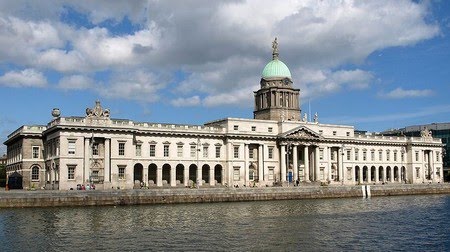
Anyone who visited Dublin before the bust would have recognized that Dublin's architecture is dominated by two eras: the recent boom and the late 18th Century. The Customs House, the Four Courts and Dublin's famous Georgian squares and many other buildings were built before 1800 by a confident, thriving Dublin. It wasn't just Dublin either. Great Georgian buildings can be found in other cities and throughout the country.

The modern equivalent of those great Georgian houses and official buildings are the large rural homes, the expensive apartment and the modern, confidence-oozing glass and steel office buildings that dominate our city centers. Gradually, however, those modern buildings and modern country estates are looking like symbols of another era, a time past, just as the Customs House would have seemed to 19th Century Dubliners.

Many people believe it will take nearly a generation to work through the problems caused by the recent boom and bust. Presumably this will not include anything like a murderous famine, but economic decline and emigration are sure to be part of Ireland's future for some time. And, just as in 1800, it was all avoidable if only Ireland's political class had recognized that union has a cost.


11 comments

Page 1 of 1 pages
GeorgeDillon

That would be as big a disaster as choosing the euro. Ireland needs a currency that straddles the two economies of Europe and America.
I'd like to see Ireland dumping the euro and adopting the US dollar.
I liked the old currency better, it was much more interesting and artistic than the euro.
Ajreaper,

Sharing a currency works when those states/nations doing the sharing are closely linked economically (& ideally, politically). The greater the differences in fiscal policies and the economic cycle the more the currency will be like an ill-fitting shirt.
plasticpaddy,

Just because it was democratic, doesn't mean joining was the right decision. And you cannot seriously believe we had a debate on the merits of membership in the euro, do you?

And, just as a comparison, how much more democratic was the constitutional convention at which the US Constitution was drafted? How democratic were the 13 state conventions at which the Constitution was approved?

I don't really know the answers to those questions, but what I'm getting at is that the democratic aspect is not really relevant when evaluating right vs wrong. I'm not talking about a moral right vs a moral wrong, simply that a democratic vote can still be an error.

I believe the Irish people's approval of Maastricht was an error.
Oh please, like the act of union was a democratic choice. It was voted upon by puppets and nothing more. To equate that to our entirely democratic membership of the EU is just silly. Politically Fianna Fail messed up by forcing votes on already rejected treaties but our membership of the common market, the EMU and the currency was and remains entirely democratic and our choice.
I see- your examples clearly show the merits of adopting the Euro. I guess with all change comes some negatives that must be worked through. It seems the entire concept of a Europeon union sharing a comoon currency (mostly) makes sense but a country like Ireland seems to be at the mercy of the larger more influencial members.
Ajreaper,

There definitely were advantages to switching currencies. One is that American companies would have been able to pay their costs here in the currency in which the majority of their European sales were being made. For example, Dell was selling PC's from Limerick across Europe priced in euros. If their costs were not in euros that would have been an additional uncertainty for them. However, unfortunately, during the boom our wage rates went through the roof as compared with the rest of Europe, which pretty much undid the good of this aspect of being in the euro.

Another advantage was that a small currency like the Irish pound can suffer from a lack of confidence. Very few investors want to hold Irish pound bonds because (a) there isn't much demand for them so they can be hard to sell and (b) there's more risk associated with small economies. All of that meant we had higher interest rates than we would have had in the euro.

The decision to join wasn't entirely without merit, but we should have debated it more. Some form of half-way house might have been the ideal solution, although the one that existed was politically unacceptable (the UK pound).
I am curious Yank what, if any, were/are the advantages to Ireland in using the Euro? It would seem to me that having a currency over which you have little to no control over makes little sense.
Monsoonman,

While I can understand your pessimism with regards to democracy and people voting for "free stuff" I don't really share it. The Tea Party movement in America is a clear sign that the people can figure this out. I think next month's election will be the beginning of the fight back against the culture of "free stuff."

Our problems are bigger because of the decision to join the Euro, but at the time we voted the idea seemed distant and - this is BIG - we ignored what they were saying and assumed the UK would join too. Would have made a massive difference to Ireland if the UK was included. We should never have joined without them.
Yank: I think the political class reflects the wishes of the proletariat. We are witnessing the result of that in the States, eroding dollar, shrinking real estate values, high unemployment. The politicians just gave the voters what they wanted, free stuff that the "other guy" has to pay for. We got easy, no qualifier mortgages which artificially inflated real estate values, because the "political class" said that everyone deserves a home. We have an entrenched class of citizens who pay no taxes yet get to vote for who gives them the most goodies, it is a system that is destined to fail. All democracies will eventually fail(Greece) and some other form of government will rise from them.
Page 1 of 1 pages


Log into IrishCentral with your Facebook account


or sign-in directly

E-Mail:
Password:
 Remember me Forgot my password
Not a member? Register Now!
print this article Print
email this articleE-mail