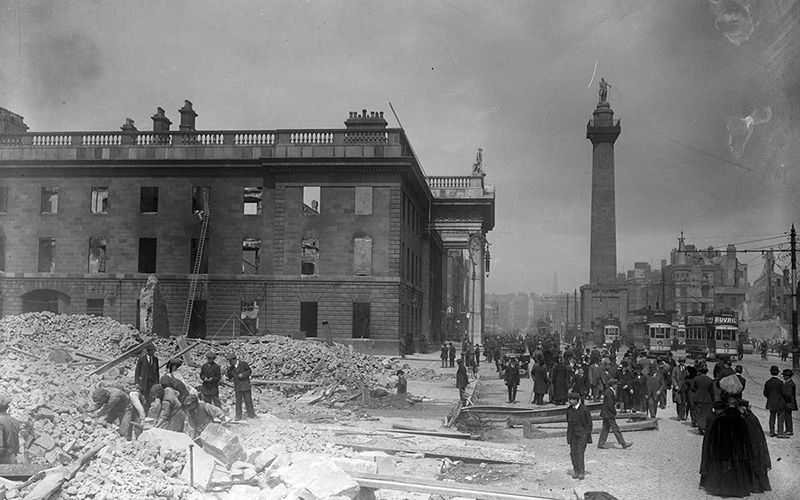
The position of Chief Secretary for Ireland was abolished following the establishment of the Irish Free State in 1922. From that moment Ireland has had varying degrees of independence, but it was basically independent. Until now.
There can be no more argument on the matter. Many people have claimed with each new European Union treaty that Ireland was no longer an independent nation, that we were just a state in a vast European federal union. Others argued otherwise and it is, or was, a complex matter.
However, this week all pretense of independence evaporated as the Irish people got to meet our new Chief Secretary, Olli Rehn {photo}. Unlike the last Chief Secretary, Canadian Hamar Greenwood, Rehn is not a member of the British Government, but is the European Union's Commissioner for Economic and Monetary Affairs. However, the roles are similar enough because the Chief Secretary's role was to see that British policy was enforced in Ireland as Mr. Rehn's is to see that the EU's policy is followed by this state.
Rehn dropped in for a visit this week. With the budget due in only a few weeks, Rehn's presence is a signal to all in the parliament that the real power here demands that Ireland toe the line on deficits, spending and taxation. Rehn reiterated his view that Ireland can no longer be a "low tax country" but must move towards being a "normal tax country," which means overall taxation rates should be similar to what applies in other EU countries.
Rehn helpfully offered the support of the European Commission to "Ireland and its citizens as they faced into the challenges ahead," but he offered nothing else other than "thou shalt comply" and get the deficit under 3% by 2014.
This is the price of being the good Europeans, the English-speaking country that was enthusiastic about the European project. We adopted the euro, unlike the bad Europeans across the Irish Sea. We opened our borders to the work‑hungry Latvians and Poles, unlike the Dutch, French and others. We showered love on all that was European, blindly ignoring that the powers that be were eying us coldly the whole time, waiting for an opportunity to punish us for our foibles and weaknesses.
For a while we thought we were rich, but it was a mirage. No, it was a trip, like we were on LSD. We were the debt addicts and we thought our wealth was real, but it was illusory.
Now it's not just cold turkey for us, but punishment. The EU is punishing us for our addiction, but the pushers, the German and French (& others') banks and investment funds who threw money at our banks and property developers, who fed our addiction, are not only getting away with it, but are being protected by the same people who are now dictating how Ireland is to run its affairs.
So we're stuck with stern-faced Olli, accepting his lectures like the bad children the EU always knew we were and, it seems, people here are taking it. The only question is how much longer before the people decide to send Olli to join Hamar Greenwood.

Comments