American in Ireland


Celebrating the Irishman who burned the White House

Posted on Monday, August 22, 2011 at 12:03 PM

RSS


Recent Posts

Archives

submit to reddit

Major General Robert Ross
I have often heard about the Irishman, James Hoban, who "designed the White House," but until recently I'd never heard of the Irishman who burnt it down 14 years after it was completed – Major General Robert Ross.

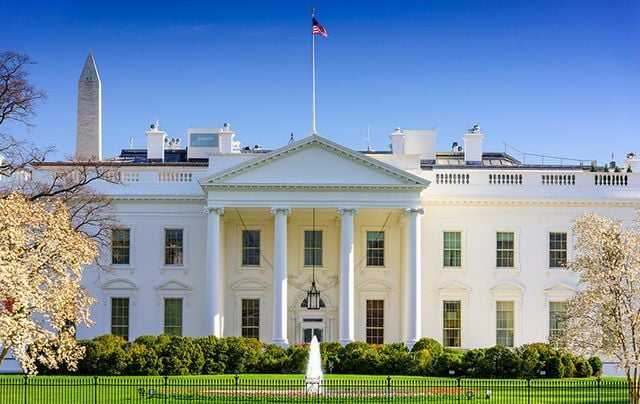
Ross was the head of the British Army that "burned Washington" in 1814. While the War of 1812 didn't feature prominently in my school lessons, I clearly remember learning about how President Madison and his wife had to flea the White House and Washington before the British marched in and torched the city's public buildings, including the Capitol Building and the White House. The man who led the British Army that day was General Ross from Rostrevor, County Down.

Last month I visited Fort McHenry in Baltimore, which was the center of an important engagement during the War of 1812. The British were thwarted in their efforts to capture the crucial port city of Baltimore. It was the victory in the Battle of Baltimore that inspired Francis Scott Key to write the Star Spangled Banner. It was also the battle where Major General Robert Ross was killed.

Ross was loved by his men and a hero to the British for his exploits in the Napoleonic Wars and for what he accomplished in America before he was killed in the Battle of Baltimore (at Dundalk, MD). Ross's family were allowed to amend their name so that the family name was Ross of Bladensburg, which commemorated the British victory at the  Battle of Bladensburg, MD the British victory that opened the door to Washington. The family's coat of arms was also amended to depict a captured American flag. These moves incensed the Americans and there was a plan to attack Rostrevor, but the war ended before this plan got much further.

In 1826 men who served under Ross erected a monument to celebrate his career in the British Army, and his victory at Bladensburg in particular. The monument is a massive obelisk. The inscription on the front of the monument says, "Major General Robert Ross served with distinction in Holland, Egypt, Italy, Spain and France, conquered in America and fell victorious at Baltimore." There are other inscriptions along the sides and the back of the monument, including one lauding Ross and his army's victorious entry into "Washington, capital of the United States."

The monument was refurbished in 2008. Inside the gate is a new sign - in Irish (Gaelic) as well as English - explaining who Ross was, including that he was "sent to America in 1814 to avenge American atrocities," which is a reference to the burning of York (now Toronto) in 1813.

My time at Fort McHenry inspired me to take a half hour detour on Saturday evening to see the monument at Rostrevor. It was a beautiful evening and well worth the time. Even if you're not of a mind to pay a visit to a monument dedicated to the man who "burned Washington" it's worth a visit if you're in the area. The view from the steps of the monument looking out over Carlingford Lough is spectacular and the drive from Newry provides a few great scenes.
The Moutains of Mourne sweeping down to the sea (left)

{For more on Ross and the monument see The Man Who Captured Washington. I love this picture of the monument surrounded by scaffolding, which is topped with a Betsy Ross style American flag. In a place where flags can be contentious I bet the Betsy Ross flag drew smiles from all.}


5 Comments

See all comments

@TheYank, interesting column. As an American, I'm sorry that Ross was successful in burning the White House and other buildings in Washington D.C. I can't think of him as a hero, but more like a traitor to Ireland for working for the British. I sort of wish he could see the White House and the Capitol Bldg. today. I'll agree that the view looks spectacular.
Drumsesk,

Let me say your web site is fantastic.

As I said above, my knowledge of the War of 1812 was/is pretty scant. I'm reading a history of the war right now, but so much of it is unfamiliar that I'll probably have to read it again. I also just checked Amazon.co.uk and I see that a paperback version of Taylor's book is due out in Oct. I grew up not far from the Canadian border in upstate NY. I knew next to nothing about battles on the Great Lakes and along the border. I'll be looking for Taylor's book.

I'll keep an eye out for your book on Ross too, although I know it'll be about more than his time in America. When I say I know little about the War of 1812 I know comparatively far less about the Napoleonic Wars. I'll have to remedy that someday.
As the author of The Man Who Captured Washington website I am pleased to see this post. Ross' monument in Rostrevor was erected on almost the exact spot where he intended to build his retirement home had he survived his expedition to America. As owners of the village of 'Rosstevor' as it was then known he had the pick of building sites and this location is truly spectacular. Writing to his brother C.S.Lewis once remarked: 'That part of Rostrevor which overlooks Carlingford Lough is my idea of Narnia. I am currently writing a book on the career of Ross. He fought with and against many Irishmen both in Europe and America. Up to 40% of the British Army he led to the USA were Irishmen while expatriate Irishmen in the United States joined the American army in their thousands to resist the British. It is an extraordinary tale that witnesses United Irishmen having another crack at the British in America, with a United Irishman claiming to have killed Ross near Baltimore. Alan Taylor traces this sub-text of Irish politics in his recent book on the War of 1812 which focuses on the war on the frontier with Canada:The Civil War of 1812: American Citizens, British Subjects, Irish Rebels, & Indian Allies. I see a similar pattern in the war in the Chesapeake Bay area in 1814 and of course there is a hugely important Irish dimension to Andrew Jackson's victory at New Orleans with up to 80% of the Tenessee militia involved having some Scots Irish blood.
Brit attempt at overlooking the thrashing they took at Jackson's hands. The real hero of 1812. Mother nature made the brits pay dearly for their folly.
Thanks very much for that piece of history! I suppose, in some ways, it was only fitting an Irishman led the forces who burned Washington D.C. on that day.


Log into IrishCentral with your Facebook account


or sign-in directly

E-Mail:
Password:
 Remember me Forgot my password
Not a member? Register Now!
print this article Print
email this articleE-mail