'Celtic' myth exposed by DNA
By: Michael O'Laughlin | Published Friday, December 21, 2012, 8:22 PM | Updated Friday, December 21, 2012, 8:22 PM
Milesians Not Irish Founders
We have been taught for a few generations
that the Irish descend from the Celts.
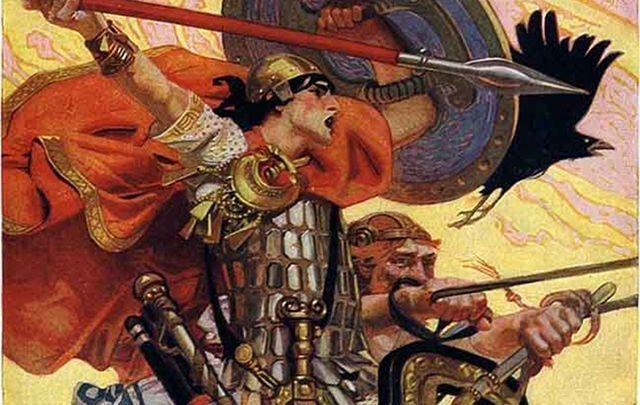
The King of one wave of Celts was Milesius.
Milesius is the most famous Celt in legend
I think. Some call him the founder of
the Irish people - but it looks like it is
mostly a fanciful story.
First Irish Families
DNA studies are now telling us that Ireland
was settled centuries earlier than thought.
It was not first settled by the Celts of legend.
Ice Age Survivors
It was actually those who survived the last
ice age about 10,000 years ago, holding out
in northwest Spain. As things warmed up,
they found their way to Ireland.
In fact, the closest DNA match with the
Irish in all Europe is with the Basque.
Take a look at the film 'Blood of the Irish'
and you'll become a believer.
How They Got Here
Current theory is that they came by boat
to Ireland, which was settled much later
than Britain, which was connected by
land to the continent. They did not come
from Scotland, but from Basque country.
So, at least they came from around Spain like
some of the Milesian legends speak of.
Our New Ancestors
We still have to double check all the findings
but it seems pretty convincing. The Irish and
the Basque are brothers, so to speak. As far
as we can see, our earliest ancestors were
the Basque people. So there is the point to
start your genealogy in Ireland !
Books
If you want to see some of the legend that
came from the story of the Celts and
Milesius there is a book. It is titled
several years ago.
Book of Invasions
If you want to see a real classic, take a
look at the 'Book of Invasions', one of our
oldest written stories about who settled
Ireland. This book gives that the Irish
originally came from Spain. This is the
ancient book that O'Donnell took to the
court of Spain, trying to strengthen the
ties between the two countries. Looks
like there was some truth there.....
All of this should make doing current
day research on your Irish family history
seem a lot easier....
Just remember, Every Day is a holiday....
-Mike O'Laughlin
About the author of this blog
Mike is the most published author in
his field, and also founded the first audio
show on the internet, on Irish Families
and genealogy.
31 Comments
-
-
-
-
-
-
-
-
-
-
-
-
-
-
-
-
-
-
-
-
-
-
-
-
-
-
-
-
-
-
-
Switch to the desktop site to post a comment.teltalheart | Mar 22, 2012, 04:47 AM EDT
I am most interest in the fact the King Tut has R1b1a2 Y-DNA, a Celtic marker!
EphraimKibbey | Nov 11, 2011, 04:31 PM EST
Thanks Michael O'Laughlin, I had heard about a spainish invasion but narrowing it to the Basques was new to me. Are there any Semitic markers in Irish DNA? I have seen "Tuatha Dé Danaan" translated as "Tribe of Dan." There is a reference in the Bible where the writer complains that, while the other Hebrew Tribes were fighting, the Tribe of Dan remained in their ships and this tribe seems to have disappeared before the first invasion of Israel. The mines in Ireland and in Cornwall were know of in Biblical times.
Molaughlin | Nov 11, 2011, 04:04 PM EST
naughtius - I wrote this article a year and a half ago! Yes, I expect new evidence will continue to come in for quite a while.
naughtius | Nov 11, 2011, 10:49 AM EST
Michael, you are referring to an old DNA studie that was subsequently superceded with new evidence. George, what are you on about?
Molaughlin | Nov 10, 2011, 11:18 PM EST
This is an article I wrote in July of 2010. A lot of hub bub coming in. In point of fact: 1) Most N. Americans do not know about the ancient origins of the Irish. 2) Many folks do consider 'celtic' as an ethnic term. (academics aside). 3) Many believe the Celts & Milesians were the first Irish, from legends. 4) I have not written a book on this topic. I have published early works. It's a big world out there, with a lot of opinions, and levels of knowledge. That is worth keeping in mind. The point is, legends aside, there were people who settled in Ireland before the Celts and 'Milesius'. Some will find this helpful, some will not.
crowsnest | Nov 10, 2011, 07:46 PM EST
oopps - spell it TENACITY
crowsnest | Nov 10, 2011, 07:45 PM EST
Reply to MURPH46 - TENANCITY FOR SURVIVAL - Sounds Irish to me
GeorgeDillon | Nov 10, 2011, 07:15 PM EST
This is probably the last generation in history when we can speculate on the Irish DNA or remote racial origins. By mid 21st century there will be no recognizably Irish gene pool, just as today there is no American gene pool. The Irish, as a separate ethnic and national group, will no longer exist. As someone who loves diversity and opposes globalization, I think that's sad.
dragonladyleanne | Nov 10, 2011, 05:51 PM EST
OY!! The headline of this article is faulty from the beginning, as "Celtic" is a cultural and language group, NOT related to DNA at all. Irish (Gaeilge) is indisputably a Celtic language, related to Scots, Welsh and Manx. Further down, the author states "They did not come from Scotland, but from Basque country". DUHHHH, the Celts were ALL OVER Western Europe until the Romans decided they were too independent and fierce (see Caesar's 'Gallic Wars'), and drove all but the few Gauls who became Roman off the mainland. The SCOTS came from IRELAND, and interbred/displaced the Picts - no history I have ever read claimed the other way round! Also, all human DNA is related to 99.99 percent, so analyzing modern DNA and finding traces of ANYwhere else is no proof that our ancient ancestors came from one place or another. People do travel you know, and sometimes bring home or leave a little souvenir!
ancavker | Nov 10, 2011, 01:58 PM EST
lostgold: Not Norse, but pockets of an old English dialect (heavily influenced by the Irish language) that existed in 2 isolated pockets in county Wexford up until the famine years. The language was referred to as Yola (old) closely related to another dialect in Dublin called Fingalian. These were Saxons who who followed along with the Normans during the Norman invasion of Ireland.
Mickwall | Nov 10, 2011, 01:34 PM EST
The long comment below starting with "If some believed...." was not posted by Mickwall so please correct poster's name.z
tocon1941 | Nov 10, 2011, 11:49 AM EST
Quit worrying about where you came from and start thinking about where you are going.
naughtius | Nov 10, 2011, 11:46 AM EST
In early interpretations the Book of Invasions the Milesians ahve been seen as gaels with the Tuatha de Dannan being the original celts. One theme of the book of invasiosn is the linking of ireland to biblical events and characters, the Milesian story seems to be propaganda to give certain families in the new christian era "legitimacy" by way of connecting them to biblical characters or places that were in vogue at the time like Scythia. DNA analysis has come on in leaps and bounds since the Basque idea was put forward first. Current evidence suggests the populating of ireland being much like the original Celtic stories but more so in the bronze age than iron age with some possible male dominated military elite groups in the iron age. As said below ireland played a big role in the bronze age with trading, particularly Cork and Kerry as they had important in mines. To re-iterate the point, irish are not Basques and did not descend from them. The closest genetic match to the irish are the british.
Mickwall | Nov 10, 2011, 11:32 AM EST
How about the several genealogies that link the prominent Gaelic families to the Milesians? How does this fit in to the statements in this article?
Mickwall | Nov 10, 2011, 11:21 AM EST
If some believed that the early Irish were Celts, or that Milesius was the first, fair enough regarding your headline. However... First, regarding the classic Irish mythology: even if we accept that the legend of Milesius was analogous or a metaphor for the Celts arriving, the Book of Invasions itself recognises Milesius was not the first. The Tuatha Dé Danaan, the Fir Bolg and the followers of Parthonán/Cesair (?) were mythical/legendary peoples that preceded him/them. Also: if I'm not mistaken, even in the legends, some of the peoples in the Book of Invasions were supposed to have come from a territory that was mythologised, but later identified by the monks with Spain. Second: the Celtic League, for example, has never accepted the "racial" definition of the Celts - it is primarily a linguistic (i.e. cultural) characteristic. Not that the Basque connection isn't fascinating - but genes alone are not the definition of ethnicity. Third: Bob Quinn's "Atlantean" hypothesis posits that the entire Atlantic seaboard of Europe was a cultural and social causeway during the Bronze Age (and afterwards). The sea was not just a division, as it is seen by many today, but was a super-highway connecting territories and peoples. But fair enough for pointing out that Ireland's past isn't just monocultural (even if we love the idea of the Celts!) I look forward to reading your book, by the way.
naughtius | Nov 10, 2011, 10:59 AM EST
This article is way out of date. The R1b that arrive d in Ireland came a lot later than first thought. Even the Basques arrived later than first thought. The irish and Basques share similar direct male ancestry around 6,000 years ago. Look up R1b L21. Celt is a linguistic term anyway not an ethnic one
carrickcourt | Nov 10, 2011, 10:48 AM EST
Genetically the people of the UK and Ireland come from the same stock. The Basque connection is interesting. What of a Basque connection to the different peoples in the UK if there is one? The basic gene pool in the UK and Ireland did not change. The different invaders changed the culture and language of the original folks.
Murph46 | Nov 10, 2011, 10:27 AM EST
What are some basic attributes of the Basques?
Springfield9 | Nov 10, 2011, 10:23 AM EST
My DNA has been done and while it is squarely in Ireland .... I have a handful of DNA duplicates among the Basque people. So, I have no trouble with this. The migration across Europe had to take a left because of the Ice Age.
Loveshamrocks | Nov 10, 2011, 10:12 AM EST
this news does not surprise me at all. My family always believed they were of "Spanish" descent, as some of us have dark hair, eyes. I guess the Black Irish thing has some truth to it. !! :)
cillowen | Nov 10, 2011, 10:07 AM EST
spain basque is a feeling that is strong with erinacts and suits. mucho gracious
Richard1965 | Nov 10, 2011, 09:47 AM EST
Could it be possible that the Picts were in fact the Basque? Not really much is known about the Picts or their Language...They are considered the Aboriginals of the Islands, So, they may well have been a Basque tribe...How strong is the Basque DNA in Scotland versus Ireland?...
lostgold | Sep 12, 2010, 01:18 PM EDT
There were pockets of people who spoke Norse in Ireland up till the Famine years. They left or died like the ones who spoke Gaelic. That doesn't prove that all Irish have some Scandinavian roots. Theres another myth floating around that all dark haired Irish particularly from Connaught have some modern Spanish in them from the Armada. Yet if anyone reads Moryson's book "The Great Armada" he will soon learn that the Irish really treated them a whole lot more cruel than the Protestant Scotch because the Irish were just getting over another drubbing from England and were afraid to help their fellow Catholics the Spainish survivors of the Armada.As for looking back far to the Ice age what were the numbers of these prehistoric Spainiards a great many or few?until we know for sure we can't say Basques and Irish are brothers. They may well indeed have come up from Spain but Spain itself was a human refugium for many differant people forced south by the Great Glaciars.Some of these ancient Irish may have belonged to a group we have never heard of.
mcdolan | Sep 12, 2010, 09:06 AM EDT
Hallelujah! Popular belief seems to skip the first centuries after the last Ice Age and go directly to the Milesians, which is hogwash. But, what about the Tuatha De Danaan, who were supposed to have either chased about the Fir Bolgs into the hills (small and dark, 'the little people'. They were supposed to be tall, graceful and light haired/light skinned. Were they before or after the Mileasians? Also, Alba (Scotland) was heavily settled by the Dalcassians who were Irish raiders from northeast Ireland, and they displaced the Picts, who were the aboriginal people of Scotland, and popular belief is that they were small and dark and became Scotland's elves and fairies.
elektros | Aug 04, 2010, 03:21 AM EDT
The legends themselves say that the Milesians succeeded the Tuatha de Danaan, and that before them in turn were the Fomor, although they are hazy about the origins of these earlier peoples. Possibly successive waves who all immigrated from Spain at different times? We don't know, but the legends do give a Spanish origin for the Milesians, and if the DNA says the original inhabitants (the Fomor, or someone else?) also came from there, there's not necessarily any inconsistency in that. The Milesians are considered to be Gaels, a sub-group of the Celts.
BrendanPKeane | Jul 21, 2010, 11:12 AM EDT
The Celts had an important influence on the English language which is related to that genetic study which shows the Anglo Saxons did no exterminate the Celts they met in England. At least Celt genes are recognized now amongst English people (and not deemed racially inferior), maybe one day too, the Celtic origins of English vocabulary will find similar acceptance.
CitizenWhy | Jul 21, 2010, 11:04 AM EDT
Identities are language and culture based, not racially or genetically based. Ireland has a strong and distinct Celtic language and culture, some of which survived the English invasion and occupation. Interestingly, when you get away from formal French and learn street French the manner of talk is funny, laced with elaborate metaphors, and playful, a Celtic cultural heritage. My own parents could speak very formal English, even using Victorian periodic sentences, but when they were being Irish their English was another language culturally and psychologically - witty, playful, self-mocking, full of elaborate metaphors and dramatized emotions. Much more fun. But then the old English working class speech was also great fun.
CitizenWhy | Jul 21, 2010, 10:56 AM EDT
Curious about what this article did not point out from this DNA study, namely that the Irish, Basque AND English are closely related but not that closely related to the rest of Europe. In England there is also a thin overlay of Saxon and Celt, as there is in Ireland, with the Saxon thinner.
BrendanPKeane | Jul 20, 2010, 07:09 PM EDT
But you put "Celtic" in quotation marks as though you had found evidence to disprove something the Irish think about themselves. You had not. The well-known monument Newgrange was built by the people the Celts incorporated into what became two thousand years of Gaelic Ireland.
Molaughlin | Jul 20, 2010, 02:00 PM EDT
Many folks researching Irish family history, have not studied early Irish History at all. This is understandable, but it can lead to misunderstandings. I have had several genealogical researchers state that the Celts and Milesius were the first Irish, etc... The point of this brief article is that people were here thousands of years before the 'Milesians', and it has been proven we carry the DNA of those people today. Evidenced of late by the bones found in the Burren, DNA matched to living school children, pre-dating the Milesians, etc... The fact is that DNA is improving our knowledge of the origins of the Irish.
BrendanPKeane | Jul 20, 2010, 12:35 PM EDT
The myth is very clear that the Milesians were not the first invaders. Where has it ever been written that the Celts were Ireland's first inhabitants? Everyone knows the Celts invaded a populated island and subsumed everyone over centuries into a Gaelic Irish identity, with a Celtic language most Irish spoke up until a few generations ago. Your refutation of the Celtic origin of Irish people is unexplained and badly stated.